This boiled bag of offal is banned in the US. In Scotland it's a fine-dining treat
Anthony Bourdain loved haggis. But even the late, great American chef, writer and television host recognized that Scotland’s national dish, with its “sinister sheep parts”
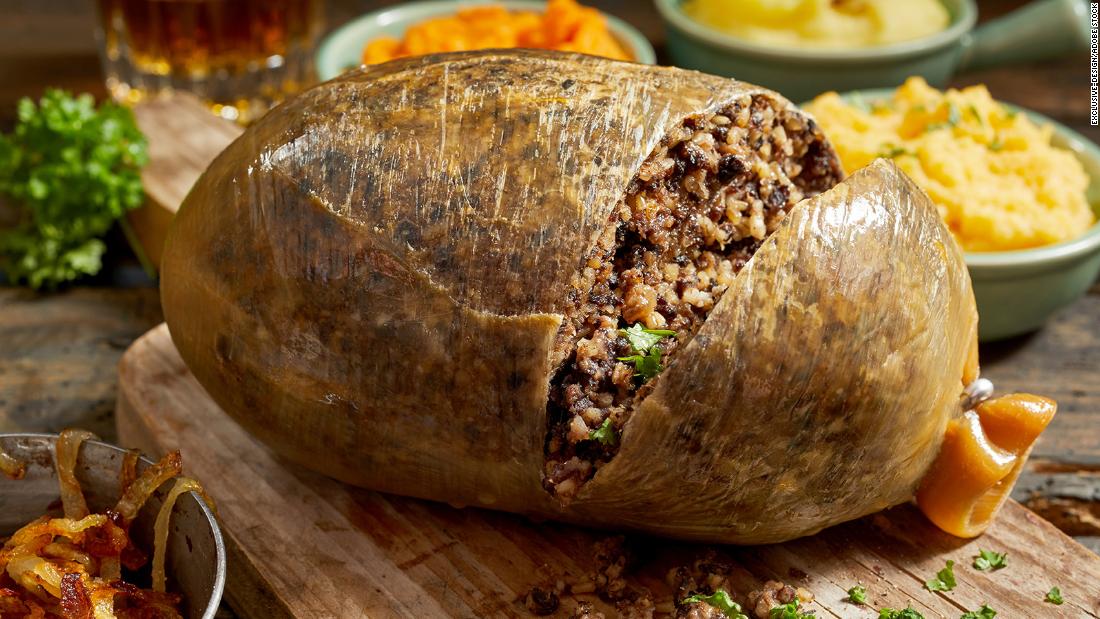
Anthony Bourdain loved haggis. But even the late, great American chef, writer and television host recognized that Scotland’s national dish, with its “sinister sheep parts” wrapped in a shroud of mystery and half-invented history, could be a hard sell. “Don’t let them tell you otherwise, that’s really one of life’s great pleasures,” Bourdain said on one of his gastro-curious pilgrimages to Glasgow. “There is no more unfairly reviled food on Earth than the haggis.” A mash-up of diced lung, liver and heart mixed with oatmeal, beef suet, onion and assorted spices, haggis was traditionally made by stuffing these raw ingredients into the stomach of a recently slain sheep and boiling the lot to a state of palatability. Instagrammable is not the word that immediately comes to mind. In our 21st-century world, where “clean” eating and processed pap overlap, haggis can seem like an “Outlander”-style outlier from another age. Yet, by some alchemy, once cooked to its required “warm-reekin’ (steaming)” state, it adds up to much more than the sum of its modest parts. It’s offaly charm has kept nose-to-tail eating alive among a younger generation of Scots that has largely turned its back on the tripe, liver and kidneys their predecessors enjoyed (or endured). Carefully prepared, haggis tastes both oaty and meaty; it is dark and crumbly, a little crispy at the edges but still moist; earthy but also savory and spicy; deep-tasting and profoundly warming, the perfect foil for its traditional garnish of floury mashed potatoes and orange bashed turnip. “It’s like a cuddle for the stomach,” says Nicola Turner, a 35-year-old office administrator from Helensburgh, a town on western Scotland’s Firth of Clyde. Spice and texture Haggis is traditionally served with turnips. Jeff J Mitchell/Getty Images For children of the 1960s and ’70s, like crime novelist Ian Rankin, haggis meals were a choice between the classic meat-and-two-veg plate and the battered and deep-fried, chip-shop iteration loved by both his friend Bourdain and his quintessentially Scottish detective character, Inspector John Rebus. Now myriad other treatments have blossomed. “I’m pretty sure the first time I dined with AB in Edinburgh we had haggis in filo pastry with a jam-style – maybe blackcurrant – sauce,” Rankin recalled. “He was a big fan of haggis and of chip shops. Rebus will have enjoyed the occasional haggis supper from his local chip shop. He was definitely a fan, as am I.” “It is all about the spicing and the texture,” says the Scottish food writer, novelist and cook Sue Lawrence, a champion of haggis’ adaptability for use in other dishes.
“If you didn’t know what was in it, you wouldn’t think ‘oh that tastes of liver or whatever.’ It is all nicely chopped up and the oatmeal gives it a lovely texture. It could easily be a nice, big mince dish.” Lawrence uses haggis as an alternative to beef and pork ragù in lasagna and in her pastilla, a version of the North African dish in which a hand-made haggis from the Isle of Mull substitutes for the traditional poultry or seafood filling. The filo pastry savory is flavored with the spice blend ras el hanout, apricots, chile, orange zest and almonds before being sprinkled with cinnamon and icing sugar. Such cultural crossovers serve as a reminder that haggis could easily be a dish with nothing specifically Scottish about it at all. Records of similar quick and portable preparations of the fast-perishing innards of sheep and other animals date back to ancient Rome and Greece. Haggis-like combinations of offal and grains are part of the culinary history of several countries. Spain has chireta, Romania drob and Sweden polsa, while chaudin, or ponce, is a rice and meat-stuffed pig stomach that is a staple of Cajun cooking. Wild wee beastie Deep-fried haggis is often a staple of Scottish fish and chip shops. Yarvin World Journeys/Alamy Stock Photo In neighboring England, recipes for “hagese,” “hagws of a schepe,” “haggas” or “haggus” pop up in recipe books published between the 15th and 17th centuries, probably preceding written records north of the border. Etymological evidence points to the term “haggis” having its roots in Old Norse, suggesting an early version of an oat-and-offal sausage might have arrived in Britain and Ireland on a Viking longboat. But ever since it was first optioned by the poet Robert Burns in the late 1700s, the haggis backstory has been monopolized by Scotland and the Scots, sometimes mischievously. It is, according to the kind of lore that Burns engendered, the dish a doughty Highlander would carry with him as he drove cattle through the glens to the markets of the central belt or the perfect picnic for a whisky smuggler plying his illicit trade by moonlight. Imports of Scottish haggis are banned from the United States. Russell Cheyne/Reuters From such romantic notions it was a short step to turning the haggis into a wee wild beastie, one with longer legs on one side that was thus condemned to run round and round whichever hill it lived on.
In 2003, a poll of American tourists in Scotland found that one in three of them believed they might encounter such a confused creature on a Caledonian vacation. Bourdain, a native New Yorker, may have qualified as haggis’ biggest admirer since Burns, but his compatriots at the US Department of Agriculture remain unconverted to offal-filled paunch. Haggis imports into the United States were prohibited in 1971 as part of a ban on the consumption of all livestock lungs. Authentic versions of old school haggis remain culinary contraband in the US, as hard to lay your hands on as Cuban cigars. Across the rest of the world, it’s a different story. According to leading producer Simon Howie, haggis is more widely appreciated and consumed now than it has been since Burns improvised his “Address to a Haggis” for the entertainment of well-to-do Edinburgh acquaintances. Pudding chieftan It’s like a cuddle for the stomach Nicola Turner, haggis fan The haggis is toasted on Burns Night, held every year in honor of Scottish poet Robert Burns. eff J Mitchell/Getty Images Firmly tongue-in-cheek, the poem lauds the “Great chieftain o’ the pudding race,” as exactly the kind of unpretentious, hearty fare required to nourish a nation of braveheart warriors. In comparison to the enfeebling foreign muck enjoyed by the capital’s claret-quaffing elites of the time – the olio, fricassée or ragoût that would “sicken a sow” – Burns urges his readers to wonder at the magical impact of haggis on his fellow sons of Scotland’s soil. As the English translation of the original Scots language version puts it But mark the Rustic, haggis-fed/ The trembling earth resounds his tread/ Clap in his ample fist a blade/ He’ll make it whistle/ And legs and arms and heads will cut/ Off like the heads of thistles Video Ad Feedback Anthony Bourdain and Anderson Cooper talk Scottish food 0:39 • Source: CNN Anthony Bourdain and Anderson Cooper talk Scottish food 0:39 These days synthetic casings have largely replaced stomach but ovine and porcine innards remain at the core of most of the haggis produced in its homeland, said Howie, who estimates that his company Simon Howie Butchers, accounts for around 60% of the roughly two million haggises produced every year. For Howie, versatility, value for money and convenience explain why this staple of the Scottish larder is thriving. Typically haggis retails in Scotland, which accounts for half of global consumption by volume, for around £6, or $7.70 per kilogram ($3.36/pound).
That’s around half the price of less expensive cuts of beef or a third of the price of Scotch lamb while enjoying a fairly similar nutritional and calorific profile. “You can give your kids a meal that is not full of things you don’t want to feed them – for a few pounds you can feed three strapping lads,” Howie said. “From a kitchen perspective, it is very simple because when it leaves our factory it is already cooked. So when you or a restaurant owner gets it into the kitchen all you have to do is heat it up to be piping hot. It couldn’t be more basic: a student with no cooking skills or a Michelin-starred chef do exactly the same thing to put it out on the plate.” Haggis pakora Haggis can often be found on fine dining menus. Andrea Artz/laif/Redux Its texture means haggis can also be usefully deployed in fine dining alongside leaner meat like venison or as a stuffing for poultry and game birds. Its spicy intensity means it is also finding uses in canapés and as a crouton-borne garnish for soups. Buoyant sales are also underpinned by the increasing consumption of haggis in forms inspired by Scotland’s ethnic minorities. Glasgow’s Sikh community pioneered haggis pakora in the 1990s and samosas, spring rolls and quesadillas have followed in its wake, often using a vegetarian version of the protein in which the offal is replaced by a mix of vegetables, pulses and mushrooms. Such dishes are more than culinary twists. They are badges of belonging, and an indication that, two centuries after Burns grabbed it for the nation, haggis is as intimately entwined with Scots identity as ever. Just ask Ross O’Cinneide, a promising 14-year-old fly-half in the junior section of Stirling County rugby club. “Most of my friends and I like haggis,” he says. “Mum makes it for us sometimes after rugby and it’s got a very nice warming feeling. And it’s nice because it’s purely Scottish.”
 The BriefWire