A new approach to a Covid-19 nasal vaccine shows early promise
Scientists in Germany say they’ve been able to make a nasal vaccine that can shut down a Covid-19 infection in the nose and throat, where
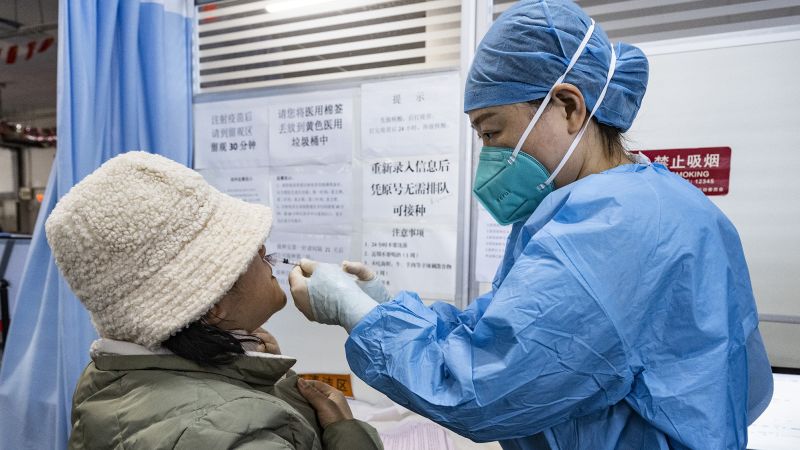
Scientists in Germany say they’ve been able to make a nasal vaccine that can shut down a Covid-19 infection in the nose and throat, where the virus gets its first foothold in the body. In experiments in hamsters, two doses of the vaccine – which is made with a live but weakened form of the coronavirus that causes Covid-19 – blocked the virus from copying itself in the animals’ upper airways, achieving “sterilizing immunity” and preventing illness, a long-sought goal of the pandemic. Although this vaccine has several more hurdles to clear before it gets to a doctor’s office or drug store, other nasal vaccines are in use or are nearing the finish line in clinical trials. China and India both rolled out vaccines given through the nasal tissues last fall, though it’s not clear how well they may be working. Studies on the effectiveness of these vaccines have yet to be published, leaving much of the world to wonder whether this approach to protection really works in people. Halting progress on next-generation Covid-19 vaccines The US has reached something of a stalemate with Covid-19. Even with the darkest days of the pandemic behind us, hundreds of Americans are still dying daily as the infection continues to simmer in the background of our return to normal life. As long as the virus continues to spread among people and animals, there’s always the potential for it mutate into a more contagious or more damaging version of itself. And while Covid infections have become manageable for most healthy people, they may still pose a danger to vulnerable groups such as the elderly and immunocompromised. Researchers hope next-generation Covid-19 vaccines, which aim to shut down the virus before it ever gets a chance to make us sick and ultimately prevent the spread of infection, could make our newest resident respiratory infection less of a threat. One way scientists are trying to do that is by boosting mucosal immunity, beefing up immune defenses in the tissues that line the upper airways, right where the virus would land and begin to infect our cells. It’s a bit like stationing firefighters underneath the smoke alarm in your house, says study author Emanuel Wyler, a scientist at the Max Delbruck Center for Molecular Medicine in the Helmholtz Association in Berlin.
The immunity that’s created by shots works throughout the body, but it resides primarily in the blood. That means it may take longer to mount a response. “If they are already on site, they can immediately eliminate the fire, but if they’re like 2 miles away, they first need to drive there, and by that time, one-third of the house is already in full flames,” Wyler said. Mucosal vaccines are also better at priming a different kind of first responder than injections do. They do a better job of summoning IgA antibodies, which have four arms to grab onto invaders instead of the two arms that the y-shaped IgG antibodies have. Some scientists think IgA antibodies may be less picky about their targets than IgG antibodies, which makes them better equipped to deal with new variants. The new nasal vaccine takes a new approach to a very old idea: weakening a virus so it’s no longer a threat and then giving it to people so their immune systems can learn to recognize and fight it off. The first vaccines using this approach date to the 1870s, against anthrax and rabies. Back then, scientists weakened the agents they were using with heat and chemicals. The researchers manipulated the genetic material in the virus to make it harder for cells to translate. This technique, called codon pair deoptimization, hobbles the virus so it can be shown to the immune system without making the body sick. “You could imagine reading a text … and every letter is a different font, or every letter is a different size, then the text is much harder to read. And this is basically what we do in codon pair deoptimization,” Wyler said. Promising results in animal studies In the hamster studies, which were published Monday in the journal Nature Microbiology, two doses of the live but weakened nasal vaccine created a much stronger immune response than either two doses of an mRNA-based vaccine or one that uses an adenovirus to ferry the vaccine instructions into cells. The researchers think the live weakened vaccine probably worked better because it closely mimics the process of a natural infection.
The nasal vaccine also previews the entire coronavirus for the body, not just its spike proteins like current Covid-19 vaccines do, so the hamsters were able to make immune weapons against a wider range of targets. As promising as all this sounds, vaccine experts say caution is warranted. This vaccine still has to pass more tests before it’s ready for use, but they say the results look encouraging. “They did a very nice job. This is obviously a competent and thoughtful team that did this work, and impressive in the scope of what they did. Now it just needs to be repeated,” perhaps in primates and certainly in humans before it can be widely used, said Dr. Greg Poland, who designs vaccines at the Mayo Clinic. He was not involved in the new research. The study began in 2021, before the Omicron variant was around, so the vaccine tested in these experiments was made with the original strain of the coronavirus. In the experiments, when they infected animals with Omicron, the live but weakened nasal vaccine still performed better than the others, but its ability to neutralize the virus was diminished. Researchers think it will need an update. It also needs to be tested in humans, and Wyler says they’re working on that. The scientists have partnered with a Swiss company called RocketVax to start phase I clinical trials. Other vaccines are further along, but the progress has been “slow and halting,” Poland said. Groups working on these vaccines are struggling to raise the steep costs of getting a new vaccine to market, and they’re doing it in a setting where people tend to think the vaccine race has been won and done. In reality, Poland said, we’re far from that. All it would take is another Omicron-level shift in the evolution of the virus, and we could be back at square one, with no effective tools against the coronavirus. “That’s foolish. We should be developing a pan-coronavirus vaccine that does induce mucosal immunity and that is long-lived,” he said. More on the way At least four nasal vaccines for Covid-19 have reached late-stage testing in people, according to the World Health Organization’s vaccine tracker.
The nasal vaccines in use in China and India rely on harmless adenoviruses to ferry their instructions into cells, although effectiveness data for these has not been published. Two other nasal vaccines are finishing human studies. One, a recombinant vaccine that can be produced cheaply in chicken eggs, the same way many flu vaccines are, is being put through its paces by researchers at Mount Sinai in New York City. Another, like the German vaccine, uses a live but weakened version of the virus. It’s being developed by a company called Codagenix. Results of those studies, which were carried out in South America and Africa, may come later this year. The German team says it’s eagerly watching for the Codagenix data. “They will be very important in order to know where whether this kind of attempt is basically promising or not,” Wyler said. They have reason to worry. Respiratory infections have proved to be tough targets for inhaled vaccines. FluMist, a live but weakened form of the flu virus, works reasonably well in children but doesn’t help adults as much. The reason is thought to be that adults already have immune memory for the flu, and when the virus is injected into the nose, the vaccine mostly boosts what’s already there. Get CNN Health's weekly newsletter Sign up here to get The Results Are In with Dr. Sanjay Gupta every Tuesday from the CNN Health team. Still, some of the most potent vaccines such as the vaccine against measles, mumps and rubella use live attenuated viruses, so it’s a promising approach. Another consideration is that live vaccines can’t be taken by everyone. People with very compromised immunity are often cautioned against using live vaccines because even these very weakened viruses may be risky for them. “Although it’s strongly attenuated, it’s still a real virus,” Wyler said, so it would have to be used carefully.
 The BriefWire