'From collection to connection': How museums are redefining themselves
Gone are the days when museums were just places to see art and artifacts. On International Museum Day, DW looks at how museums are becoming
Gone are the days when museums were just places to see art and artifacts. On International Museum Day, DW looks at how museums are becoming unique spaces of community engagement and participation. Around 530 BC, the world's first public museum opened its doors in the Mesopotamian state of Ur, in modern-day Iraq. The curator was a priestess princess, and the museum was part of the palace complex, displaying artifacts from the region with informational labels in multiple languages. Fast forward some 2,500 years, and museums no longer only offer stationary exhibits accompanied by written information. From digitized collections to social media accounts to virtual reality, recent technology allows viewers to interact with collections in new ways. But recently, an even more profound shift has been taking place, one that goes to the very heart of what a museum is supposed to be and provide. It is a shift in focus from the objects on view to those doing the viewing, as museums become places that foster engagement and participation while serving broader societal needs. The Seddulbahir Fortress museum, in Canakkale, Turkey, runs oral history projects incorporating local voices into the museum narrative; it is nominated for European Museum of the Year Image: Egemen Karakaya A new museum definition for a new era "Museums are moving in this direction," Sandro Debono, a museum thinker, consultant and academic, explained to DW. He pointed to the current definition of a museum by the International Council of Museums, a global NGO that promotes and furthers heritage work. Adopted in 2022, it specifically recognizes inclusivity, diversity and community participation as essential aspects of museum work — a marked departure from the previous definition, which named serving society, but not involving it. When it comes to specific regions, Latin America has particularly embraced participatory practices, Debono said.
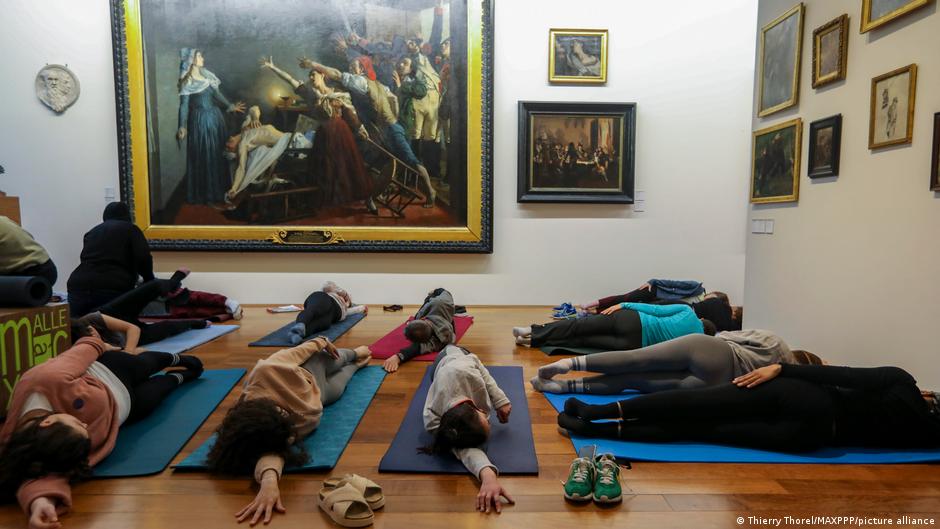
There, ideas of museums as places of participation and inclusion, such as citizen and community-led museums, can be traced back to the 1970s. A few decades later, the concept of social museology emerged, which focused not on objects but on living people, especially the marginalized, supporting their empowerment, heritage and social transformation. Now, many other parts of the world, including Europe, are also embracing similar approaches in their own ways, including in traditional institutions. Amsterdam's Stedelijk Museum is pioneering a new era of youth participation with its Blikopeners program Image: Dingena Mol/ANP/picture alliance For Julia Pagel, the secretary general of the Network of European Museum Organisations (NEMO), this momentum is captured by the phrase "from collection to connection." "[European] Museums are focusing more and more on communities," she told DW. She explained that funding, which largely comes from the state, is increasingly linked to social relevance. "Museums need to move from being mainly the venues you visit to becoming those social and civic infrastructures that you use, or trusted places where people can meet and exchange [ideas]." From yoga to dance: New forms of engagement While museum talks, school group tours and social events have long been staples of traditional museums' outreach, their current engagement offerings often have individuals participating in ways that do not directly relate to a collection. At the Museum of Singapore, seniors with cognitive and memory issues can take part in everything from dance classes to art workshops to discussion groups, turning the museum into a site of socialization for individuals who are often excluded from public life. Upcoming discussion events at the Hammer Museum in Los Angeles, California, include poetry readings and a panel of legal experts weighing in on the current US Supreme Court. And numerous institutions participate in "museums on prescription" programs, in which museums partner with national health systems to have museum visits recognized as a form of treatment for things like depression and loneliness.
Uniting these diverse offerings is the expansive view of how a museum can engage its community. Museum visits on prescription To view this video please enable JavaScript, and consider upgrading to a web browser that supports HTML5 video Breaking down the museum wall There is also a wide range in how museums are directly involving local citizens. One of the most profound examples is the Museu de Favela, in Rio de Janerio, Brazil. It describes itself as a "living museum," and "its main collection is its residents." The community-run museum was created in 2008, and favela residents are woven into all aspects of its work, from exhibitions featuring street graffiti and oral testimonies to lecture series and handicraft workshops led by locals. But even in more traditional museums, locals are being given chances to participate more directly. For some, this means involving non-professionals in the curation of exhibits. In 2022, Serbia's Gallery of Matice Srpska, in Novi Sad, hosted a project called "Novi Sad Citizens Choose," in which prominent society members selected a work of art that spoke to them and that was then hung in a special exhibition. Other museums are giving regular local residents a voice on the museum team itself. The Bundeskunsthalle, a contemporary art museum in Bonn, Germany, has long seen itself as "an active place of encounter," said Katja Schöpe, who manages inclusion and integration at the museum. "This raises the question of how we can remain an open and accessible space that is relevant for people regardless of their background or education, and relevant to a diverse society," she told DW. The Bundeskunsthalle's 'Society Forum' gave local residents of all ages, backgrounds and education a say in the direction of the museum Image: Bundeskunsthalle, Bonn To achieve this, the museum launched the "Gesellschaftsforum," or "society forum," in 2023.
Initially envisioned as a one-time council of 31 local citizens that would advise the museum on its future and how to better serve residents, the council's experience was so fruitful that it recommended its establishment as a permanent body — a suggestion the museum embraced. A smaller version now regularly advises the museum on how to make their offerings more accessible, open and easy to understand, breaking down the wall between museum staff and local citizens and bringing outside perspectives into the museum. The Stedelijk Museum Amsterdam in the Netherlands, home to modern and contemporary art, also includes "museum outsiders" on its staff. Every year for the past 18 years, a diverse cohort of 15 local teenagers has worked in various capacities at the museum, bringing their perspectives and ideas to museum operations, from tours to marketing to programming. Participation: Not just a one-off event In an impact study co-authored by program alums, they concluded that if museums want to remain relevant to young, diverse generations, they need to institute "an intensive, properly embedded, continuous, long-term and inclusive youth program." "One-off efforts," states the study, "will do little to make the sector more inclusive or diverse." In this way, their view lines up with that of museum expert Debono — that no matter where and no matter what form, involvement cannot be superficial. "Participatory practices are the name of the game," he said, "although museums interpret this in varied ways. What matters most, however, is the depth of participation." Feeling Van Gogh: Art experience for the blind To view this video please enable JavaScript, and consider upgrading to a web browser that supports HTML5 video Edited by: Elizabeth Grenier
 The BriefWire