Why Stephen Colbert's 'Late Show' mattered
As the final curtain falls on "The Late Show," a brief history of the evolution of the late-night tradition and Stephen Colbert's satire. "It's not
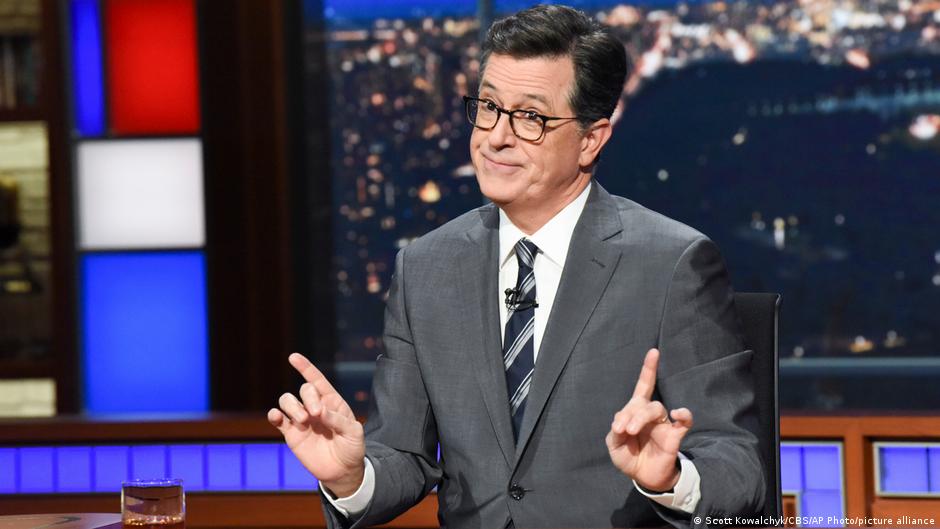
As the final curtain falls on "The Late Show," a brief history of the evolution of the late-night tradition and Stephen Colbert's satire. "It's not just the end of our show, it's the end of 'The Late Show' on CBS. I'm not being replaced. This is all just going away," Stephen Colbert told viewers last July, as he announced that the long-running program would be canceled at the end of his contract. The final episode of the network's late-night talk show airs on May 21. According to CBS, the cancellation was "purely a financial decision." Even though Colbert recognizes that the economic collapse of traditional broadcast TV models may have contributed to the decision, "there are many people who believe there was another reason," the talk show host noted in a recent interview with The Hollywood Reporter. Indeed, the announcement came just days after CBS and Paramount agreed to pay $16 million (€13.6 million) to resolve a lawsuit filed by President Donald Trump — a settlement Colbert had described in his show as "a big fat bribe." The settlement and the decision to cancel "The Late Show" also coincided with plans by Paramount — the owner of CBS — to take over movie studio Skydance. The multibillion-dollar merger required the US government's approval. Trumps say comedian Jimmy Kimmel should be fired To view this video please enable JavaScript, and consider upgrading to a web browser that supports HTML5 video Colbert, who has been hosting CBS' flagship late-night show for the past 11 years, is a renowned critic of Trump, and the US president openly celebrated the comedian's cancellation: "I absolutely love that Colbert got fired," the president wrote in a Truth Social post on July 18. "His talent was even less than his ratings. I hear Jimmy Kimmel is next. He has even less talent than Colbert!" "The Late Show" was the most-watched late-night program, averaging more than 2.7 million viewers in 2026; another 10 million people are subscribed to the show's YouTube channel.
Late night's political turn Late-night television has a long tradition in the US, going back to the 1950s. As the iconic host of NBC's "The Tonight Show” from 1962 to 1992, Johnny Carson turned the format into a cultural institution. His witty opening monologues became one of the staples of modern talk shows. Colbert's predecessor on CBS, David Letterman, was another key figure in modernizing the format; he notably added irreverence to his show — and his sarcastic style went on to influence an entire generation of talk show hosts, including Jon Stewart, Jimmy Kimmel and Stephen Colbert. Veteran late-night star David Letterman (left) welcomed his eventual successor, Stephen Colbert, as a guest in 2011 Image: CBS/ZUMA/picture alliance After Trump's first election win in 2016, political commentary significantly increased on late-night shows. Colbert leaned into that trend more heavily than some others because it matched his established identity: "Colbert clearly brought his own signature style," political satire researcher Sophia A. McClennen, professor of international affairs and comparative literature at Pennsylvania State University, told DW. As the author of books including "Colbert's America: Satire and Democracy" and "America According to Colbert: Satire as Public Pedagogy," McClennen has been analyzing Colbert's work since long before he became the host of the "Late Show" in 2015. US President Barack Obama (seen here with Colbert in 2014) gave another long interview to the host in one of the final episodes of 'The Late Show' Image: Andrew Harrer/dpa/picture alliance Colbert anticipated the 'post-truth' era The comedian first gained national recognition as a correspondent on Comedy Central's "The Daily Show" from 1997 to 2005. Colbert then started hosting for the same TV network his own news satire program, "The Colbert Report," from 2005 to 2014. In "The Colbert Report," the comedian played a satirical version of a conservative cable-news pundit. His show revolved around mocking political media, ideology and public hypocrisy.
Because he was performing as an alter ego, some people didn't understand this "highly sophisticated form of satire," explained McClennen. But she also noted that despite the irony and ambiguity of his persona, he was already teaching his audiences to be distrustful of power. Colbert played a caricatured, arrogant, right-wing pundit in 'The Colbert Report' Image: Andrew Harrer/epa/dpa/picture alliance As the professor pointed out, "on the very first episode of the 'Colbert Report,' he coined the term 'truthiness,'" which the comedian defined as "the belief in what you feel to be true rather than what the facts will support." That was in 2005 — more than a decade before Trump's first presidency, which infamously opened with false statements about the size of the crowd at his inauguration, lies that were then described as "alternative facts." Those terms came to embody the "post-truth" era that characterizes the current political landscape. An authoritarian's playbook: Silencing dissent When he became the host of "The Late Show,” Colbert dropped his fau conservative satirical character. But despite the change, his comedy remained deeply political. The cancellation of "The Late Show with Stephen Colbert" is not just about the career of one late-night host and his team. It can be seen as part of a broader trend to silence critics, used by authoritarian regimes to dismantle democratic institutions. "Comedians are anti-authoritarian by nature," Colbert told The New York Times in a recent interview ahead of his final episode. "And authoritarians are never going to like anybody to laugh at them." In a 'sign of late-night solidarity,' Jimmy Kimmel — who has also faced suspension — will not be airing a new episode of his show on May 21 Image: Randy Holmes/Disney via AP/picture alliance ABC's move to briefly pull Kimmel's show off the air in 2025, following his remarks about the assassination of conservative activist Charlie Kirk, was denounced as censorship.
The decision was reversed following fans' massive wave of boycotts of Disney, the owner of ABC, but the Trump administration is still engaged in a targeted effort to censor Disney through sweeping regulatory actions, according to the only Democrat on the Federal Commission (FCC), the government agency that regulates media across the US. In a letter sent to Disney on May 11, FCC Commissioner Anna Gomez revealed that there is currently a "coordinated campaign of censorship and control, carried out through the weaponization of the FCC's authority as a federal regulator and aimed at pressuring a free and independent press and all media into submission." Will Jimmy Kimmel be next? A commissioner in the Federal Communications Commission has accuses the agency of trying to pressure 'all media into submission' Image: Brian Cahn/ZUMA/picture alliance 'Comedy doesn't die' Despite this alarming trend, McClennen remains optimistic for the future of political satire. "Stephen Colbert will not be host of 'The Late Show' anymore after May 21. But will this mean the end of political satire? Will this mean the end of humor that's critical of the government? Absolutely no way," she said. "The human condition is to use political comedy to make sense of absurd political situations." McClennen is currently analyzing satire news shows produced since the 1990s, "from every continent, from Nigeria, from Taiwan, from Mexico..." And that research has led her to one conclusion: "Any time there are efforts to censor satire, it comes back fighting. The comedy doesn't die. It comes back stronger." Edited by: Sarah Hucal
 The BriefWire