Will Germany's aviation tax cut lower ticket prices?
The tax cut aims to ease the burden on the aviation industry and make flying slightly cheaper. However, some experts warn that it is unlikely
The tax cut aims to ease the burden on the aviation industry and make flying slightly cheaper. However, some experts warn that it is unlikely to have a meaningful impact on ticket prices. German lawmakers in the Bundestag on Thursday voted in favor of a proposal to cut aviation tax, raising hopes the move could make flying slightly cheaper in the country. If it’s approved by the upper house of parliament, the Bundesrat, the tax will be lowered from July 1 to the level it was at before the last increase in May 2024. Depending on the length of the flight, the tax will drop between €2.50 and €11.40 ($2.90 to $13.25) per flight. The measure is expected to reduce federal tax revenues by approximately €350 million per year. “We are, of course, grateful for this signal to reverse the latest tax increase, but that does not yet mark a turnaround,” Kay Lindemann, the Lufthansa Group's representative for policy and regulation, told DW. The aviation tax accounts for only a portion of the total tax burden, which has doubled in Germany since 2019, he pointed out. “If we impose too heavy a tax burden in Germany, we will lose aircraft to other locations because the business conditions there are more attractive, and that will result in a loss of economic value.” But some experts warn that the tax cut will not have a meaningful impact on ticket prices.
"The state is giving up revenue, but passengers will not see any of the tax reduction," said Gerald Wissel, founder and CEO of Hamburg, Germany-based aviation consulting firm Airborne Consulting. High costs render German airports uncompetitive To view this video please enable JavaScript, and consider upgrading to a web browser that supports HTML5 video According to the plan, the aviation tax for domestic and European flights, as well as other short-haul flights, will be reduced from €15.53 to €13.03. For medium-haul flights (destinations between 2,500 and 6,000 kilometers away), the tax will be cut from €39.34 to €33.01, while for long-haul flights, it will be down to €59.43, instead of €70.83. However, energy costs have risen sharply since the outbreak of the Iran war at the end of February. “The recent surge in kerosene prices has forced us to suspend about 1% of our least profitable routes," Lindemann said. Aviation ta A boon for the budget "The current reduction in the aviation tax is not sufficient to offset the competitive disadvantages resulting from government-imposed costs compared to other European countries," the Federal Association of the German Aviation Industry (BDL) said in a statement. These burdens are reflected in the industry's modest growth rates. Data compiled by the German Federal Statistics Office (Destatis) show 84 million passengers subject to aviation tax traveled in Germany last year — a steep climb from 62 million in 2022, but still below the 96 million recorded in 2019.
Tax revenue, however, has more than recovered, as income from the aviation levy has nearly doubled since its introduction in 2011, rising from €963 million to €2.1 billion last year. "Aviation taxes have become a fixed part of budget planning not only in Germany but across Europe," said Frank Fichert, expert on tourism and transport at Worms University of Applied Sciences in Germany. The revenue typically flows into national coffers, he noted, which is why lowering taxes is possible, but must be "compensated elsewhere" — a tall order given strained government finances. Aging fleets, soaring demand While passenger taxes are "an important factor," Fichert said they were "not the only factor influencing a location's attractiveness." Alongside taxes, airlines face mounting operational headaches, he added. A December 2024report by aviation industry group IATA warned of a "record high" backlog (cumulative number of unfulfilled orders) for new aircraft of 17,000 planes globally. "At present delivery rates, this would take 14 years to fulfil, double the si year average backlog for the 2013-2019 period," the report said. The average age of the global commercial aircraft fleet has climbed to 15 years — the highest in aviation history — while the industry is also grappling with a long-term pilot shortage, the report added. Aviation sees a new battle in the skies To view this video please enable JavaScript, and consider upgrading to a web browser that supports HTML5 video Wissel told DW that this crunch is hitting Europe's budget carriers particularly hard.
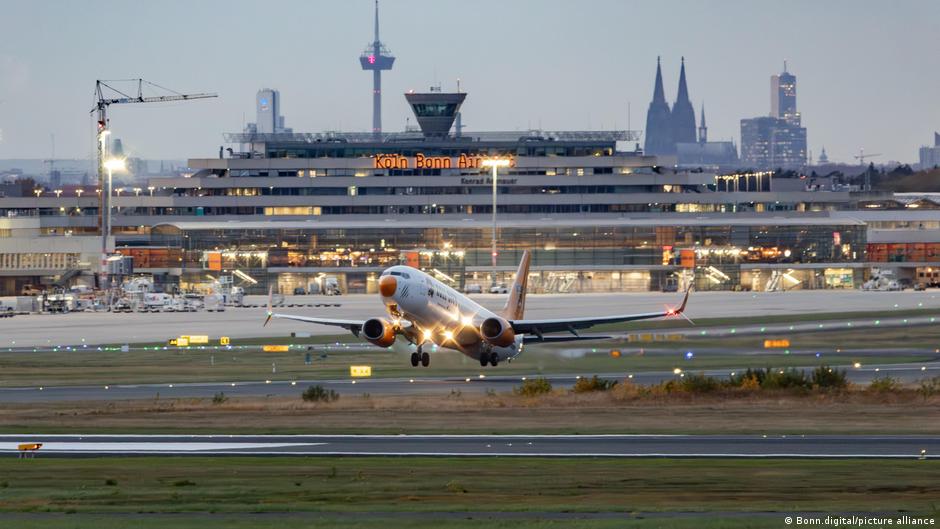
Ryanair has around 400 aircraft on order — 100 for replacement and 300 for growth. The same applies to EasyJet." Until those deliveries materialize, he argues, airlines will "concentrate precious capacity where profitability is highest." Airline cuts hit German airports While the two budget airlines cautiously welcomed the German aviation tax cut, their strategies are already reshaping the market. EasyJet plans to grow seat capacity in 2026 by just 2-4% — well below its group-wide target of around 7%. Ryanair, meanwhile, has canceled flights in Germany. The airline announced in late April that it would close its base at Berlin Airport, and halve the number of flights to the German capital starting this fall. The Cologne/Bonn airport in western Germany will lose 44 flights. Still, Germany remains Europe's largest aviation market — too big for major carriers to ignore. Wissel predicted that when the aircraft backlog has been resolved, "Ryanair will be back." "It won't leave [German flag carrier] Lufthansa with the field to itself," he added. This article was originally published on December 7, 2025. It was updated on May 21, 2026.
 The BriefWire