Ebola patient in Berlin: Why Germany's helping
An Ebola‑infected US doctor is being treated under the highest safety standards in a specialized isolation unit in the German capital, Berlin. The facilities are
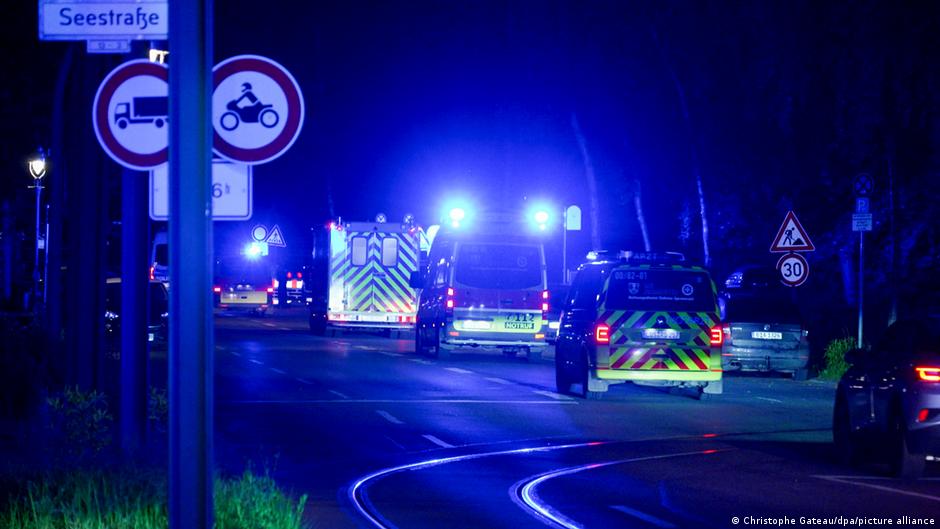
An Ebola‑infected US doctor is being treated under the highest safety standards in a specialized isolation unit in the German capital, Berlin. The facilities are considered to be among the best equipped worldwide. A US doctor infected with the Ebola virus is being treated in a high-level isolation unit at Berlin's Charite university hospital. The patient contracted the disease in the Democratic Republic of the Congo. US authorities had asked Germany for assistance due to the shorter flight distance to Europe compared with the United States. Several family members were also flown to Germany and are considered close contacts, in terms of the infection, according to the German Health Ministry. "A patient suffering from Ebola disease can be in a precarious condition. And on an evacuation airplane your means are limited. So, you want to have a short flight route but to a center with very high medical standards," said Thomas Pärisch, a medical doctor and CEO of Pandemic Shield consultancy, in an interview with DW. Most cases of Ebola have occurred on the African continent where in certain regions the virus is considered endemic. Ebola is a zoonotic infectious disease, which circulates in animals and can naturally jump to humans. US Ebola patient treated in Berlin Charite hospital To view this video please enable JavaScript, and consider upgrading to a web browser that supports HTML5 video High-security isolation units prevent transmission In Germany, Ebola patients are treated exclusively in high-level isolation units.
These facilities, such as those at the Charite, are completely separated from regular hospital operations. According to the German Health Ministry, this means there is no risk to the public. Safety measures are extensive: Outgoing air is filtered, wastewater is collected and neutralized and contaminated materials, such as protective suits, are disposed of separately from general hospital waste. Much of the medical care also takes place within the unit — from diagnostics to intensive care. Ebola belongs to the highest biological risk category (Risk Group 4), as do the Lassa and Marburg viruses. "Patients must therefore be transported and treated under the highest safety standards," said Torsten Feldt, an infectious disease physician and head of the Tropical Medicine Unit at the University Hospital of Heinrich Heine University in Düsseldorf, western Germany. Staff wear special protective suits fitted with an independent air supply, and the units are located in negative pressure rooms featuring advanced air filtration systems. The flow of fresh air into a negative pressure room is lower than that of the exhaust, and that reduces the risk of airborne contamination. The rooms also feature barriers, such an antechambers and self-closing interlocking doors. Germany boasts strong networks, experienced teams There are seven such facilities in Germany, designed to treat highly infectious, life-threatening diseases. They are all part of the STAKOB network, which is coordinated by the Robert Koch Institute, a German federal agency. The Charite's isolation unit is the largest of its kind in the country, and the only one that combines infectious disease treatment with intensive care.
The self-contained unit can isolate up to 20 patients, without disrupting normal hospital operations. Staff regularly train procedures and emergency scenarios. Some have international experience with other infectious outbreaks, including in West Africa. Germany has built "a very strong reputation" through this work, said Feldt. Rare but highly complex operations Cases such as these are rare in Germany. The last time patients were evacuated like this was during the biggest Ebola outbreak and epidemic to date, in West Africa in 2014 and 2015. Several patients were flown to Germany for treatment at the time. Every case involves enormous logistical and medical effort. "Even for very experienced doctors, it's something extraordinary," said Pärisch at Pandemic Shield. Studies have shown how crucial it is to have the best treatment conditions. While mortality rates during outbreaks in West Africa have sometimes reached more than 50%, they have been seen to drop to around 20% among patients treated in Europe after their evacuation from the center of the outbreak, Pärisch said. What makes this Ebola outbreak different from others? To view this video please enable JavaScript, and consider upgrading to a web browser that supports HTML5 video Intensive care is key to survival Treating Ebola is complex. For infections caused by the Zaire strain, specific medications are available, but for other variants, treatment is often experimental or limited to supportive care. "Supportive care can significantly reduce mortality," said Feldt. However, there is no approved vaccine for the Ebola strain in the current outbreak.
Two vaccines exist for the deadliest form of Ebola, known as Ebola virus disease (EVD). strains. But there is none for Bundibugyo virus, which caused the May 2026 outbreak. The World Health Organization (WHO) is evaluating experimental, candidate vaccines — those in pre-clinical or clinical trials — but it may take months before any become available. Containing Ebola requires global efforts The current Ebola outbreak shows the importance of global care systems. High-security medicine is not just a national responsibility, say experts, but part of global health preparedness. Even the most advanced medical systems have their limits. According to the WHO, containing the virus often depends on factors beyond clinical care. "The key to containing transmission lies in grassroots work within the communities" — including raising awareness, countering misinformation and ensuring compliance with hygiene measures, particularly during high-risk, contagion situations, such as funerals because Ebola is contagious even after a person's death. The case also highlights a structural imbalance that could be corrected: high-level isolation units are unevenly distributed around the world. It is important to build similar capacities in parts of the Global South, said Pärisch, at least in politically stable countries where such infrastructure is feasible. "These high-level isolation units [are only in] the Global North. I don't understand it," he said. This article was originally written in German.
 The BriefWire