How did Berlin's Jewish Hospital and hundreds of its patients survive the Holocaust?
When Red Army troops entered Berlin's Jewish Hospital in 1945, they were astonished to discover hundreds of Jews living just a couple of miles away
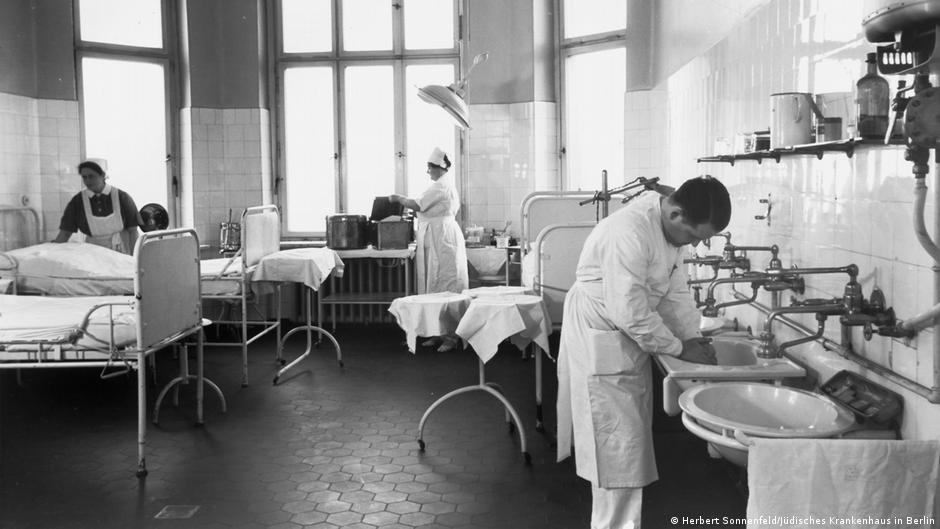
When Red Army troops entered Berlin's Jewish Hospital in 1945, they were astonished to discover hundreds of Jews living just a couple of miles away from Hitler's bunker. Picture the scene on April 24, 1945, as the Battle of Berlin between the Soviets and the Nazis raged: A group of Red Army soldiers arrive at Berlin's Jewish Hospital to find hundreds of people living and working in the battle-scarred facility. "You are Jews? Not possible. You can't be Jews, the Jews are all dead," one Russian soldier reportedly exclaims. Berlin's Jewish Hospital, together with the Jewish Cemetery Weissensee, is the only Jewish institution that continued to operate and survive the Nazi era. It still operates to this day. How could an institution designed to preserve Jewish life survive in the heart of the Nazi killing machine — and outlast it? Founded in 1756, the Jewish Hospital moved to its current location in the northwestern district of Wedding just before the outbreak of World War I in 1914. From its founding, the hospital was open to all patients regardless of their faith and was a prominent symbol of Jewish integration. But after the Socialists came to power in 1933, the hospital was barred from treating "Aryan" patients and non-Jewish employees were forced to resign. A controversial figure: Walter Lustig In December 1941, the Nazis established the so-called "Screening Unit for Transport Complaints" at the Jewish Hospital to determine the "fitness" of Jews for deportation and Walter Lustig was sent to head it. Lustig, a controversial figure who has been painted as both a hero and villain in the drama of the hospital's wartime history, was born into a Jewish family in Ratibor (today Racibórz in Poland) in 1891. He moved to Berlin in 1927 and initially worked for the police before his dismissal — because he was Jewish — in 1933. After his medical license was revoked in 1938, Lustig became head of the healthcare division at the Reich Association of Jews in Germany, established by the Nazis in 1939. After the Nazis seized power in 1933, it was forbidden for non-Jewish Germans to be treated at the Jewish Hospital Image: Herbert Sonnenfeld/Jüdisches Museum Berlin The Reich Association was a highly controversial organization. It initially helped Jews to emigrate out of Germany. It was compulsory for anyone identified as a Jew under the Nuremberg Laws to become a member and to share detailed personal information, such as asset inventories, with the organization. In 1941, emigration was forbidden, and the Reich Association was forced to carry out preparatory work for the compulsory deportation of Jews to ghettos, forced labor, concentration- and extermination camps in Germany-occupied Eastern Europe.
Deadly balancing act amid mass murder Jewish institutions, perhaps none more so than the Reich Association, were forced to perform a deadly balancing act in Nazi Germany. That included Walter Lustig in his role as hospital director and later head of the Reich Association. Some witnesses said he made a point of protecting many of the children housed at the hospital because of their "indeterminate racial status." Others remember how Lustig did nothing when Gestapo officers toured the hospital and handpicked people for deportation. There is also evidence that he sexually abused women in return for keeping them or their family members off the deportation lists. Operation 1005: How the Nazis concealed their atrocities To view this video please enable JavaScript, and consider upgrading to a web browser that supports HTML5 video For some, Lustig was the "utmost negative example" of collaboration with the Nazis, says Gideon Botsch, director of the Emil Julius Gumbel Research Center on Antisemitism and Right-Wing Extremism at the Moses Mendelssohn Center in Potsdam. "But the problematic system of this relationship between the Jewish community and the Nazi terror apparatus is of course inherent in the systematic abuse of Jewish institutions with the aim to destroy Jewish communities in Germany," Botsch told DW. Mass deportations of Jews from Berlin took place between October 1941 and April 1943, during which time Lustig became the hospital's director in 1942. Jews who were too sick to be transported out of Germany were granted a delay of up to three months in the hospital. Pregnant women were not spared unless they were about to give birth, after which they were granted six weeks before deportation together with their newborn babies. Berlin in 1943: 'Cleansed of Jews' At the end of February 1943, the so-called "Factory Roundup" ("Fabrikaktion") involved the sudden arrest of over 10,000 Jews in Berlin and the surrounding area and their deportation either to Theresienstadt Ghetto in German-occupied Czechoslovakia or the Birkenau death camp at Auschwitz in German-occupied Poland. During the roundup, almost the entire staff of the Reich Association of Jews was deported to Theresienstadt. During further arrests, several Jewish doctors, including some from the hospital, were taken from their homes to a transit camp in the city center. After the war, Hilde Kahan, Lustig's Jewish secretary, would describe how SS functionaries visited the hospital to discuss the deportation of 50% of its staff. "A week later, the affected employees were arrested in their homes along with their family members, and we never heard from them again [...]," she told the Berlin public prosecutor's office in the 1960s.
Jewish deportees are seen here upon their arrival at the Auschwitz-Birkenau extermination camp where around 1.1 million people were murdered during the Holocaust Image: United Archives International/IMAGO The Reich Association was officially dissolved in June 1943 after Nazi Propaganda Minister Joseph Goebbels declared Berlin "cleansed of Jews" ("Judenfrei"). In its place, the Nazis created its successor organization, the Residual Reich Association, headquartered at the Jewish Hospital, and made Lustig its head, albeit under the direct control of the Gestapo. Additional functions were then established at the hospital: The central shelter for Jewish orphans was moved there in June 1943; Berlin's last remaining transit camp for Jews destined for deportation was transferred to the hospital in March 1944. Nearly 50 Jewish men and women were also forced to work at the camp. Some were tasked with running it, others — so-called "grabbers" ("Greifer") — were ordered to track down Jews in hiding and were permitted to leave the grounds without wearing the Star of David. The lie that saved hundreds of lives In the final days of the war, an extraordinary incident saved the hospital's transit camp from liquidation. As the Third Reich collapsed around them, the Gestapo issued a last-ditch order to shoot all Jews in the camps. Curt Naumann was a Jewish former bank clerk who was conscripted to work at the hospital's camp. He was soon entrusted with "official" bank errands and then to run private errands for the camp commander and other Gestapo leaders, mainly by procuring items on the black market. On April 19, 1945, Naumann entered the office of Erich Möller, the head of the Jewish Affairs Department of the Gestapo, where he overheard Möller discussing the order. Naumann went directly to the Berlin Post Office, called the hospital and managed to convince the SS officer that the order to execute the Jewish captives was instead an order to release them. Naumann's quick thinking saved the lives of roughly 180 camp inmates. Holocaust survivors in post-war Germany To view this video please enable JavaScript, and consider upgrading to a web browser that supports HTML5 video Despite the release orders, many people remained in the hospital because the area around it was the scene of heavy fighting. When Soviet troops and Red Cross workers walked into the hospital on April 24, 1945, they found 370 patients, 1,000 residents, 93 children and 76 prisoners. By this time, the hospital's staff members were almost all people in "mixed marriages" ("Mischehen") between Jews and non-Jews — part of Nazi attempts to break up these marriages — and so-called "Geltungsjuden" of mixed Jewish and non-Jewish descent (for example children of "mixed marriages).
Some were Jews who had been taken there for treatment after falling ill in the custody of the Gestapo, the SS or police. One of those patients was Bruno Blau, a Jewish lawyer. He had been transferred to the Jewish Hospital by the Gestapo in 1942 while serving a three-year prison sentence in Tegel. He was diagnosed with cancer and kept for treatment. In his 2003 book "Refuge in Hell: How Berlin's Jewish Hospital Outlast the Nazis," Daniel B. Silver speculates that this was perhaps down to "a virtually instinctive German sense of bureaucratic order [...] applied unthinkingly, even in the midst of mass murder." Berlin's Jewish Hospital is still operating in the same location to this day, despite facing insolvency Image: Schöning/IMAGO Neither a story of resistance nor of rescue The survival of the hospital and the many people in it is not as strange as it might first sound, says Beate Meyer, a former historian at the Institute for the History of the German Jews in Hamburg. "It was in the interests of those in power to keep the hospital open," she explains. "It was not an act of resistance in that sense. For the Jews it was a workplace and so long as the people there could be put to work, they were to some extent protected from deportation, even though being under constant surveillance by the Gestapo was, of course, dangerous." For Botsch, the story of the hospital's endurance is neither one of resistance nor rescue. "By 1943, most members of the Jewish community had been deported to Theresienstadt or assassinated and who was left were the most useful instruments, from the perspective of the Gestapo, with which to fulfil the job of destroying German Jewry," he says. The streets of Berlin were torn apart during heavy fighting between Soviet and Nazi troops in 1945 Image: ITAR-TASS/IMAGO So what happened to Walter Lustig? In the immediate aftermath of the war, Lustig had hoped to rebuild the Jewish community and serve as its leader in Allied-occupied Berlin. However, a Jewish boxer who had survived the war identified Lustig as the man who had had his parents deported and knocked him to the ground. Lustig was last seen getting into an official Soviet limousine, accompanied by two uniformed officers in June 1945. Deemed a Nazi collaborator, it is assumed he was shot in the woods a short time later. Edited by: Sarah Hofmann and Felix Tamsut
 The BriefWire