Iran war: Oil shortages threaten global energy security
Strategic petroleum reserves are declining rapidly as countries release emergency crude supplies to cushion the economic impact of the Middle East conflict. The Iran war
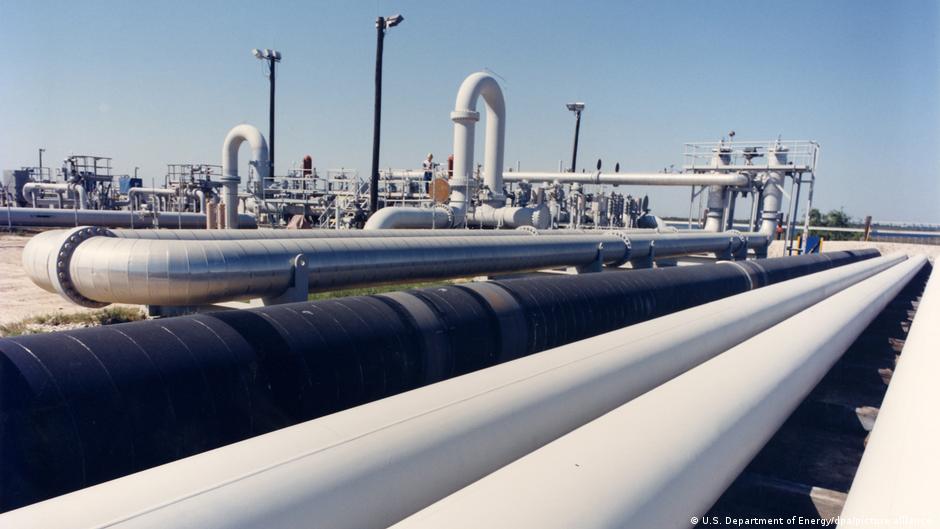
Strategic petroleum reserves are declining rapidly as countries release emergency crude supplies to cushion the economic impact of the Middle East conflict. The Iran war and the subsequent closure of the Strait of Hormuz — a key waterway through which about 20% of the global oil trade passed before the conflict — have triggered an oil supply shock on a scale unseen in decades. The crunch has sent countries worldwide scrambling for alternatives to fill the lost supply. Many governments, particularly in Asian countries that are heavily dependent on Middle Eastern energy, have also introduced measures to curb fuel demand. The International Energy Agency (IEA) coordinated a massive release of oil reserves in March — about 400 million barrels — from the emergency stockpiles of industrialized countries. The move was aimed at ensuring adequate supply and stabilizing crude prices. Strategic reserves provide buffer from oil shock Before the war, global crude oil markets were in surplus. Major economies built up vast strategic reserves, with the largest stockpiles globally held by China, the United States, and Japan. As of December 2025, China had nearly 1.4 billion barrels in its inventories, including both commercial and government-held reserves, according to US Energy Information Administration (EIA) data. The US maintained around 413 million barrels in its Strategic Petroleum Reserve, and a further 411 million barrels of commercial crude oil inventories. Japan held the third-largest strategic oil inventories, with about 263 million barrels in government-controlled reserves alone. EU countries, meanwhile, are required by law to maintain emergency stocks equal to at least 90 days of net imports or 61 days of consumption. The bloc's nations contributed roughly 20% of the 400 million barrels released as part of the IEA-coordinated move, with Germany releasing 19.5 million barrels, then France (14.6), Spain (11.6) and Italy (10).
India held around 21 million barrels in its strategic reserves, according to the US EIA. They currently provide coverage of about 9.5 days of net oil imports, according to S&P Global. But coverage rises to about 74 days when factoring in reserves held by state-run oil firms. In addition to these strategic reserves, millions of barrels of Russian crude sitting on oil tankers stranded at sea also became available for buyers in Asia after the US temporarily waived sanctions on this oil to boost global supply. When will oil reserves hit critical low levels? These oil inventories have so far helped absorb the energy shock and manage supply volatility. But nearly three months after the war broke out, oil traffic through Hormuz remains at a standstill despite hopes that Washington and Tehran are inching toward a deal to end the conflict and reopen the crucial waterway. As the disruption persists, countries have continued to draw down both strategic reserves and commercial inventories at a rapid pace. The IEA said global observed oil inventories fell at a record pace in March and April, dropping by 246 million barrels. The agency's chief, Fatih Birol, recently warned that oil stocks are "not endless" and are falling "very fast" around the world. He also stressed that it will take "a lot of time" for production and refining capacity to return to pre-war levels. US investment bank Goldman Sachs issued a similar warning last week, saying global oil stockpiles are being drawn down at a record pace this month. "At the current pace of drawdown, commercial oil stocks could reach critically low levels by the end of June," Neil Shearing, chief economist at Capital Economics, wrote in a research note on May 18.
If supply conditions don't improve soon, "prices could rise sharply," Shearing warned. Iran war: Who benefits from the oil price shock? To view this video please enable JavaScript, and consider upgrading to a web browser that supports HTML5 video How will the drawdown impact prices? The situation has raised fears of shortages, particularly during peak summer demand. If supply disruptions persist, "shortages will not be felt as acutely across all geographies and sectors," Antoine Halff, non-resident fellow and energy expert at Columbia University's Center on Global Energy Policy, told DW. He noted that Asian countries are likely to be the most affected because of their heavy reliance on Middle Eastern energy, while air travel and aviation fuel are among the sectors and product categories most acutely impacted. It will also drive a surge in oil prices, which "will be felt everywhere, including in countries that benefit from ample domestic supply such as the US," Halff said. Crude prices already remain elevated relative to pre-conflict levels, reflecting supply constraints and a geopolitical risk premium. At the same time, prices have been volatile and sensitive to headlines, declining after statements indicating a quick resolution to the conflict and spiking when signs suggest that the strait will remain closed for longer. Helima Croft, head of Global Commodity Strategy and MENA Research at RBC Capital Markets, believes the markets may be underestimating the challenges involved in resolving the conflict. "The fundamental reality is that expectations for a near-term, full Hormuz recovery rest on unrealistic assumptions about the ease of resolution and the strategic calculations of all parties involved," she wrote in a report. If the current rate of supply loss continues, the expert estimates, "cumulative crude losses will exceed 1 billion barrels by month-end and approach 1.5 billion barrels if the situation remains unchanged through June." This will drive oil prices toward 2008 peak levels, she said.
"At that stage, demand destruction will likely be what balances the market." Some countries have already introduced measures to curb demand and conserve fuel, such as shorter workweeks in the Philippines and reduced transport use in places like Pakistan. Indians fall back on polluting fuels amid gas crunch To view this video please enable JavaScript, and consider upgrading to a web browser that supports HTML5 video Another coordinated release of strategic oil reserves? Amid depleting inventories, however, governments appear wary of a second coordinated release of strategic reserves. French Finance Minister Roland Lescure, who recently hosted his counterparts from G7 nations, told the Financial Times that the stocks are "finite" and they could not be released "without having visibility on the duration and intensity of the conflict at this stage." Halff said that should Hormuz remain blocked for much longer, "there just isn't much governments can do to ensure supply and keep prices in check at the same time." "Releasing oil from strategic reserves can help, but only up to a point, as supplies are not limitless," he said. Edited by: Rob Mudge
 The BriefWire