Reiche brings energy sector ties to German Economy Ministry
Economy Minister Reiche is a controversial figure. Her plans for new gas-fired power plants, rolling back plans for more renewables in the building sector and
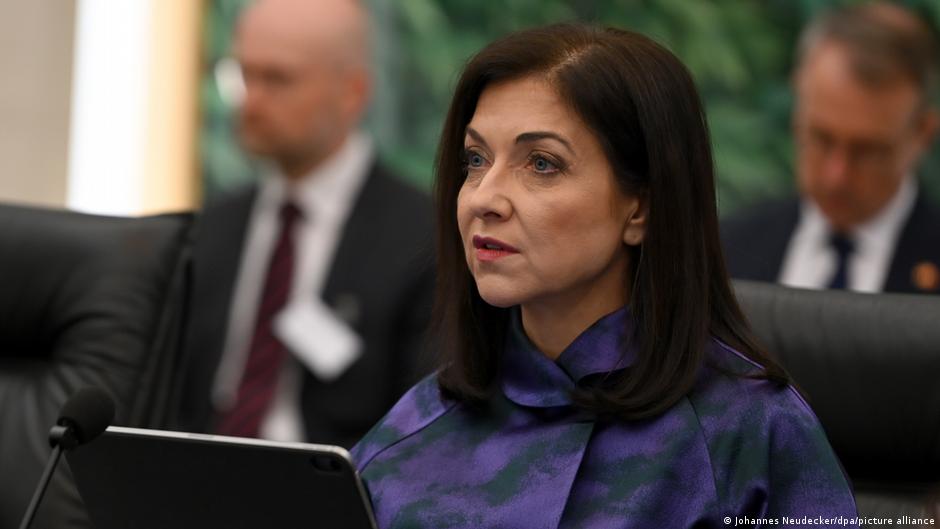
Economy Minister Reiche is a controversial figure. Her plans for new gas-fired power plants, rolling back plans for more renewables in the building sector and scrapping solar subsidies have been met with criticism. Fifty-two-year-old Katherina Reiche was already seen by many in Germany as combative before she was unexpectedly appointed as Chancellor Friedrich Merz's economic affairs minister in 2025. Environmentalists and climate activists have long regarded the politician from the conservative Christian Democratic Union (CDU) as pro-business and pro-industry, and as an opponent of Germany's ambitious shift toward renewable energy. After serving in the Bundestag from 1998 to 2015, the politician from Luckenwalde, Brandenburg — 80 kilometers (50 miles) south of Berlin — moved into the energy industry. Some critics referred to her as a lobbyist. Among other roles, Reiche served as chair of the executive board of Westenergie, the largest subsidiary of the energy giant E.ON. With around 10,000 employees, Westenergie supplies approximately 6.6 million people with a significant amount of fossil fuel energy. Rolling back Habeck's policies Shortly after taking office, Reiche made it clear that she intended to reverse the efforts of her predecessor, Robert Habeck of the environmentalist Green Party, to advance the energy transition in the heating systems of German homes.
Approximately 72% of German homes are heated with natural gas or oil. Alongside transportation, the building sector is considered the one in which the country has made the least progress in implementing its climate policy. Both sectors have been missing targets for years. Habeck wanted to change that and drafted a law stipulating that new heating systems would have to be powered mainly by renewable energy. There were fierce protests against this, particularly in the eastern part of the country; Habeck was accused of forcing people to install expensive heat pumps. When she came to office, Reiche quickly scrapped this provision and stated: "The Heating Act has cost us trust and divided society. We are setting a new course." At the same time, the minister announced her plan to build new gas-fired power plants. Claudia Kemfert, a researcher at the German Institute for Economic Research (DIW), rejects the accusations made by Reiche's critics who say that she has long been a lobbyist for the gas industry. "What matters is not so much her past as her current policies," Kemfert told DW. "The problem arises when fossil fuel interests are once again given priority over renewables, [energy] storage and efficiency. Germany needs future-oriented technologies instead of new dependencies on fossil fuels." Germany's chemical industry hit by high energy prices To view this video please enable JavaScript, and consider upgrading to a web browser that supports HTML5 video Reiche ruffles feathers Reiche received support from the country's major industry associations from the start because she announced that she would prioritize affordability in energy policy.
But now even the powerful Federation of German Industries (BDI) is more critical. The reason: The economy has not picked up as hoped, though this is certainly also due to international upheavals, such as US President Donald Trump's unpredictable tariff policy and, since March 2026, the US and Israel's war against Iran. Disagreement quickly arose within the federal government over how to address the high energy costs facing German citizens following the start of the war with Iran. Finance Minister Lars Klingbeil of the junior partner in government, the center-left Social Democratic Party (SPD), advocated for a tax on windfall profits of energy companies. Reiche swiftly rejected the idea and publicly declared that the SPD was constantly making proposals that were "expensive, ineffective and constitutionally questionable." Chancellor Friedrich Merz then urged her to show more restraint toward the smaller coalition partner. As a rule, however, the chancellor tends to protect Reiche: When she recently cut subsidies for private solar installations, Merz defended her on public broadcaster ARD. "We pay a high subsidy from the federal budget for electricity that isn't needed. Katherina Reiche has made proposals on how we can limit this, how we can curb it, how we can reduce it," the chancellor said after Reiche had decided to no longer pay compensation if solar power cannot be fed into the grid, for example during grid overloads.
Is this Germany's most advanced AI factory? To view this video please enable JavaScript, and consider upgrading to a web browser that supports HTML5 video Reiche woos China In late May, Reiche embarked on her first visit to China. For two days, she was seeking Chinese investment to help Germany catch up in the technology sector. Thirty-five business representatives were invited to accompany her, from companies and startups in the renewable energy and the e-mobility sector. Reiche's strategy in China seemed to focus on showing respect and recognition, praising the strength of her host country. Whether that will pay off remains to be seen. This article was translated from German.
 The BriefWire