International aid cuts complicate Congo's Ebola epidemic
The scaling back of development aid has contributed to the inability to contain the Ebola outbreak in the Democratic Republic of Congo. German organizations are
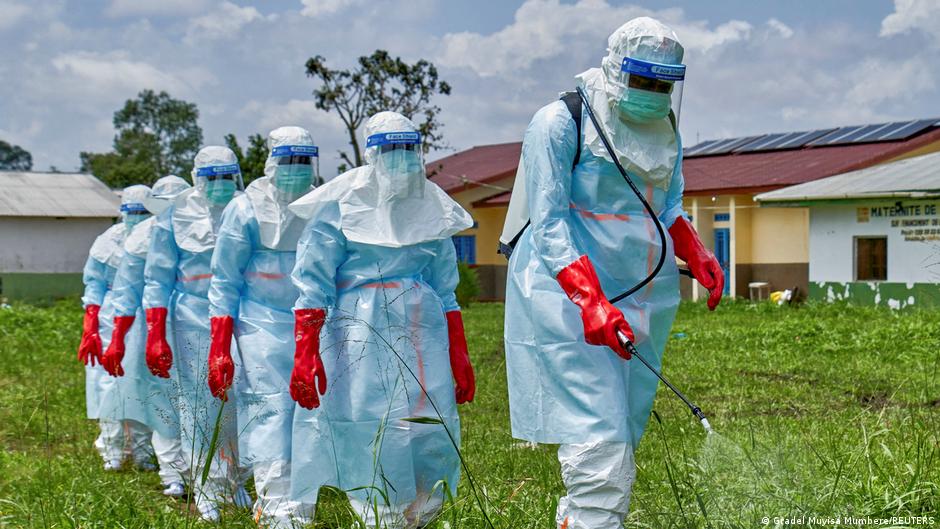
The scaling back of development aid has contributed to the inability to contain the Ebola outbreak in the Democratic Republic of Congo. German organizations are calling for a major spending boost to help stop the spread. The Ebola epidemic continues to grow in the provinces of Ituri and North Kivu in the east of the Democratic Republic of the Congo (DRC), with more than 900 suspected cases and 220 deaths so far. The World Health Organization (WHO) fears that the virus will keep continue to spread in DRC. "We are facing an extremely serious and difficult outbreak. It will get worse before it gets better," WHO chief Tedros Adhanom Ghebreyesus said earlier this week. The global health body wants to provide help on the ground as quickly as possible by sending equipment and medical experts. The WHO's funds, however, are limited, especially since the US withdrew from the body. It was the single largest contributor to the global health organization. This shortfall in funding forced the WHO to reduce and even cut certain programs, including in DRC. Although Germany is currently the largest donor to the WHO, it has reduced its contributions. It has also cut back the German Ministry for Economic Cooperation and Development's (BMZ) budget this year. "The 2026 budget shows that all funds allocated to the Ministry of Health and the Ministry for Economic Cooperation and Development (BMZ) have been scaled back," said Julia Stoffner, a health policy expert at the German Protestant aid organization Brot für die Welt.
Global health care expert Julia Stoffner criticizes that aid budgets have been cut Image: Bernd Riegert/DW These budget cuts include voluntary contributions to the WHO. The BMZ has been dialing back funding for health care programs for years, Stoffner tells DW: "When health systems in the global south become weaker and weaker or are no longer supported, this contributes to outbreaks like the one in the DRC going unnoticed for a very long time before becoming apparent." CARE, another humanitarian relief agency, has also urged the international community to invest more in aid and education. Caritas, a Catholic welfare organization, has published a similar appeal. Insufficient funds to fight Ebola Josue Ibulungu runs the office of German disaster relief organization Diakonie in Goma, the capital of North Tivu Province, in eastern DRC. He is trying to organize help for those in the Ebola outbreak region but said only 30% of the demand can met. "The situation is very difficult for all humanitarian aid workers, funding cuts from many donors make the situation very difficult. Organizations are even struggling to find funds to make Ebola vaccinations possible," he told DW. Josue Ibulungu says health care workers and doctors on the ground are under immense pressure Image: Kerem Uzel/Diakonie Katastrophenhilfe "Many hospitals have been destroyed by the war," Ibulungu added. "This makes it very hard for doctors and nurses to help Ebola patients because they lack the necessary equipment." Government troops, militias, insurgents and criminal gangs have been fighting for dominance over eastern DRC for decades.
The tensions stem from a desire to control natural resources, ethnic conflicts and Rwandan and Ugandan geopolitical interest. Germany's BMZ said the DRC government has received around €160 million in development aid earmarked for 2026 and 2027. This is less than what was provided in previous years, as the BMZ's budget has been reduced for several years running. Disease prevention is not a single BMZ budget item, but addressed through various programs, ministry spokesperson Benedikt Schöneck said on Wednesday: "Looking to the future, it is clear that cuts in prevention support will of course have a corresponding impact." German BMZ Minister Reem Alabali Radovan's budget has seen serious cuts Image: Ronka Oberhammer/DW Images He also said Germany was providing "massive funds" to create financial security for international initiatives in the coming years, yet failed to provide any concrete figures. While funds had been reduced, the BMZ was committed to providing reliable assistance in epidemic prevention, Schöneck said. The ministry wants to dispatch a group of experts to eastern DRC, or establish one in the region, to train additional aid workers on the ground. Aid boost needed Brot für die Welt is urging a major funding boost to tackle the Ebola epidemic. The 500 protective suits pledged by the BMZ are insufficient, Stoffner told DW. "Funding for global health efforts as a whole must be increased," she said. "Civil society organizations on the ground must be strengthened, as these are the people who know the needs and the regions best.
They have access to the communities and have their trust. The local population is crucial to containing this outbreak, especially as there are no vaccines." The Bundibugyo strain of the Ebola virus, for which there is neither a vaccine nor a cure, is rampant in eastern DRC. Developing a vaccine for this variant will take at least nine months, predicted Gisela Schneider of the German Institute for Medical Mission, a Christian aid organization focused on global health. Right now, there is an urgent lack of rapid testing kits and labs to trace and track the Bundibugyo strain outbreak. An Ebola isolation site was set on fire in Rwampara, eastern DRC, after relatives sought to bury a deceased family member Image: Xinhua/IMAGO German Health Minister Karl Lauterbach, who was in office during the COVID-19 pandemic, is also calling for an increase in development aid to combat the pandemic. He said that battling the spread of epidemics on the African continent is not only a humanitarian necessity, but in Europe's own interest. "Eroding health care systems could cause a major influx of refugees from African countries in Europe," Lauterbach told German daily Rheinische Post. He added that demands expressed by right-wing populists to further cut development aid were wrong and could "backfire." This article was originally written in German.
 The BriefWire