Swing Youth: In Nazi Germany, jazz was an act of defiance
The Nazis denounced jazz music as "degenerate art," despite its widespread popularity in Germany. As the Nazis clamped down on expression, groups of jazz-loving teenagers
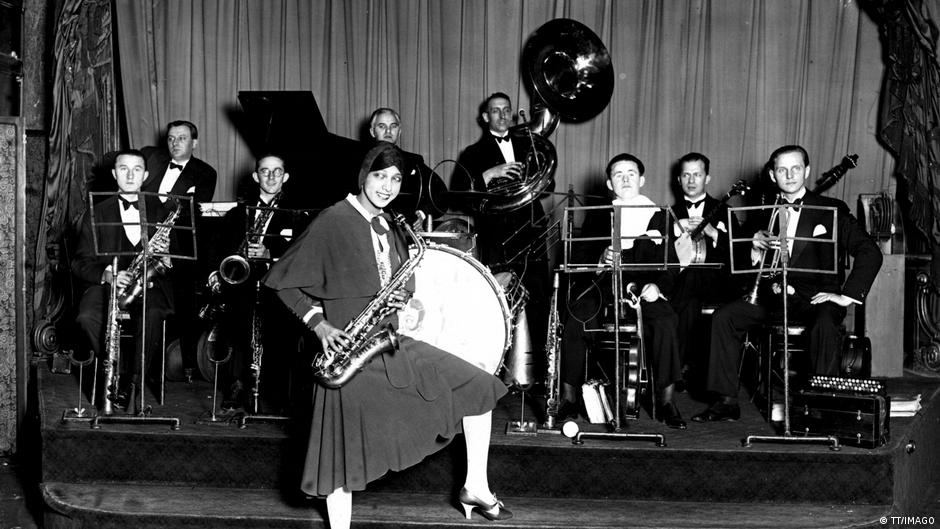
The Nazis denounced jazz music as "degenerate art," despite its widespread popularity in Germany. As the Nazis clamped down on expression, groups of jazz-loving teenagers formed the Swing Youth to rebel. The interwar Weimar Republic period is often referred to as a "Golden Age" of culture and creativity in Germany. It was a time when groundbreaking movements, from Bauhaus architecture and experimental cinema to avant-garde art and theater, flourished against the backdrop of economic catastrophe and extreme political polarization. In cities such as Berlin, where speakeasies, cabarets and hedonistic nightlife were the norm, a radical new genre of music became immensely popular. Jazz, which emerged from African American communities in the Deep South, was first brought to Germany by pioneering artists from the US, UK and France after World War I. Josephine Baker, the US-born dancer, actress and jazz artist who found fame in 1920s Paris, became a huge star in Germany after her sensational debut as the "Black Venus" in Berlin in 1926. By the 1930s, records by jazz icons such as Louis Armstrong and Duke Ellington were being played all over Germany. Baker would become known for her civil rights activism in the US Image: Keystone Archives/HIP/picture-alliance But after the Nazis seized power in 1933, modern art forms like jazz came under extreme pressure. The white supremacist Nazis, who believed that Germanic peoples belonged to a superior "Aryan master race", sought to align German society through a process known as Gleichschaltung (synchronization). This was the process of Nazification through which all aspects of society from politics and law, into art, music and everyday life, were submerged into a totalitarian system of control.
The Reich Culture Chamber (Reichskulturkammer) placed music, arts, literature, theater, radio, film and the press under state supervision, allowing only artists belonging to Nazi-affiliated bodies to work. The Nazis produced touring exhibitions denouncing so-called 'degenerate' art and music, pictured here in Düsseldorf in 1938, and sought to link jazz with Jewish identity Image: TT/IMAGO In 1937 and 1938, the Nazis introduced the labels "degenerate art" ("entartete Kunst") and "degenerate music" ("entartete Musik") to persecute artists and artworks that did not conform to the Nazi ideal of art and beauty, or to the Nazis' racial worldview. By 1935, it was forbidden to broadcast jazz, which, with its Black American roots, the Nazis denounced as inferior. Many jazz promoters and musicians were also Jewish, and the Nazis spread antisemitic and racist propaganda about its origins, linking jazz with Jewish people. A racist caricature of a jazz musician wearing a Star of David appeared on a propaganda poster for the 1938 Nazi exhibition 'Entartete Musik' ('Degenerate Music') Image: Fine Art Images/Heritage Images/IMAGO Individual artists were eventually banned, as was listening to foreign radio stations. However, jazz music was never completely outlawed by Nazis. Due to its widespread popularity, there were even attempts to create a more "Germanic" form of jazz music. Enter the Swing Youth (Swing-Jugend), which emerged as a counterculture movement among affluent teenagers in the northern city of Hamburg in 1939. The movement quickly spread to other cities like Berlin. Youth under Nazi rule: from repression to resistance German youth had been the target of Nazi propaganda since the 1920s.
After 1933, escaping indoctrination became almost impossible as youth organizations had become a key tool of ideological control. After it restricted freedom of association and dissolved independent youth groups, the Socialist regime established organizations such as the Hitler Youth (Hitlerjugend) and the League of German Girls (Bund Deutscher Mädel). Their purpose was to mold young Germans into loyal and disciplined members of the "people's community" ("Volksgemeinschaft"), starting from an early age. The purpose of the Hitler Youth, pictured here in Nuremberg in 1940, was to indoctrinate young people in Nazi ideology Image: United Archives/kpa Keystone/IMAGO But not all young people in Nazi Germany supported the regime's ideology, and for the Swing Youth, jazz music became a vehicle for rebellion. Its members tried to distinguish themselves from Nazi youth movements by appropriating American fashion trends and names. They wore their hair long and dressed in plaid jackets to meet in cafes and clubs playing swing, a jazz sub-genre. They were also said to have greeted one another with the phrase: "Swing Heil!" The term "Swing Youth" likely originated with the authorities who persecuted them as a label for young people who distanced themselves from the Nazi regime primarily through their preference for swing. "They stood up for a certain form of freedom, resisting the idea of being the same as everyone else," historian Mascha Wilke from the Foundation for Remembrance, Responsibility and Future (EVZ) told DW. Historian Mascha Wilke emphasized the bravery of the young people who 'dared to be themselves' Image: Melissa Escarria Parra/DW While the Swing Youth's resistance to Nazi ideology was more cultural than political, it nevertheless became a target of repression.
Its adherents were even monitored by the Nazi Security Services, which according to musicologist Ralph Willett, accused them of "hankering after democratic freedom and American casualness." Some were arrested and even sent to concentration camps. Wilke also refers to an incident in which detainees reportedly sang and danced to Louis Armstrong's "Jeepers Creepers" inside a camp — an act she describes as "incredibly brave." The memory of the Swing Youth was honored at a 'Liberation Dance' in Berlin on May 8, 2026 Image: Melissa Escarria Parra/DW Jazz and swing enthusiasts of all generations gathered at Berlin's Besselpark on May 8, 2026, to mark the 81st anniversary of Liberation Day (Tag der Befreiung), commemorating the unconditional surrender of the Wehrmacht, and to honor those persecuted for their love of jazz and swing music. Organized by the EVZ, participants were invited to dance to swing. Newcomers could also receive guidance from Natalie Reinsch, a historian and professional swing dancer working for the Bremen Alliance for German-Czech Cooperation, who was invited by the EVZ. "Totalitarian regimes have always suppressed art forms like swing and jazz, because they stand for individuality," Reinsch said. Edited by: Helen Whittle
 The BriefWire