Space race: Why Portugal is reaching for the stars
A spaceport is being built on a small Portuguese island in the Atlantic. Is Portugal on the verge of becoming a space nation? Imagine rockets
A spaceport is being built on a small Portuguese island in the Atlantic. Is Portugal on the verge of becoming a space nation? Imagine rockets being launched from the Azores, an archipelago out in the Atlantic Ocean, carrying Portuguese-built satellites into space — and then picture reusable space capsules returning to base. While this may sound like a rather futuristic scenario, elements of it could soon become reality. Portugal, after all, is working hard to become a spacefaring nation, with the help of its many highly skilled engineers and EU cooperation. "Portugal has modernized considerably over the past 20 years," Portuguese Space Agency President Ricardo Conde tells DW. "Our universities produce outstanding engineers. We have created human capital that we can build on." Conde, whose agency was founded in 2019, says about 80 different companies now employ some 2,000 highly qualified workers across Portugal's space industry. It generated a turnover of €200 million ($232.5 million) last year, according to Conde, with even greater productivity expected this year. This is "because we hold another trump card: the Azores," Conde says. Indeed, Portugal is presently building a spaceport on the sleepy Azores island of Santa Maria. "This will be a big deal," Ivo Vieira of space industry group AED Cluster Portugal tells DW. "The European Space Rider spaceplane is even slated to land there in 2028." It will float down on huge parachutes and land right beside the old runway, which was once built by the Americans during World War II and is now barely ever used.
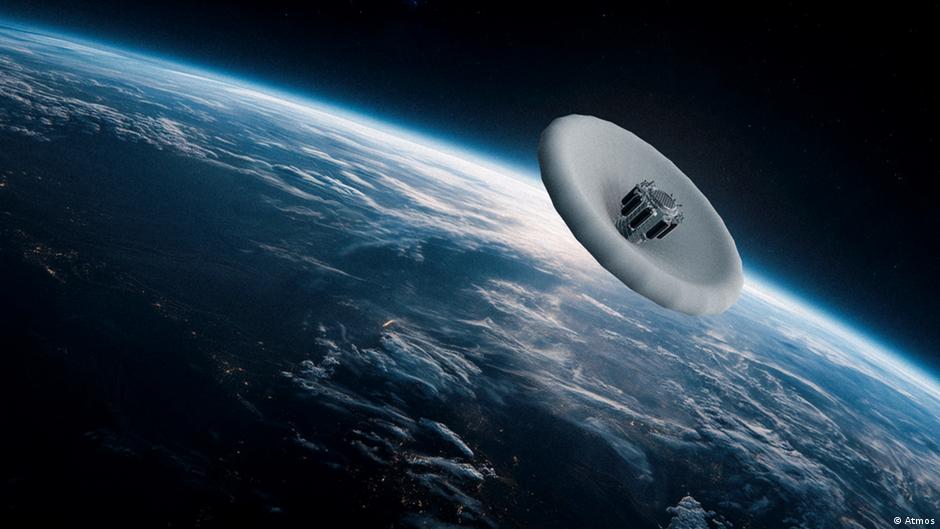
Vieira says a rocket launch is planned for 2030, which will send "a South Korean satellite into orbit." Several satellite communication antennas are already in operation on the island, he adds. This Santa Maria site could see a growing number of rocket launches Image: ASC - Atlantic Spaceport Consortium Will Portugal seek to rival US spaceports? Is Portugal in the process of establishing its very own Cape Canaveral? Not exactly. Bruno Carvalho of spaceport operator ASC says it will not rival the vast US rocket launch site. "It is much smaller and more of an addition to the European Kourou spaceport in French Guiana," Carvalho explains. "We will be a cost-effective launch site for smaller rockets with smaller satellites, within the EU, which is strategically important." The space port's remote location in the Atlantic also means spacecrafts can safely land in the ocean without posing a potential danger to anyone. Thirty-five people will work at the spaceport once everything is set up and ready. This makes for a far smaller and cheaper operation than US launch sites. Carvalho also wants the site to tap into local resources and hopes it could strengthen the local economy: "Maybe we can bring back young people who have left the island." The first Azores spacecraft landing could take place later this year. "Portuguese authorities have approved the first EU splashdown for the Phoenix 2.1 transport space capsule," Marta Oliveira of ATMOS Space Cargo tells DW.
Oliveira, co-founder of the German space logistics firm, aims to deliver satellites to orbit at low cost using reusable capsules. She jokingly describes her venture as "the FedEx of space." For now, transporters are sent into space using SpaceX, though that could change, says Oliveira, as "we are in talks with European companies." The plan is for spacecraft to land in the Atlantic, near the Azores island of Santa Maria, with "ASC spaceport facilitating logistics and coordinating with the local authorities, which is ideal for us." Marta Oliveira says the Azores make an ideal base for rocket launches Image: Atmos Space Cargo Portugal's compact satellites What is still missing are satellites. "Three Portuguese centers are developing them," says Ricardo Conde. "One is the CEiiA consortium in Porto in the north, another is the Open Cosmos multinational at the university of Coimbra in the center of [Portugal] and a third is based in Lisbon, which mainly builds satellites in collaboration with the armed forces." They are small and used for commercial, military and mixed applications such as communications, Earth and ocean observation and, most recently, fighting wildfires. CEiiA, which also develops mobility and aircraft technology, is already making big progress. "We entered the space sector in 2018," Andre Dias, who is responsible for the consortium's downstream division, tells DW. "Our aim is to develop an industry for high-resolution satellites." To achieve this, a research and development facility will be established in Portugal's north, near the city of Guimaraes, to "partner with the city and local university there, as we want to increase our production capacity by a factor of four or five." Germany launches €35-billion military space program To view this video please enable JavaScript, and consider upgrading to a web browser that supports HTML5 video CEiiA has the capacity to build four civilian satellites, weighing up to 500 kilograms (roughly 1,100 pounds), every year, says Dias.
He adds that demand is growing steadily and expanding capacity could open the door to more international contracts. One can see decentralization playing out between "the large European space nations like Germanyand France and smaller countries such as Portugal, so what we are seeing is a kind of democratization of space travel," Dias says. "We are specializing in small satellites that cost between €20 and 30 million, not the big ones that can cost up to €500 million." While aiming to build compact units, the Portuguese space agency's plans are anything but modest. "We will have 30 satellites in space by 2030, some of them in collaboration with Spain," Conde tells DW. "We want to bring international players to Portugal to work with them and are building on European initiatives." This also applies to the military sector, he adds, which is becoming increasingly important. This article was translated from German.
 The BriefWire