Google mosquito army: Scientists say 'we must take action'
Google's Debug research program plans to release millions of sterile mosquitoes to fight species that spread diseases like dengue. How does the method work
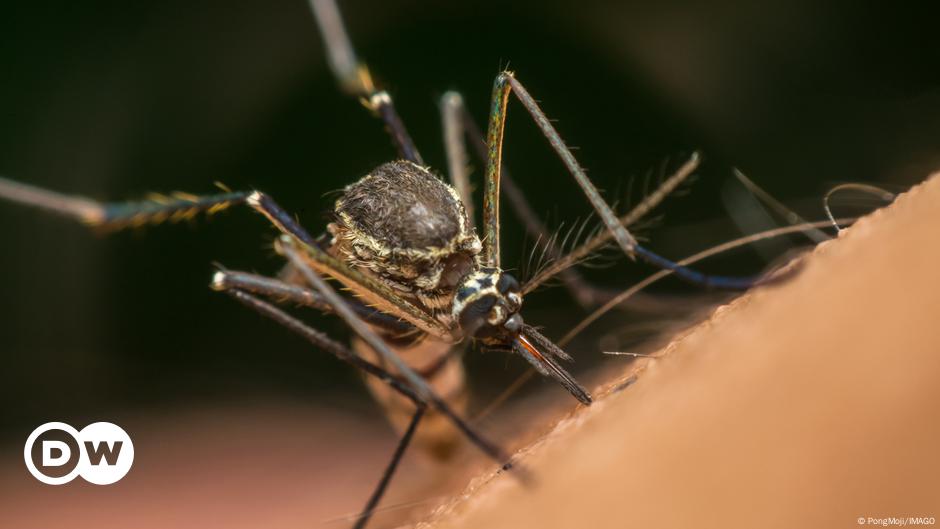
Google's Debug research program plans to release millions of sterile mosquitoes to fight species that spread diseases like dengue. How does the method work — and should humans interfere with nature like this? What's the best way to combat disease-spreading mosquitoes? More mosquitoes! At least that's the plan of scientists at Google's Debug program. The researchers want to release 16 million mosquitoes each in the US states of Florida and California in a first step. And then they want to do it all again next year. Trying to reduce the mosquito population by adding millions more sounds counterintuitive at first. But to understand the project, you have to look at what kind of mosquitoes the researchers are fighting — and what kind they're looking to release. In a nutshell, it's good mosquitoes vs. bad mosquitoes. Google's 'mosquito army' The researchers plan to "raise sterile males and release them into wild insect populations," according to the Debug website. "When a wild female mates with a sterile male, her eggs won't hatch. The population gets smaller with each generation." The male mosquitoes will be infected with bacteria called Wolbachia, which makes them sterile. In theory, that should lead to two things: The next generation of mosquitoes should shrink when the females' eggs are left unfertilized. And there won't be more bites for humans through the additional mosquitoes, because male mosquitoes don't bite. "Mosquitoes, like a lot of insects, only mate once in their lives," Robert Hancock, a mosquito behavior scientist at the Metropolitan State University of Denver in the US state of Colorado, told DW.
"That's the key for this whole thing to work." If a female mosquito chooses one of Google's male mosquitoes that carries the Wolbachia bacteria, her eggs won't hatch. Hancock, who is also the president of the West Central Mosquito & Vector Control Association in the US, says one female can lay more than 100 eggs. The Debug method would prevent these 100 or more mosquitoes from being born, and the same female mosquito would not lay any more eggs in her life. Do the math — with roughly 16 million sterile males released at a time, that's a lot of new mosquitoes prevented! Asian tiger mosquito fuels disease spread in Europe To view this video please enable JavaScript, and consider upgrading to a web browser that supports HTML5 video US government agency still has to ok mosquito release Separating male and female mosquitoes is not an easy feat. That's why the Debug researchers are working to develop "technologies that combine sensors, algorithms, and novel engineering to… quickly and accurately sort males from females." The technology isn't the only challenge — you can't just release millions of mosquitoes into the wild willy-nilly. Google filed for a permit with the US Environmental Protection Agency; the organization's decision is still awaited. Wanted dead: the Aedes aegypti mosquito The target of the Debug program aren't any mosquitoes native to Florida or California. The researchers aim to fight Aedes aegypti, an invasive species that's originally from Africa. This invader spreads dengue, yellow fever, Zika virus and chikungunya, a disease that comes with excruciating joint pain that can last for months or even years.
According to Debug, 40% of the world's population is at risk of contracting a disease spread by this very mosquito, which has invaded tropical, subtropical, and temperate regions across the world. Florida is a logical location in the US for programs like Debug. "In Florida, we have some of the longest established populations of Aedes aegypti," said Matthew DeGennaro, director of the Biomolecular Sciences Institute at Florida International University, in an interview with DW. "There is also some insecticide resistance." Mosquitoes and other insects can develop such resistances when insecticides are used abundantly. The process is similar to how bacteria in humans can develop antibiotic resistances when antibiotics are prescribed indiscriminately. Aedes aegypti: 'a very bad mosquito' Aedes aegypti is "a very bad mosquito," says Nathan Burkett-Cadena, an associate professor at the University of Florida's Medical Entomology Laboratory. Because it is not native to Florida, there aren't any animals that rely on this specific mosquito for food, Burkett-Cadena explained in an email to DW. "If Google began to target native mosquito species, then I would be concerned with cascading environmental consequences," he said. Since Aedes aegypti is not native to Florida, this shouldn't be a problem. Fighting dengue, Indonesia breeds bacteria-tainted mosquito To view this video please enable JavaScript, and consider upgrading to a web browser that supports HTML5 video 'I love mosquitoes' The World Mosquito Program, an organization run by Australia's Monash University, fights disease-spreading mosquitoes in various countries across the world. They, too, release mosquitoes infected with the Wolbachia bacteria in 15 nations across Asia, Oceania and the Americas.
According to the World Mosquito Program's monitoring, Wolbachia gets passed from one generation of mosquitoes to the next, decreasing the number of disease-spreading mosquitoes long-term. And, crucially, the organization states that "in areas where high levels of Wolbachia are present, we have not seen any dengue outbreaks." So, it seems like there really is a way to shrink the Aedes aegypti population. But is it ethical? Do humans have the right to interfere with nature to such a degree? Should we reduce populations, even pest populations, just because we can? Entomologists say 'yes.' "I 'love' mosquitoes," Burkett-Cadena said. "Most species do humans no harm whatsoever and they are actually beautiful organisms. However, in many places, human life is truly threatened by invasive… mosquito species, and those charged with protecting human life must take action." Biologist De Gennaro is of the same opinion. "The thing is, Aedes aegypti is a species that we have caused to spread," he said. "They have followed us around the world. They're like the cockroaches or rats of the mosquito world. If the climate is right and humans are there, you'll find Aedes aegypti. So, we have an obligation to control them." Edited by: Zulfikar Abbany This artical was originally published on June 2, 2026. It was updated the following day, June 3, 2026, to include additional expert comment.
 The BriefWire