Germany's UN defeat: What went wrong?
Austria and Portugal have won seats on the UN Security Council, ending Germany's 40-year streak. DW examines the foreign policy questions raised by Berlin's defeat
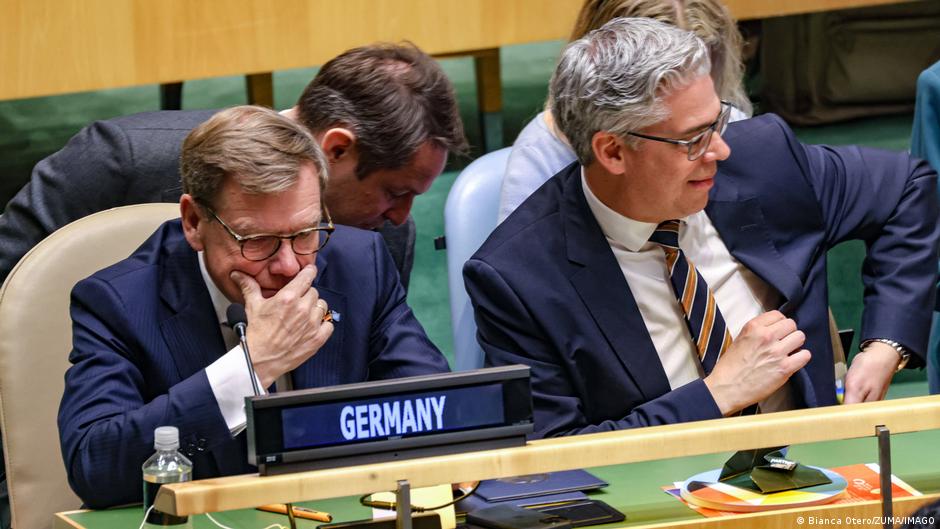
Austria and Portugal have won seats on the UN Security Council, ending Germany's 40-year streak. DW examines the foreign policy questions raised by Berlin's defeat. German Foreign Minister Johann Wadephul accepted the result with a solemn expression: The UN General Assembly had just elected Portugal and Austria as non-permanent members of the Security Council for 2027 and 2028 — not Germany. Wednesday's decision in New York was the most severe foreign policy defeat yet for the coalition government made up of the center-right Christian Democrats/Christian Social Union(CDU/CSU) and the center-left Social Democratic Party, in office for just over a year. Speaking with ARD television several hours later, Wadephul acknowledged as much. He even revealed that he had considered resigning in the event of a defeat, but ultimately dismissed the idea. "I have nothing to blame myself for," said the CDU politician. He conceded, however, that the decision was "a real disappointment," and promised to conduct a "thorough analysis" of the reasons for Germany's failure. How Germany's aid cuts may have cost it support After the United States, China and Japan, Germany is the largest contributor to the UN budget. Why wasn't that enough to secure the necessary votes, especially from countries in the Global South?
Critics — especially from Germany's opposition parties — have argued that government cuts to once-reliable development aid are to blame. Germany fails in bid for temporary seat on UNSC To view this video please enable JavaScript, and consider upgrading to a web browser that supports HTML5 video It's a view shared by nongovernmental organizations like ONE, which advocates for investment in Africa. "Those who, like the German government, want to make massive cuts to development cooperation for the fifth time in a row should not be surprised by a lack of support on the international stage," said Lisa Ditlmann, the NGO's director in Germany, after the vote. Other critics see Germany's belated application and its hesitant campaign for the candidacy as decisive factors. Austria and Portugal had already expressed their interest in a seat on the UN Security Council more than 10 years ago, and had shown up on multiple occasions with a strong government presence at UN headquarters in New York. Chancellor Friedrich Merz, on the other hand, chose not to attend the UN General Assembly last year. Then, as on Wednesday, he sent Wadephul. Is Germany still seen as a defender of international law? Some analysts believe the German government has not been clear on the importance it places on international law.
To put it another way: Why didn't Merz describe the US abduction of Venezuela's former leader, Nicolas Maduro, in early January for what many observers believe it was: a violation of international law? Many critics now say Merz was more concerned with not upsetting the unpredictable US president. Did Merz do too little to defend international law out of deference to US President Donald Trump? Image: Mark Schiefelbein/AP Photo/picture alliance The CDU's coalition partners, the Social Democrats, called Wednesday's decision a setback for foreign policy. "Those who claim to be the guardians of the rules-based international order must not apply double standards when it comes to international law," said their foreign policy expert, Adis Ahmetovic, in Berlin. "Where the impression of double standards arises, credibility suffers." Jan van Aken, co-chair of the socialist opposition Left party, put it more bluntly. "This is what happens when you shred international law," he said on ARD. Did Germany lose support over Israel and Russia? On the topic of international law, however, Germany's relationship with Israel is perhaps much more important. Like many other countries, Germany has become increasingly critical of the Israeli government's actions in Gaza following the Hamas-led terrorist attacks on October 7, 2023.
Berlin has also been worried about the recent attacks on Lebanon and the US-Israeli war against Iran. And yet, Germany has consistently rejected sanctions against Israel, citing Germany's historical responsibility toward Israel. Sources in government circles said Thursday that Germany had actually received enough commitments from other countries to reach the required two-thirds majority for a seat. According to these sources, this means numerous states did not keep their promises during the secret ballot. The significance of Russia's influence also remains unclear, as Russia had sought to prevent a German seat on the UN Security Council primarily because Germany is considered a strong supporter of Ukraine. For Germany, the failure of its bid for a seat on the UN Security Council marks a first. In addition to the five permanent members — the US, China, Russia, France and the United Kingdom — there are 10 non-permanent members who rotate every two years. Since 1987, Germany, one of the world's most economically powerful countries, had been elected to the body every eight years. That streak is now over. This article was originally written in German.
 The BriefWire