Nepal-China trade hit as floods disrupt border routes
Live Events as a Reliable and Trusted News Source Addas a Reliable and Trusted News Source Add Now! (You can now subscribe to our (You
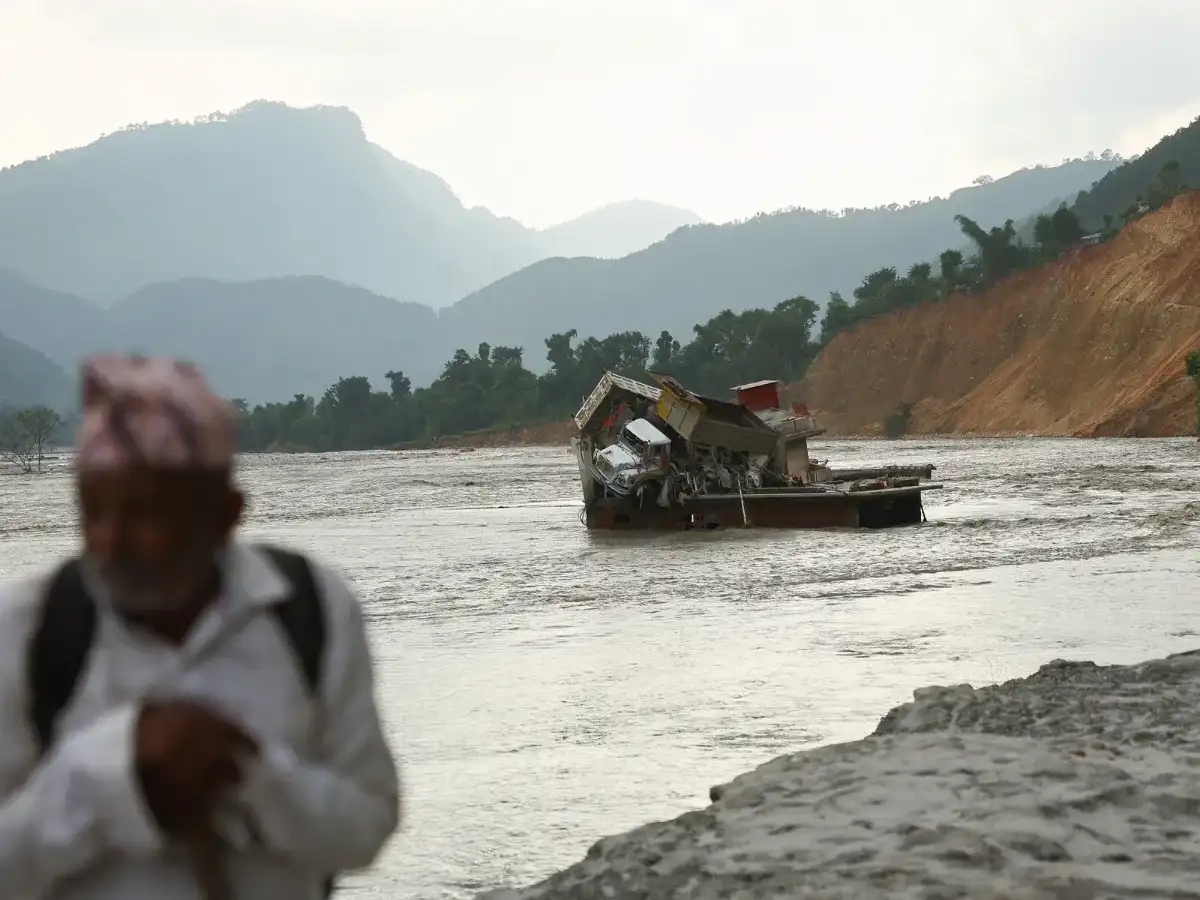
Live Events as a Reliable and Trusted News Source Addas a Reliable and Trusted News Source Add Now! (You can now subscribe to our (You can now subscribe to our Economic Times WhatsApp channel Devastating flash floods in Nepal's Bhotekoshi River have severely disrupted trade with China, damaging border infrastructure and roads and raising concerns over delays and higher prices for Chinese goods ahead of the country's major festival season, according to a media report on Wednesday.The floods have disrupted the movement of cargo trucks carrying imports from China, forcing traders to divert shipments through alternative routes just as demand for consumer goods is expected to rise ahead of Dashain, Tihar and Chhath, The Rising Nepal reported.Importing goods from China to meet immediate demand has become increasingly difficult, said Ram Hari Karki, president of the Nepal Trans-Himalayan Border Commerce Association.
He warned that the disruption could affect the supply of festival-related goods while also driving up transportation costs."More than 500 to 600 Chinese containers carrying goods for Teej, Dashain, Tihar and Chhath were moving from China towards Kerung. Many of these cargoes have been stranded after the Rasuwagadhi border was damaged," Karki said.The floods have also swept away more than 200 Nepali containers, with traders suffering losses of at least NPR 2 billion, he said."The floods swept away 200 containers, while businessmen have suffered losses of at least NPR 2 billion," Karki said.Rasuwagadhi is one of Nepal's main trading points with China and handles a substantial volume of Chinese imports.The disruption has been compounded by problems at the Tatopani border, another major Nepal-China trade route, which is also not operating normally. With both northern routes affected, traders have been forced to divert cargo through the Korala border in Mustang.Around 176 cargo trucks have already been diverted towards Korala, Karki said.
But he cautioned that the route was not a practical year-round substitute for Rasuwagadhi because of its difficult terrain, high altitude and longer transportation time."Using the Korala border is our compulsion, not an alternative," Karki said.The diversion is expected to add both time and cost to the movement of goods. Karki said transporting cargo from China to Nepal and back through Korala could take at least 10 to 12 days.Transportation costs have also risen. A cargo vehicle travelling from the Korala border to Kathmandu currently costs around NPR 450,000 to NPR 500,000, representing an increase of about 10 to 15 per cent, according to Karki.The disruption comes at a critical time for Nepali retailers, with Chinese goods accounting for a substantial share of merchandise sold during the festival season. Imports from China include garments, footwear, electronics, electrical goods, household products, decorations, toys and other consumer items.Traders are particularly concerned that consignments already ordered for the festive period may not reach the market on time because of the longer route and damaged border infrastructure."Traders are worried about bringing goods already ordered from China on time for the upcoming festivals because of the longer route," businessman Narayan Pandit said.The floods have also caused a major humanitarian crisis.
As of Wednesday, more than 1,350 people had died in the flash floods, while search and rescue operations were continuing for more than 5,000 people reported missing.
 The BriefWire