7-year-old falls in skating race, then stages epic comeback
AI-generated representation: ChatGPT 28 Jul 2026 | 16:25 Do you think social media has changed the parent-teen relationship? The race wasn't over when she fell
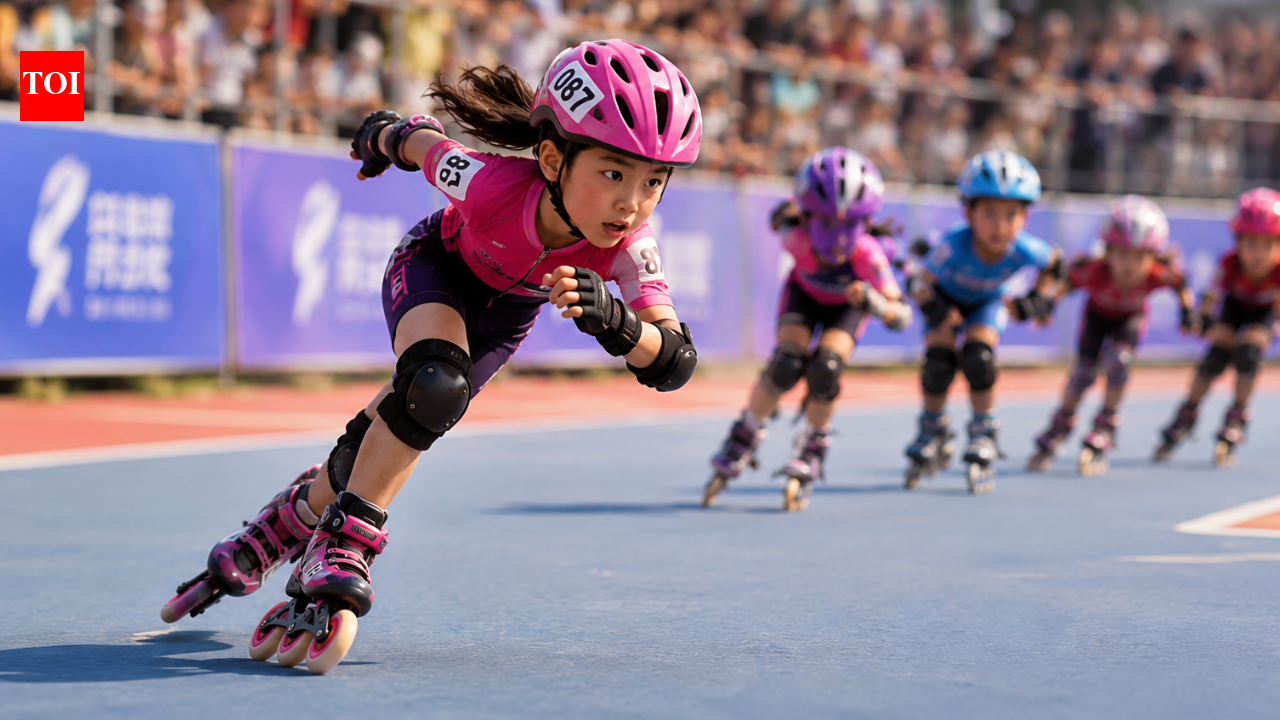
AI-generated representation: ChatGPT 28 Jul 2026 | 16:25 Do you think social media has changed the parent-teen relationship? The race wasn't over when she fell For parents, the real win may not be the medal Teach children that one bad moment doesn't define them A race can be lost in seconds. For seven-year-old Tangtang, it seemed to happen almost immediately. At a roller-skating competition in Wuhan, China, the young skater fell right at the start, while the other children quickly raced ahead. She was suddenly at the back of the pack, with the finish line still far away. But Tangtang did something that turned the race into a memorable lesson in resilience: she got back up and kept skating.Instead of giving up after the early fall, the seven-year-old began chasing the other competitors. One by one, she overtook them, eventually moving into first place in her group and securing her spot in the next round, according to a report by CGTN.The dramatic comeback has resonated far beyond the skating rink because it captures something parents often spend years trying to teach their children- what to do when things don't go according to plan.For a child, falling behind can feel bigger than it actually is.
A missed goal, a poor test score, losing a game or making a mistake can sometimes feel like the end of the world.That is where Tangtang's response becomes interesting.She did not have a perfect start. She did not have the advantage of being ahead. But she also did not treat the setback as a reason to stop. Her coach continued encouraging her from the sidelines as she worked her way back into the race.Tangtang began learning roller skating at around three-and-a-half years old. She later moved towards speed skating and began more focused training. Her coach described her as a quiet and thoughtful child who takes her training seriously.It is tempting to look at a story like this and celebrate the comeback because the child eventually moved into first place. But the more important moment came before that- when she stood up.Children cannot avoid failure forever. They will fall, lose, get rejected, make mistakes and sometimes watch someone else do better than them.
What parents can influence is how children learn to respond to those moments.Instead of immediately stepping in whenever something goes wrong, parents can sometimes give children the opportunity to figure out their next move themselves. That doesn't mean leaving a child to struggle alone. It means being close enough to support them without taking every problem away.A child who gets a low score isn't a "bad student". A child who loses a match isn't a "loser". And a child who falls during a race isn't necessarily out of the race. These distinctions may sound simple, but they can shape how children see themselves.Parents can help by focusing on effort and recovery rather than only results. Saying, "You kept trying even after it became difficult," can sometimes be more meaningful than simply saying, "You're so talented." The goal is not to make children believe that they must always win. It is to help them understand that losing, falling or making a mistake does not mean they have to stop trying.
And perhaps that's the biggest lesson from Tangtang's race.Interestingly, her story did not end with an entirely perfect competition. Reports say she later fell again following a collision in the final and finished fifth. But that does not take away from the moment that caught people's attention.Her most memorable achievement was not simply getting ahead of the other skaters. It was showing what she did after she fell behind. For parents, that may be the part worth remembering. We cannot make childhood free of disappointment. Nor should we try to. Sometimes, the most valuable thing a child can learn is much simpler: you can fall, take a breath, get back up and keep going.
 The BriefWire