A Home Lost In 1978, Reclaimed In 2026: The Return Of A Sambhal Riot Victim's Family
A Home Lost In 1978, Reclaimed In 2026: The Return Of A Sambhal Riot Victim's Family Reported By, Last Updated: June 06, 2026, 17:04 IST
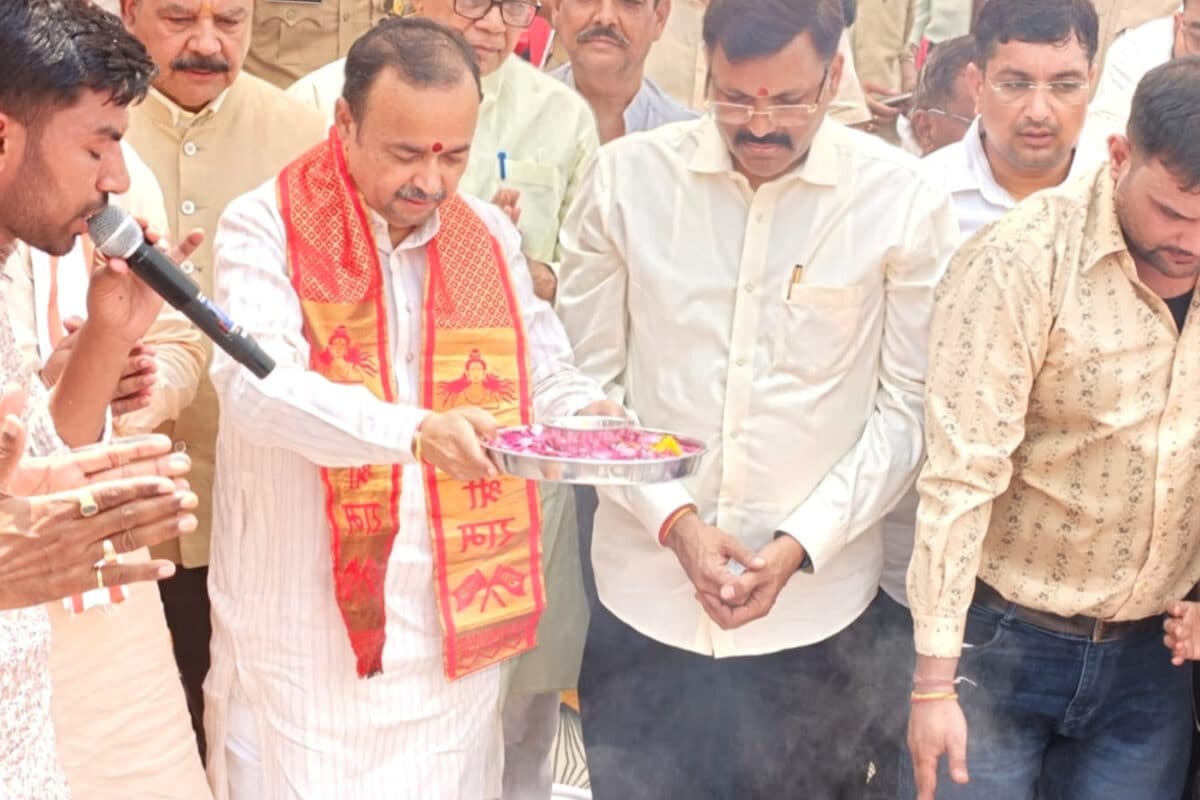
A Home Lost In 1978, Reclaimed In 2026: The Return Of A Sambhal Riot Victim's Family Reported By, Last Updated: June 06, 2026, 17:04 IST The UP government has launched a rehabilitation drive to resettle victims on three bighas of government land reclaimed in Sher Khan Sarai Minister JPS Rathore, who attended the allotment ceremony, described the initiative as an effort to deliver justice that had been delayed for decades. Image/News18 Forty-eight years after his grandfather’s body was pulled out of a well during the 1978 Sambhal riots, Kapil Rastogi watched government officials lay the foundation stone for a new home on land allotted to his family. For the Rastogis, the ceremony was not merely about receiving a 100-square-metre residential plot. It was the culmination of a journey that began on March 29, 1978, when communal violence swept through Sambhal, leaving behind death, destruction, and generations of displacement. Nearly five decades after the riots claimed around 150 lives and forced scores of families to abandon their homes and businesses, the Uttar Pradesh government has launched a rehabilitation drive to resettle victims on three bighas of government land reclaimed in Sher Khan Sarai. The family of late trader Ramsharan Rastogi became the first beneficiary of the initiative. Standing beside his mother Rukmini Rastogi as Uttar Pradesh Minister JPS Rathore handed over the ownership certificate, Kapil reflected on a city his family had not called home since the violence forced them out. “We never thought we would return to Sambhal," Kapil said. “For years, we only heard stories about our home, our shop, and what happened to my grandfather. Today, it feels like we are finally coming back." The Riot That Changed Sambhal The communal violence that erupted in Sambhal on March 29, 1978, remains one of the bloodiest chapters in the town’s history.
Contemporary accounts and survivor testimonies suggest tensions had been building before violence broke out and rapidly spread through the town’s crowded neighbourhoods and commercial centres. Within hours, markets were engulfed in flames, shops were looted, and homes were attacked. Official estimates put the death toll at around 150 people, though survivors insist the human cost went far beyond numbers. Hundreds of families were displaced, while many who survived chose never to return. Among those killed was Ramsharan Rastogi, who ran a grocery shop in Mahmood Khan Sarai near the Ekta police outpost. According to his family, a mob attacked the shop during the riots, looted its contents, and set it ablaze. Ramsharan was killed, and his body was allegedly thrown into a well outside the shop. “My grandmother and father would tell us how his body was recovered three days later," Kapil said. “Those stories became a part of our childhood. We grew up hearing about the violence, the loss, and the life we had left behind," said Kapil. The family says the body bore multiple stab wounds and deep axe injuries. Today, the same well stands as a reminder of one of the darkest episodes in the town’s history. The family has demanded that a memorial be built at the site in memory of the victims. However, the violence did not end with the riots. For survivors, the greater challenge was rebuilding their lives after losing homes, businesses, and a sense of security. Another riot survivor, Anil Kumar Rastogi, remembers watching his livelihood disappear overnight. “I had a pulses shop in Sambhal. When the violence started, I ran home to save my life. When I returned, the shop had been burnt down.
Everything was destroyed," he said. According to Anil, goods worth nearly Rs 1 lakh were reduced to ashes—a huge amount at the time. “Although security forces were eventually deployed, fear continued to grip the town. Many families decided to leave," he told News18. The Rastogis migrated to Delhi in 1979. Like many others displaced by the riots, they rebuilt their lives elsewhere while carrying memories of Sambhal with them. For decades, the family’s connection with the town survived through old photographs, family conversations, and stories passed from one generation to the next. “We had a house, a business, and our roots here," Kapil said. “Then everything disappeared. Sambhal became a place we could only remember." The issue, however, returned to the political spotlight earlier this year when Chief Minister Yogi Adityanath referred to the 1978 riots during a public event in Mathura. The Chief Minister said hundreds of Hindus had been killed during the violence, and many families had fled to Delhi and other cities. He assured affected families that if they could establish ownership claims, the government would help restore their rights. That promise translated into action on Thursday. Minister JPS Rathore, who attended the allotment ceremony, described the initiative as an effort to deliver justice that had been delayed for decades. “Today, I have come to wipe the tears of those whose homes were burnt down in Sambhal 48 years ago. Generations have passed while waiting for justice," he said. Moradabad Divisional Commissioner Anjaneya Kumar Singh urged other riot-affected families to approach the district administration with documentary evidence. “We request all those who migrated after the riots to come forward. The rehabilitation process has begun, and all eligible families will be accommodated," he said.
District Magistrate M Ankit Khandelwal described the programme as a historic moment for Sambhal, saying it marked the beginning of a new chapter for families who had spent decades waiting to return. Returning Home The three bighas of land earmarked for rehabilitation were reclaimed by the administration in 2025 following legal proceedings that declared the property government land. For the officials, the allotment might be just a rehabilitation programme, but for the Rastogis, it is the end of a 48-year wait. As workers marked the boundaries of what will soon become their new home, Kapil looked around the town that had lived in family memories for generations. “This is where my grandfather lived. This is where our family belonged," he said. The scars of 1978 have not disappeared, nor have the memories. But for the first time in nearly half a century, families displaced by one of UP’s most devastating communal riots are beginning to return to the place they once called home. News18 Newsletter Handpicked stories, in your inbox A newsletter with the best of our journalism submit First Published: June 06, 2026, 17:04 IST News india A Home Lost In 1978, Reclaimed In 2026: The Return Of A Sambhal Riot Victim's Family Disclaimer: Comments reflect users’ views, not News18’s. Please keep discussions respectful and constructive. Abusive, defamatory, or illegal comments will be removed. News18 may disable any comment at its discretion. By posting, you agree to our Terms of Use and Privacy Policy Loading comments...
 The BriefWire