By 2060, discarded solar panels could total to 402 million tonnes; recycling them could..
Solar Panel Waste: The Unknown Side of Solar Power Valuable metals hidden in discarded panels The risk of economic inequality A phased subsidy strategy Building
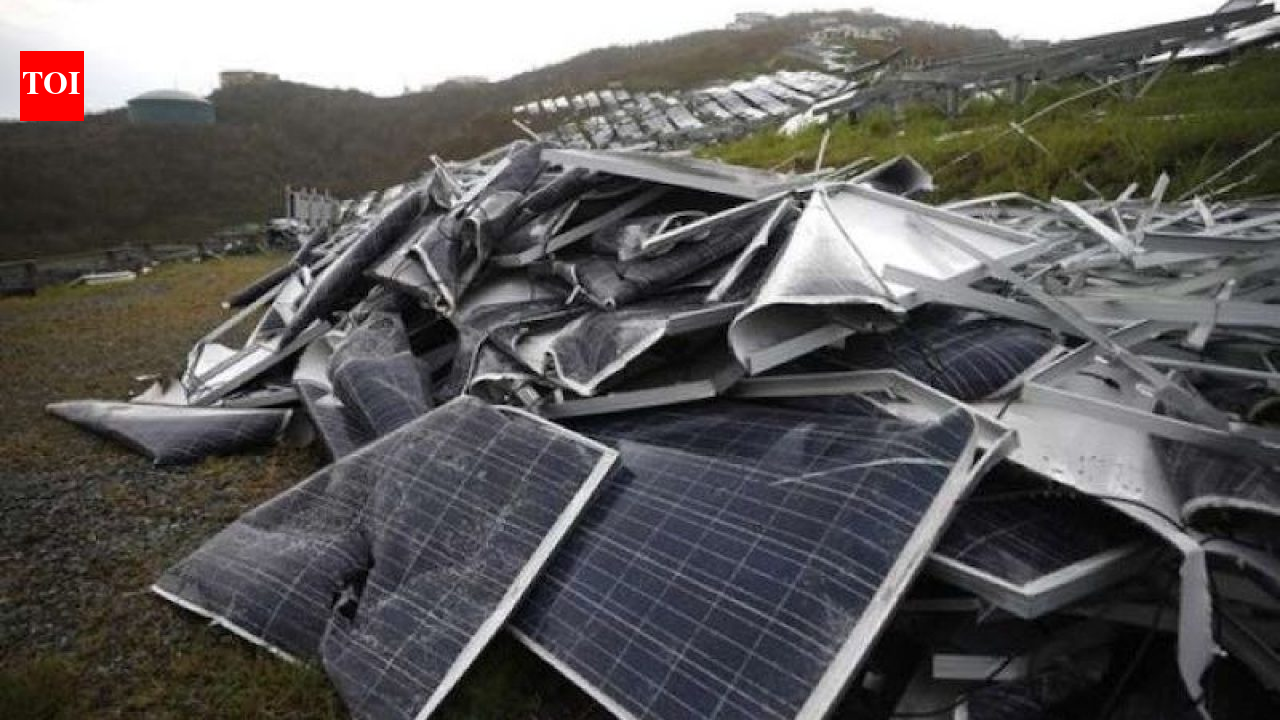
Solar Panel Waste: The Unknown Side of Solar Power Valuable metals hidden in discarded panels The risk of economic inequality A phased subsidy strategy Building recycling capacity before the waste surge Environmental benefits and stronger supply chains Discarded solar panels could become a major global waste problem, with as much as 402 million tonnes of photovoltaic (PV) waste expected by 2060. But if these panels are recycled properly, the materials inside them could create almost $1 trillion (£770 billion) in economic value.According to an international study published in the journal Nature, global PV waste could reach between 297 million and 402 million tonnes over the next four decades. After 2040, middle-income countries, especially China, are expected to become the main source of retired solar panels as early solar installations reach the end of their working lives.The research was carried out by a team from China, Australia and Sweden, including researchers from the School of Civil Engineering and Construction Management at Adelaide University.Solar panels contain valuable materials such as silicon, silver, copper and tellurium. They can also contain harmful heavy metals, including lead and cadmium. If panels are sent to normal landfills or handled incorrectly, these substances can create environmental risks.To find the best ways to recover these materials safely, the researchers created a computer model that examined 1,708 recycling scenarios across 32 regions.The model considered local recycling facilities, material prices, international trade and government subsidy policies.The researchers found that using recycling methods suited to each region, combined with international recycling partnerships, could provide the greatest economic benefit.
It could also reduce billions of tonnes of carbon dioxide-equivalent emissions.One of the main concerns raised by the study is that sending old solar panels to countries with cheaper or better recycling facilities could concentrate the financial benefits in richer regions.The research suggests that poorer regions could receive only a small share of the economic benefits by 2060, even if recycling technology becomes widely available.Co-author Professor Jian Zuo, from Adelaide University’s School of Civil Engineering and Construction Management, said energy planning must consider what happens to solar panels throughout their entire life.“Solar power is essential to the transition to a low-carbon energy system, but we cannot ignore what happens to solar panels at the end of life,” Professor Zuo said.“If we plan for recycling now, this growing waste stream can become a valuable source of materials rather than an environmental burden.”He said economic efficiency must also be balanced with fairness so that developing countries do not carry an unfair share of the waste.“The cheapest or most efficient recycling pathway globally is not necessarily the fairest,” Professor Zuo said.“If developing regions are left without the technology, infrastructure or investment needed to recycle solar panels, they risk missing out on the economic benefits while potentially carrying more of the environmental burden.”The study also looks at a phased subsidy system to make international recycling fairer. Instead of giving recycling companies permanent financial support, governments could gradually reduce subsidies as recycling facilities become commercially viable.The researchers found that this approach could improve the balance of economic benefits between regions while costing much less than providing permanent subsidies.The future value of PV recycling will also depend on raw material prices.
Higher prices for recovered silver, aluminium and silicon would make recycling more profitable. At the same time, recycling costs are expected to fall as technology improves and facilities become more efficient.The amount of solar equipment being retired is still relatively small, but the rapid growth of solar power over the past two decades means this is expected to change quickly. Many standard solar panels have a working life of around 25 to 30 years.As more panels reach the end of their lives, countries will need enough recycling facilities to deal with them. At present, many old panels are sent to landfills or stored because there are not enough specialised recycling facilities or clear laws covering their disposal.Many existing recycling systems treat solar panels like other electronic waste. They often recover the aluminium frames and glass but do not recover much of the valuable material inside the panels, including silicon and small amounts of precious metals.More advanced facilities can recover high-purity silicon and silver from solar cells, but these plants require large investments. Building recycling centres in key regions before waste levels rise could help avoid major problems when millions of panels need to be processed.Recycling solar panels could also reduce pressure on global supplies of important raw materials.Mining and processing new silicon, tellurium and silver require large amounts of energy and can cause environmental damage. Recovering these materials from old panels would allow manufacturers to use more recycled material instead of relying entirely on newly mined resources.The study suggests that recovering materials from retired solar panels could prevent billions of tonnes of carbon dioxide-equivalent emissions over the next 40 years.Recycling could also make supply chains more secure.
Countries that do not have large domestic supplies of important metals could use recycled materials from their own old solar panels. This would reduce their dependence on imports and make them less vulnerable to international supply disruptions and geopolitical tensions.Professor Zuo said governments and companies should begin planning for a circular solar economy before the waste problem becomes much larger.“We need to think of solar panels as part of a circular economy rather than a disposable product,” Professor Zuo said.“That means investing in recycling capacity, sharing technology and designing policies that allow all regions to participate in the economic and environmental benefits of the solar transition.”The study concludes that building global recycling capacity now could help the solar industry prepare for the coming wave of retired panels. If the right systems are put in place, old solar panels could become an important source of valuable materials, reduce environmental damage and strengthen critical supply chains rather than becoming a huge waste problem.
 The BriefWire