Ebola Outbreak: Which Vaccines, Treatments Are In The Works And How Long They May Take
Ebola Outbreak: Which Vaccines, Treatments Are In The Works And How Long They May Take Published By, Last Updated: June 05, 2026, 15:14 IST There
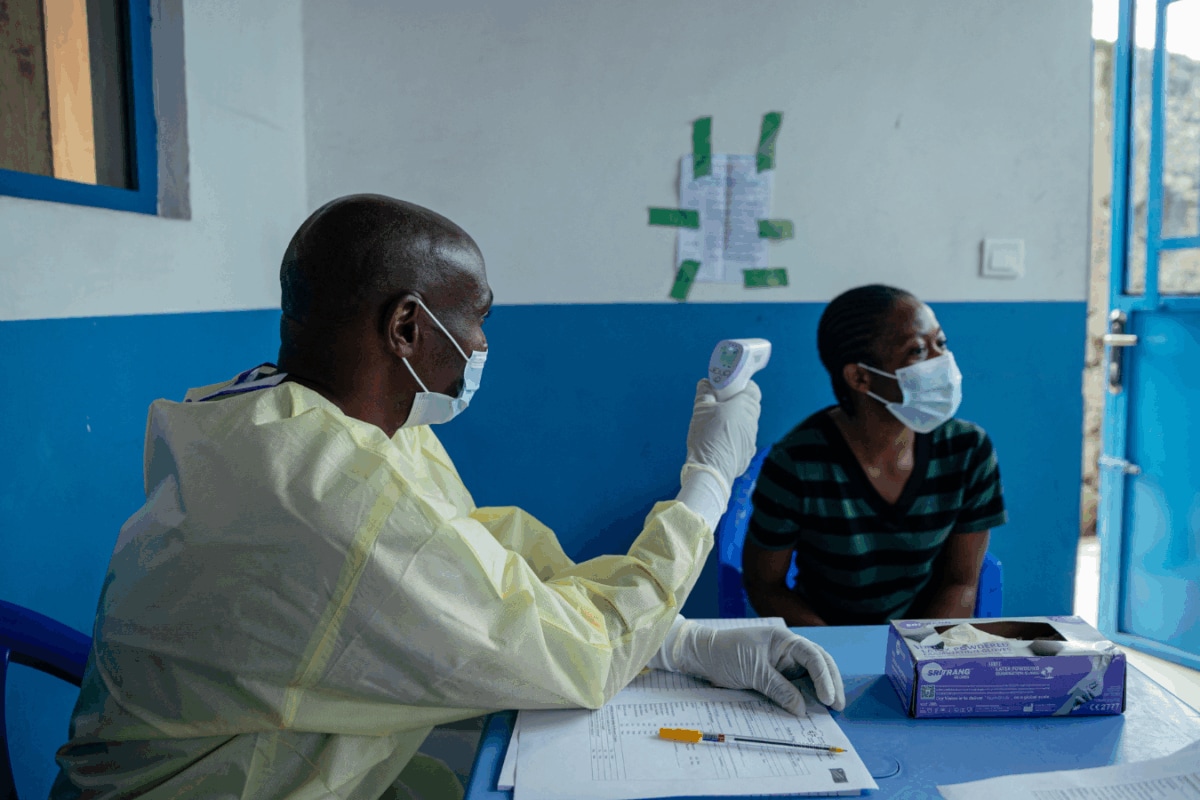
Ebola Outbreak: Which Vaccines, Treatments Are In The Works And How Long They May Take Published By, Last Updated: June 05, 2026, 15:14 IST There is no approved vaccine yet for the Bundibugyo Ebola strain, but three vaccine candidates, potential treatments and even a prevention drug are now being fast-tracked. Rapid Read A doctor from CBCA Virunga, following training on Ebola protection measures, works at a checkpoint set up at the hospital entrance as part of Ebola prevention measures in Goma, on May 22, 2026. (Image: AFP) East Africa’s latest Ebola outbreak has triggered a new global race: not just to contain the virus, but to develop and test tools against a strain for which there is still no approved vaccine or treatment. The outbreak, first declared by the Africa Centres for Disease Control and Prevention on May 15 in eastern Democratic Republic of the Congo, has been caused by the Bundibugyo virus, a rare species of Ebola. It has since spread to neighbouring Uganda, raising concern because border communities between the two countries are closely connected and mobile. The World Health Organization declared a public health emergency two days after the outbreak was announced. By June 2, at least 321 cases had been confirmed in the DRC, with another 116 suspected cases, according to WHO figures. The DRC had recorded 48 deaths and six recoveries. In Uganda, WHO confirmed nine cases and at least one death on Tuesday, while the Ugandan government later said six more cases had been found, taking its total to 15. Cases have also been reported in Kampala, far from the DRC border. Why Is There No Approved Vaccine For This Ebola Strain? The problem is not that Ebola vaccines do not exist. The problem is that the available approved vaccines are meant for a different strain. The Bundibugyo virus is not the same as the Zaire Ebola virus, which caused the 2014-16 West Africa epidemic and the 2018-20 outbreak in the DRC. The Zaire strain is the more lethal and more common form, with a death rate of 50-70 per cent.
The Bundibugyo strain has a lower but still extremely serious death rate of 30-50 per cent. There are two vaccines for Zaire Ebola. The first is Merck’s Ervebo vaccine. The second is Johnson & Johnson’s two-dose Zabdeno and Mvabea vaccine. But vaccines developed for one Ebola species cannot simply be used for another without testing and formal approval. Which Vaccines Are Being Developed Now? The Coalition for Epidemic Preparedness Innovations, or CEPI, has committed emergency funding for three vaccine candidates. The funding includes $3.2 million for IAVI, $50 million for Moderna and $8.6 million for Oxford University. The three vaccines are at different stages and use different platforms, but none is ready for immediate use in the outbreak. IAVI Vaccine The International AIDS Vaccine Initiative, or IAVI, candidate is considered by WHO to be the “most promising candidate vaccine". It uses the same technology as Ervebo, the existing vaccine for Zaire Ebola. The vaccine is known as the rVSV Bundibugyo vaccine and works by using a harmless, naturally weakened animal virus to deliver genetic instructions that the body can recognise and respond to. However, it is not expected to be available for immediate trials. WHO expects it to take seven to nine months before doses are ready for clinical trials. IAVI president Mark Feinberg said the organisation is trying to shorten that timeline as much as possible. Oxford Vaccine The Oxford candidate, called ChAdOx1 Bundibugyo, is being developed by Oxford University with the Serum Institute of India. It uses the same vaccine platform as the Oxford/AstraZeneca Covid-19 jab — a modified version of a chimpanzee cold virus to deliver the vaccine to the body. This candidate could move faster than IAVI’s. According to The Guardian, trials could begin within two or three months, though WHO experts want to see more animal-test data before confirming its suitability. Prof Teresa Lambe of the Oxford Vaccine Group and Pandemic Sciences Institute said the team hoped the vaccine would not ultimately be needed, but was moving quickly. “We have started the animal studies and we are going to be progressing with partners around the world, both in the UK and the US, to get more animal studies initiated as rapidly as we can," she told a press briefing.
The Serum Institute said it could produce as many doses as required. Moderna Vaccine Moderna’s vaccine uses mRNA technology, the same broad platform that became prominent during the Covid-19 pandemic. The vaccine was not on the WHO’s initial candidate list because the company was still assessing its response when the expert panel met. Moderna hopes the vaccine could be ready for trials within months. “We will move with urgency and scientific rigour to support the response and help bring a potential vaccine closer to the communities that need it most," Moderna chief executive Stéphane Bancel said. Are Any Treatments Available? There is no approved treatment specifically for Bundibugyo Ebola, but researchers believe three existing medicines may have potential. The first two are MBP134 and Maftivimab, both monoclonal antibody treatments. These are designed to imitate parts of the immune system’s response. The third is remdesivir, an antiviral drug. WHO independent experts have recommended using MBP134 in the current outbreak, according to Al Jazeera. Separately, researchers are preparing the Partners trial to compare possible treatments and identify which one works best against Bundibugyo Ebola. Amanda Rojek, associate professor of health emergencies at the UK’s Pandemic Sciences Institute, who will be working on the Partners trial, said the medicines already exist and investigators are seeking regulatory approval in the DRC and Uganda. “We’re effectively close to ready to go," Rojek said. But readiness on paper does not mean trials can begin immediately. Researchers still have to ensure patient safety, staff safety and proper clinical conditions in an active conflict zone. A key hurdle is “making sure that we can operationalise safely", Rojek said. “We will implement the trial at a point at which patients are receiving optimised supportive care and we can manage the safety of our teams in a challenging environment." She also stressed that evidence is essential before using drugs widely. “It is important in any patients that we manage in our clinical practice all around the world that we have an evidence basis for the care." For now, basic care remains crucial. Joanne Liu, an Ebola expert and associate professor of medicine at Canada’s McGill University, told Al Jazeera that general treatment for Bundibugyo remains similar to flu care in the sense that it focuses on supportive treatment, including hydration and maintaining correct blood pressure levels.
Can A Drug Prevent Ebola After Exposure? For the first time in an Ebola outbreak, doctors are also preparing to test a prevention drug. The idea is to give the drug to people who have been in contact with confirmed cases and see whether it stops them from developing the disease. The drug is obdeldesivir, an antiviral pill. According to The Guardian, it gave up to 100 per cent protection in monkeys against two other Ebola strains when taken daily for 10 days within 24 hours. Prof Christophe Fraser of Oxford University, who will work on the trial, said the speed of results will depend on both the drug’s effectiveness and the ability of field teams to identify and follow the right contacts. “A trial goes quicker if the intervention is very effective. If it is less effective, then it takes longer," he said. News18 Newsletter Handpicked stories, in your inbox A newsletter with the best of our journalism submit About the Author Karishma Jain Karishma Jain, Chief Sub Editor at News18.com, writes and edits opinion pieces on a variety of subjects, including Indian politics and policy, culture and the arts, technology and social change. Follo... Read More First Published: June 05, 2026, 15:14 IST News world Ebola Outbreak: Which Vaccines, Treatments Are In The Works And How Long They May Take Disclaimer: Comments reflect users’ views, not News18’s. Please keep discussions respectful and constructive. Abusive, defamatory, or illegal comments will be removed. News18 may disable any comment at its discretion. By posting, you agree to our Terms of Use and Privacy Policy Loading comments...
 The BriefWire