New Jersey begins restoration work to bring back forest and wetland habitat along Raritan river
Trees laid out at the site for planting (FWS photos) Settlement led to restoration Transforming the 112-acre site A map of the proposed restoration area
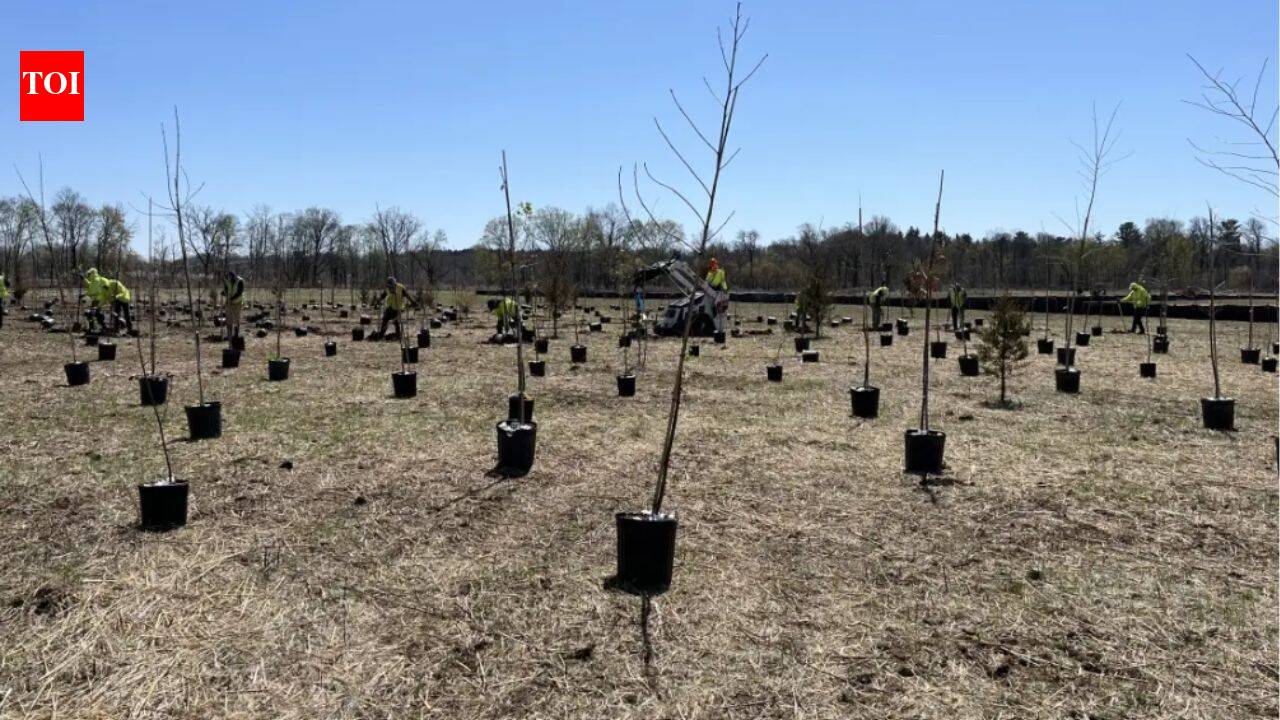
Trees laid out at the site for planting (FWS photos) Settlement led to restoration Transforming the 112-acre site A map of the proposed restoration area Helping wildlife Contamination behind restoration A 112-acre restoration project has begun along the Raritan River in New Jersey, with the aim of bringing back forest and wetland habitat that was affected by contamination linked to the American Cyanamid Superfund Site. The project is being carried out under a settlement related to damage to natural resources.According to the US Fish and Wildlife Service (USFWS), the project is taking place on land owned by Duke Farms, a centre of the Doris Duke Foundation, in Hillsborough, New Jersey. The site is about 2.8 miles upstream from the American Cyanamid Site. The work will convert retired agricultural fields into forested and scrub-shrub floodplain habitat next to the Raritan River.The restoration is part of a larger effort to compensate for natural resources that were lost or injured because of contamination from the American Cyanamid Site. The work will include planting native trees and shrubs, controlling invasive plants and creating habitat for amphibians, insects, birds and other wildlife.The project follows a settlement finalised on July 16, 2024, between the US Department of Justice, the State of New Jersey and Wyeth Holdings LLC.The settlement addresses liability for past releases of hazardous substances at or near the American Cyanamid Superfund Site in Bridgewater, New Jersey.The releases affected several types of habitat near the Raritan River, including floodplain, riparian, upland and wetland areas.The US Fish and Wildlife Service, the Oceanic and Atmospheric Administration (NOAA) and the NJDEP are the Natural Resource Trustees for the American Cyanamid Site.
The Trustees will use the settlement to support the restoration project and its monitoring.A major part of the project will be the planting of about 50,000 native trees and shrubs. The former agricultural fields will gradually be converted into floodplain forest and scrub-shrub habitat.The project will also involve intensive management of undesirable invasive plants. These plants can interfere with the growth of native vegetation, so controlling them will be an important part of establishing the restored habitat.A deer fence will be installed around the project area to protect newly planted vegetation from herbivory, or damage caused when animals feed on plants.The project will also create three acres of vernal pool habitat. Vernal pools are temporary pools of water that can provide habitat for amphibians. Native grass and pollinator seed mixes will also be planted to provide food sources for insects and other pollinators.The restoration will not end when the planting and construction work is completed. The project includes 15 years of monitoring and adaptive management. This means the site will continue to be watched and managed so that the restoration work can be assessed and adjusted when needed.Floodplain forests are among the most biologically diverse habitats in the region. However, they have also been historically degraded.
 The BriefWire