In 2022, Buffalo completed the first emerald shiner passage on the Niagara River; four years later..
Niagara River AOC Habitat Restoration and Sediment Remediation Work Restoring a key part of the food web An aerial view showing the constructed rock reefs
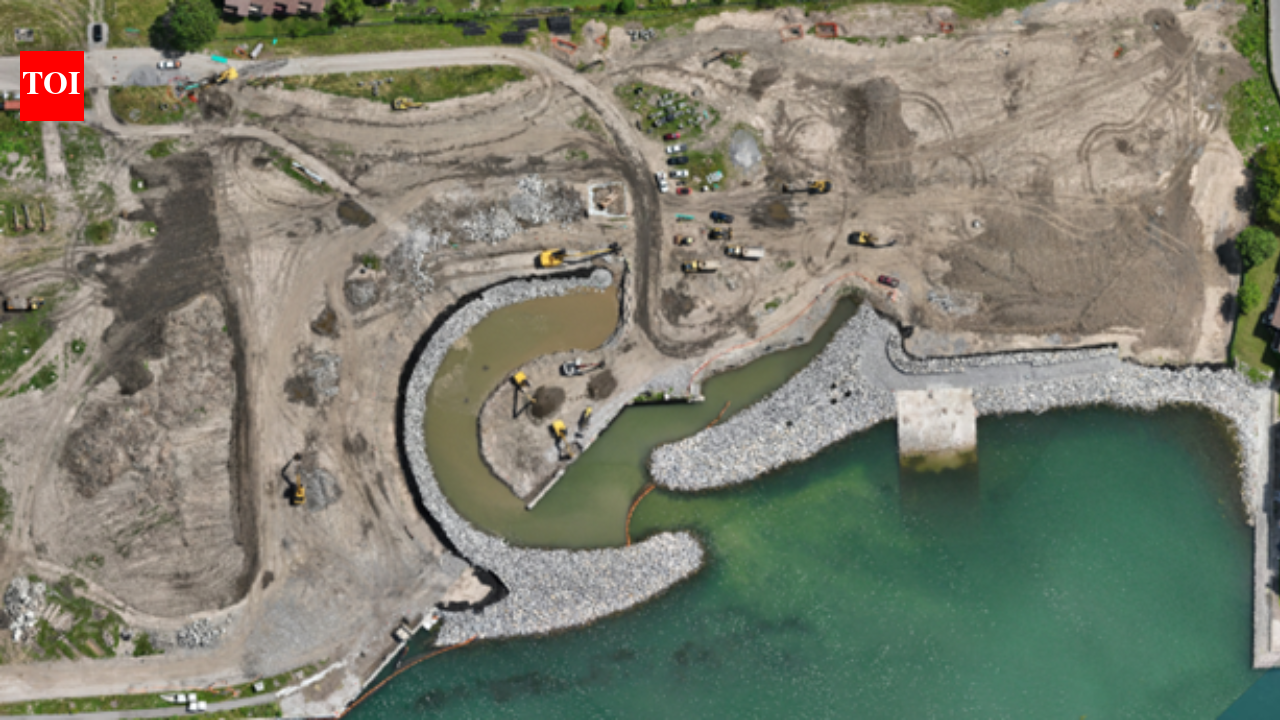
Niagara River AOC Habitat Restoration and Sediment Remediation Work Restoring a key part of the food web An aerial view showing the constructed rock reefs protecting the shoreline. Image courtesy of NYSPRHP. Turning industrial slips into habitat Restoring green spaces and wetlands The photo shows the extensive wetland at Buckhorn Island State Park. Burnt Ship creek is the access into that wetland from the Niagara River. Image courtesy of NYSPRHP Earlier projects helped set the stage Four years after Buffalo completed a groundbreaking fish ladder along the Niagara River to help native emerald shiners migrate, environmental crews are expanding the design to open an important route to Lake Erie.Work is underway to extend special steel baffles along another 700 feet of the Buffalo seawall. This builds on a 78-foot pilot section completed in May 2022. According to project updates from the United States Environmental Protection Agency (EPA), the expanded structure will slow the strong water currents along the wall, allowing tiny emerald shiners to swim upstream.The project is expected to be finished in December 2026. It is part of a multi-million-dollar federal and state restoration effort across the Niagara River Area of Concern. Once complete, the expanded baffle system will give shiners full access to Lake Erie, helping meet Fish Community Objectives and repair long-standing damage in western New York.Emerald shiners are small, silver forage fish, but they play an important role in the food web of the Niagara River and eastern Lake Erie.
Larger fish, including smallmouth bass and walleye, as well as birds such as terns and gulls, depend on them for food.For decades, development disrupted the fish's migration routes. Strong currents along smooth concrete seawalls near Broderick Park created barriers that the small fish could not cross.Funded through the Great Lakes Restoration Initiative (GLRI), the first phase of the Emerald Shiner Fish Passage project repaired 78 feet of damaged seawall and added vertical baffles to slow the current. Phase II is now extending these low-speed channels across the remaining 700 feet of seawall.Federal officials said in an EPA project document that restoring the passage will help address the Degradation of Fish and Wildlife Populations Beneficial Use Impairment (BUI), a designation given to Great Lakes areas where ecosystems have been damaged.The fish passage is part of a larger group of restoration projects along the Buffalo waterfront.Nearby, the US Army Corps of Engineers (USACE) is working on the Buffalo Outer Harbor Slip #3 Restoration Project. Construction began in fall 2023 with a protective breakwater across the entrance to the slip. In August 2024, USACE began placing clean sediment dredged from the nearby Buffalo River into the deep slip.Sediment placement will continue through three cycles, with the work expected to finish in 2028. After the final cycle, engineers will shape the riverbed and add natural features such as rock piles, gravel beds, and tree root wads.When complete, Slip #3 will provide 6.7 acres of shallow-water habitat.
 The BriefWire