How diamonds made Kolmanskop rich before turning it into a ghost town
How diamonds found in Namibia’s desert sparked the rapid growth of Kolmanskop How a diamond town built a life of luxury in the desert PC
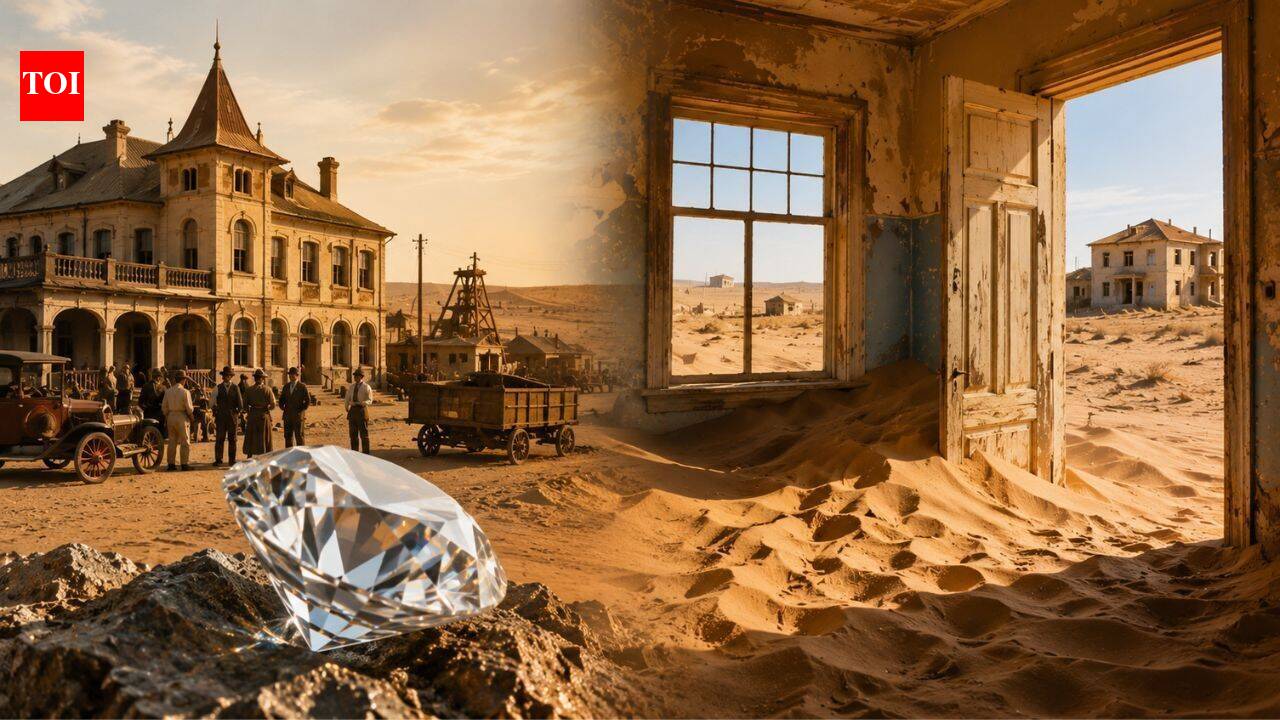
How diamonds found in Namibia’s desert sparked the rapid growth of Kolmanskop How a diamond town built a life of luxury in the desert PC: Geographic The hidden cost of Kolmanskop’s diamond fortunes From diamond riches to abandonment: Kolmanskop’s slow decline From mining settlement to tourist destination PC: BBC How long can Kolmanskop survive the sands What remains beneath the sand In 1908, a railway worker clearing sand beside a track in what is now Namibia noticed something unusual: stones that caught the sunlight. His German supervisor, August Stauch, recognised the discovery as diamonds, setting off a rush that would transform one of southern Africa’s harshest landscapes. Within months, prospectors and mining companies were moving into the remote desert, while the colonial authorities imposed tight controls over the newly valuable territory. Kolmanskop soon emerged as the centre of the diamond boom, growing into an improbable European-style settlement complete with electricity, a hospital, bakery, butcher, post office and even an ice-making plant.According to Geographic, for a few decades, extraordinary mineral wealth sustained a surprisingly comfortable town in the desert. Then richer deposits were discovered farther south. The residents left, the mines declined and, by 1956, Kolmanskop was empty. Today, sand is steadily swallowing its abandoned buildings, leaving behind a striking reminder of Namibia’s diamond rush and colonial past.A railway worker named Zacherias Lewala was clearing sand from the tracks when he noticed stones catching the light. His German supervisor recognised what they were.Diamonds had been found in one of the most inhospitable landscapes in southern Africa.Lewala received no reward for the discovery. The consequences for the area were much larger. News travelled, prospectors arrived and the previously remote stretch of desert became the centre of a rapidly expanding diamond industry.
Kolmanskop grew around the mines. Within only a few years, the settlement had acquired the appearance of a small European town transplanted into the desert. At its height, roughly a thousand people lived there, including German settlers and local workers employed by the mining industry.The diamonds were unusually easy to find in the early years. Stones could sometimes be picked from the surface, scattered among the desert gravel. That made fortunes possible at a speed that would have been difficult to imagine elsewhere. The town itself reflected that sudden wealth.Kolmanskop acquired facilities that seem almost absurd when set against its surroundings. There was a bakery, a butcher, a post office and an ice-making plant. Supplies, including water, could be transported by railway. The settlement had electricity and other conveniences that were rare in such a remote part of the region.Its residents could also find entertainment far removed from the mining camp that had initially brought them there. European performers travelled to Kolmanskop, including opera groups. The town developed its own social life and a degree of comfort that contrasted sharply with the surrounding desert.Some stories from its more eccentric period have survived. One household kept an ostrich, which became such a nuisance that it was reportedly used to pull a sleigh during Christmas celebrations. Behind the grander buildings was a mining settlement whose existence depended on a highly unequal colonial economy.At the time, Namibia was under German colonial rule as German South West Africa. The diamond discoveries gave the colonial authorities another reason to tighten their control over the region.A large area was designated the Sperrgebiet, meaning restricted or forbidden territory. Ordinary people could not simply enter to search for diamonds, and prospecting rights were concentrated in the hands of a company based in Berlin.
 The BriefWire