Why is ICE under fire over its $20 million electric shock-glove plan?
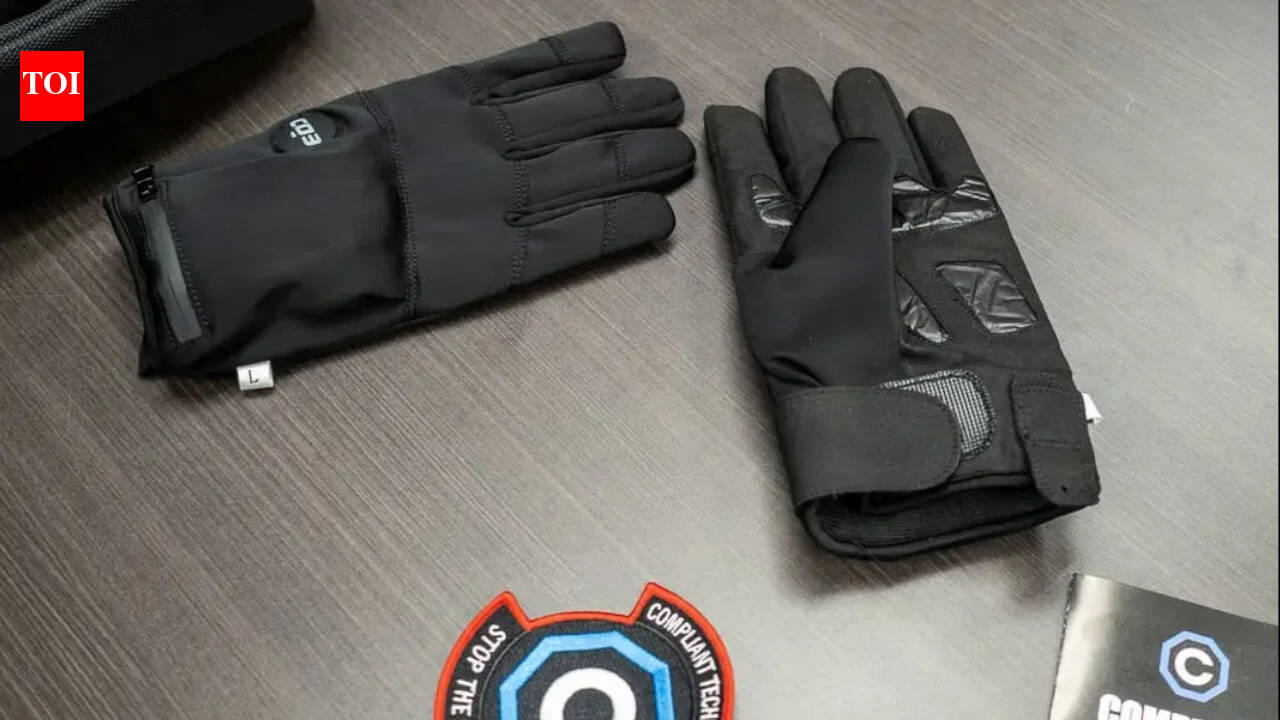
The G.L.O.V.E., sits on a table after a demonstration at the Oklahoma County Detention Center. (Photo: AP) Records differ over shocks used on Mansfield Civil
The G.L.O.V.E., sits on a table after a demonstration at the Oklahoma County Detention Center. (Photo: AP) Records differ over shocks used on Mansfield Civil rights groups warn of misuse Manufacturer calls gloves nonlethal ICE detention use of force rises DHS defends procurement US Immigration and Customs Enforcement's plan to spend up to $20 million on electric-shock gloves is facing criticism from civil rights groups and Democratic officials, with a pending wrongful-death lawsuit in Kentucky raising concerns over the potential misuse of the devices.ICE is preparing to spend between $10 million and $20 million on the gloves, which are designed to deliver an electric shock when pressed against exposed skin. The proposed procurement comes as records and legal claims have raised questions over their use on people in custody.The family of 43-year-old Johnathan Mansfield alleges that officers repeatedly used an electric glove and Tasers on him before he suffered cardiac arrest in 2024. Mansfield later died after being hospitalised.The Fayette County coroner attributed his death to an accidental overdose caused by delayed complications of methamphetamine intoxication. However, his wrongful-death lawsuit cites treating doctors and an internal investigation that linked his cardiac arrest to repeated use of force. The lawsuit remains pending.Mansfield was taken into custody at the Madison County Detention Center in Richmond, Kentucky, in September 2024 and died the following month.His family's lawsuit alleges that officers used the electric glove on him 27 times and Tasers another 13 times.
An independent Madison County sheriff's investigation cited by the Lexington Herald-Leader counted 23 uses of the glove, 13 direct-contact Taser shocks and two probe deployments.The differing figures have not been reconciled.An internal investigation found that one application of the glove lasted 99 seconds, more than six times the manufacturer's recommended 15-second limit.The role of the shocks in Mansfield's death remains disputed. While the coroner concluded that his death was linked to methamphetamine intoxication, the lawsuit points to medical assessments and the internal investigation to argue that the repeated use of force contributed to his cardiac arrest.Two other lawsuits have also alleged injuries involving the gloves. One involved a man with heart problems who was shocked at a Las Vegas trade show, while another defendant alleged that officers used the device without justification during a court appearance. Both cases were later dismissed.Critics have raised concerns over giving officers a device that can inflict pain through a concealed button.Jenn Rolnick Borchetta, deputy project director on policing at the American Civil Liberties Union, described the introduction of the device as a "recipe for harm to the public". acting ICE director John Sandweg has also warned that officers could misuse the gloves against people who do not pose a threat.New York Attorney General Letitia James said she was "outraged" by the plan and warned that ICE officers who misuse the devices in her state could face civil or criminal consequences.Democratic representatives Pramila Jayapal, Maxwell Frost and Delia Ramirez have also criticised the proposed purchase.The devices, known as G.L.O.V.E.s, or Generated Low Output Voltage Emitter, are manufactured by Compliant Technologies, which describes them as a "conductive distraction and de-escalation device".The company markets the gloves as a nonlethal law-enforcement tool that can be worn as regular duty gloves and activated when an officer needs to gain compliance.Unlike conventional Tasers, which can fire probes, the gloves must make direct contact with exposed skin to deliver an electrical stimulus.Manufacturer instructions advise against using the device on children, pregnant women and elderly people.
 The BriefWire