Ireland’s vanished rainforest is getting a second chance with 30,000 trees
30,000 trees planted to bring a lost rainforest back to Northern Ireland What makes a rainforest when there are no tropics in sight How Ireland’s
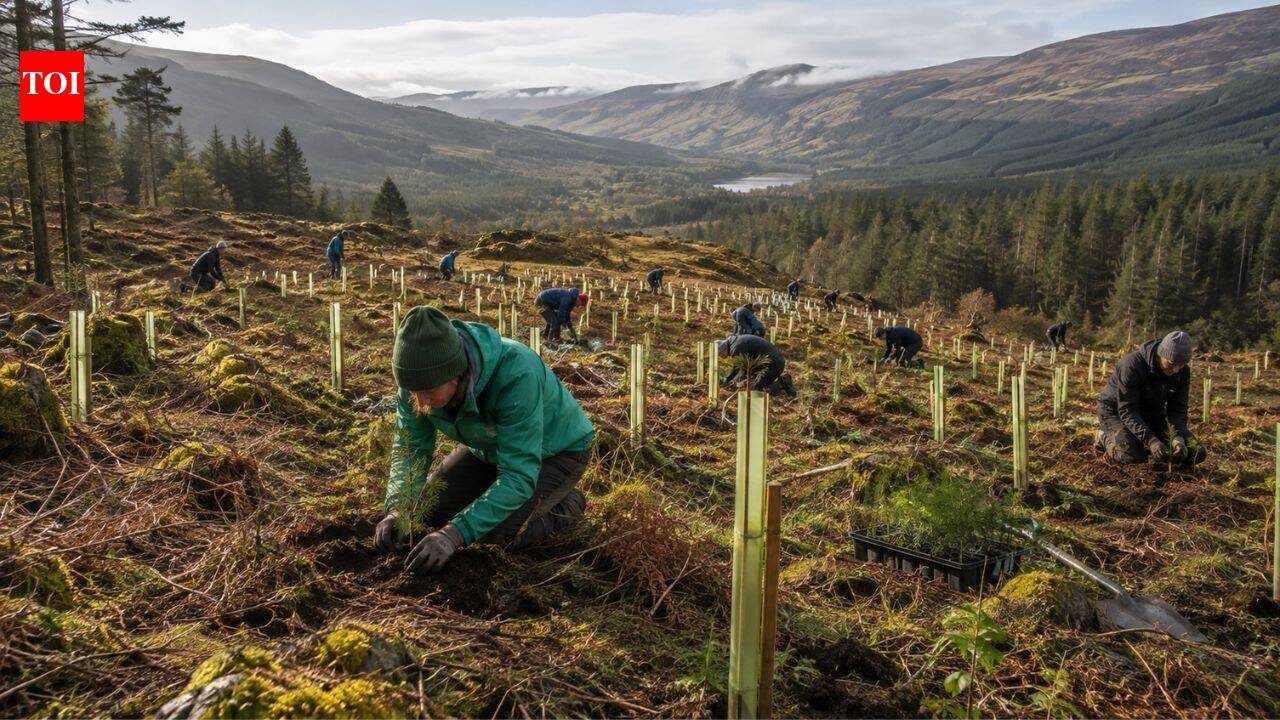
30,000 trees planted to bring a lost rainforest back to Northern Ireland What makes a rainforest when there are no tropics in sight How Ireland’s ancient forests disappeared over thousands of years How one Cork farm is being transformed back into native woodland Scientists will track how the new rainforest changes over the years Why the Atlantic rainforest matters beyond its trees Almost 30,000 young native trees have been planted at Lenamore Wood in Northern Ireland, marking the beginning of a restoration project that could take a century to mature. Oak, alder and rowan now cover parts of the 41-acre site near Gortin, though the future woodland is still difficult to picture. The trees remain small, sheltered inside protective tubes and surrounded by open ground. They are being planted to recreate a fragment of the Atlantic rainforest that once spread widely across Ireland. Northern Ireland now has only a tiny share of ancient woodland remaining, with the Woodland Trust estimating it covers just 0.04% of the land. The project is intended to restore habitat, support wildlife and bring back a rare ecosystem.The trees planted will pass through several generations of people before they can be considered mature forest. That makes the project less about reaching a final appearance and more about setting a process in motion. Ulster Wildlife intends to keep tracking what happens as the site develops, while looking for opportunities to restore other areas of suitable land. The Lenamore site is also expected to open to the public, allowing people to walk through it while it is still at the very beginning of its transformation.As reported by the BBC, the first planting at Lenamore Wood took place in February and March 2026. Nearly 30,000 trees of Irish provenance were planted across the site, including oak, alder and rowan. They are tiny compared with the woodland they are meant to create.
For a while, the changes will be easy to miss. The young trees are protected by plastic tubes, and it could be around a year before their growing tips begin to appear above them.A mature forest is a different proposition altogether. The people planting these trees know they will not be around to see the site reach its full potential. It could take a century before the woodland has developed into anything resembling the ancient forests that once covered large parts of Ireland.For Rosemary Mulholland, Head of Nature Recovery at Ulster Wildlife, that long wait is part of the point. Restoration on this scale is not designed around a single lifetime. The project is backed by Aviva, which has pledged about £38 million towards restoring lost temperate rainforests across the UK. The work at Lenamore is one part of that wider effort.Northern Ireland has very little ancient woodland left. According to the Woodland Trust, only about 0.04% of its land area falls into that category.The word rainforest can make people picture dense tropical vegetation, heavy heat and broad-leaved plants unfamiliar to Britain and Ireland. The Atlantic rainforest is much less exotic in appearance. Its trees are native species such as oak, birch, alder and hazel. What gives these woods their rainforest character is the combination around them: persistent moisture, abundant rainfall, mild conditions and the influence of the Atlantic.The ground and trees can become rich with mosses and lichens. Ravines, streams and rocky areas add further layers to the habitat, creating places for different plants and animals to live.Reportedly, John Martin, the Woodland Trust's director in Northern Ireland, describes these forests as ecosystems that provide benefits beyond the trees themselves. They hold carbon, support wildlife and form part of the natural systems that help landscapes function.The landscape would have looked very different thousands of years ago. As the climate warmed after the last ice age, trees gradually spread across Ireland.
 The BriefWire