Pakistan Civil Society Protests, Demanding Constitutional Reforms & End To Forced Conversions | Exclusive Details
News world Pakistan Civil Society Protests, Demanding Constitutional Reforms & End To Forced Conversions | Exclusive Details Pakistan Civil Society Protests, Demanding Constitutional Reforms &
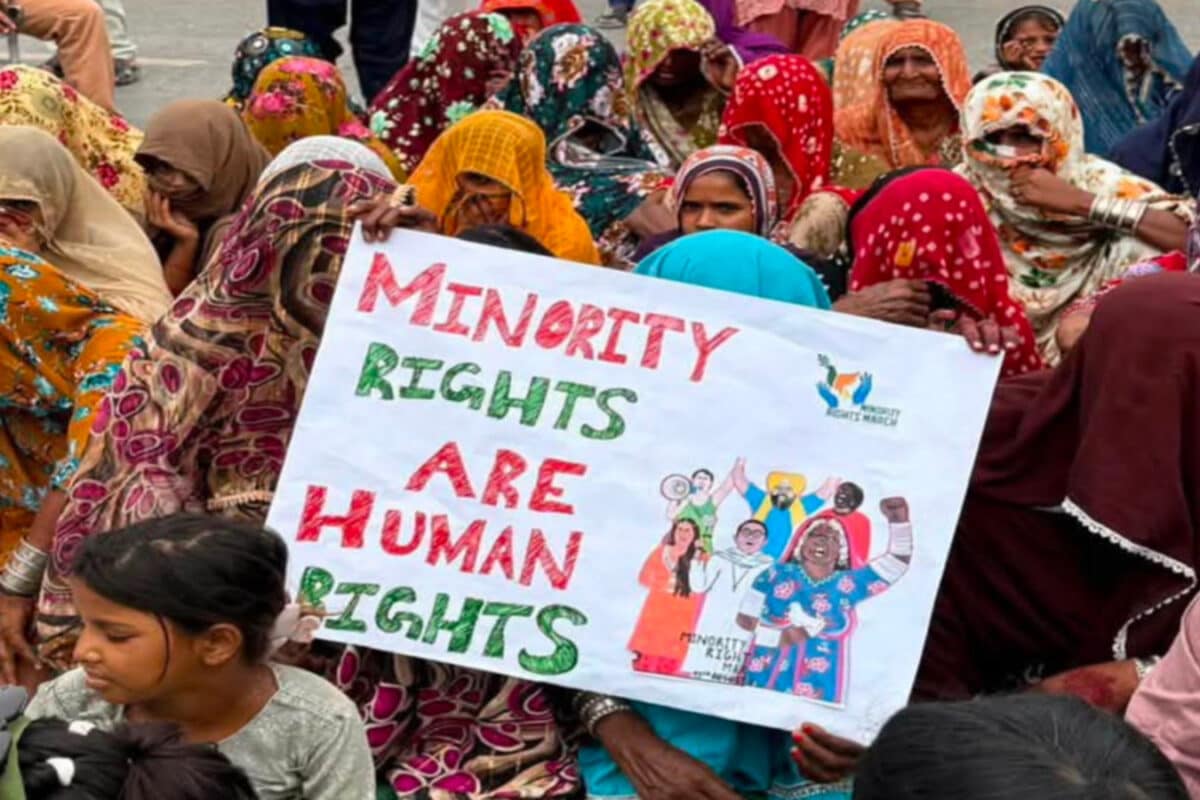
News world Pakistan Civil Society Protests, Demanding Constitutional Reforms & End To Forced Conversions | Exclusive Details Pakistan Civil Society Protests, Demanding Constitutional Reforms & End To Forced Conversions | Exclusive Details Reported By, Last Updated: August 12, 2026, 20:02 IST Activists have sought removal of religious restrictions that bar non-Muslims from holding the highest constitutional offices of President and Prime Minister Speakers stressed that religious minorities refuse to be treated as second-class citizens in their own homeland. Image/News18 Marking Minorities Day in Karachi, civil society activists, rights advocates, and minority community members gathered outside the mausoleum of Pakistan’s founder, Mazar-e-Quaid, to stage a Minority Rights March. Demonstrators voiced outrage over persistent systemic discrimination, targeted violence, and the unchecked phenomenon of forced religious conversions.
Invoking Quaid-e-Azam Muhammad Ali Jinnah’s seminal August 11, 1947, address—which pledged full equality and complete freedom of faith for all citizens regardless of creed—protesters highlighted how the state has repeatedly failed to honour its founding ideals. During the demonstration, organisers presented a comprehensive 11-point charter of demands calling for structural legal and constitutional overhauls. Central to their demands was the immediate, unconditional criminalisation of forced religious conversions and forced marriages, alongside robust statutory safeguards to protect young minority women. The charter urged Parliament to amend Articles 41 and 91 of the Constitution to remove religious restrictions that bar non-Muslims from holding the highest constitutional offices of President and Prime Minister. The marchers also demanded Quotas and Educational Reforms: Implementation of a 10 per cent quota for religious minorities across public and private educational institutions and government employment.
Curriculum Overhaul: Systematic removal of hate-based content and discriminatory narratives from national school curricula, replacing them with material celebrating diversity and pluralism. Dignity in Labour: An immediate end to practices that restrict religious minorities to low-tier sanitation positions, accompanied by fair promotion pathways. Legal and Identity Recognition: Constitutional amendments replacing the generic term “non-Muslim" in legal statutes with specific religious identities, alongside reforms to interfaith marriage laws. Electoral and Judicial Safeguards: Comprehensive electoral reforms to ensure genuine political representation, strict implementation of the Supreme Court’s landmark 2014 minority rights ruling, and full state protection, restoration, and digitisation of minority places of worship and communal properties. Speakers stressed that religious minorities refuse to be treated as second-class citizens in their own homeland.
 The BriefWire