Remote Alaska village slowly sinks as frozen ground thaws, releasing ancient carbon
Why this remote Alaska village is slowly sinking What happens when frozen ground begins to thaw This is part of a much bigger Alaska problem
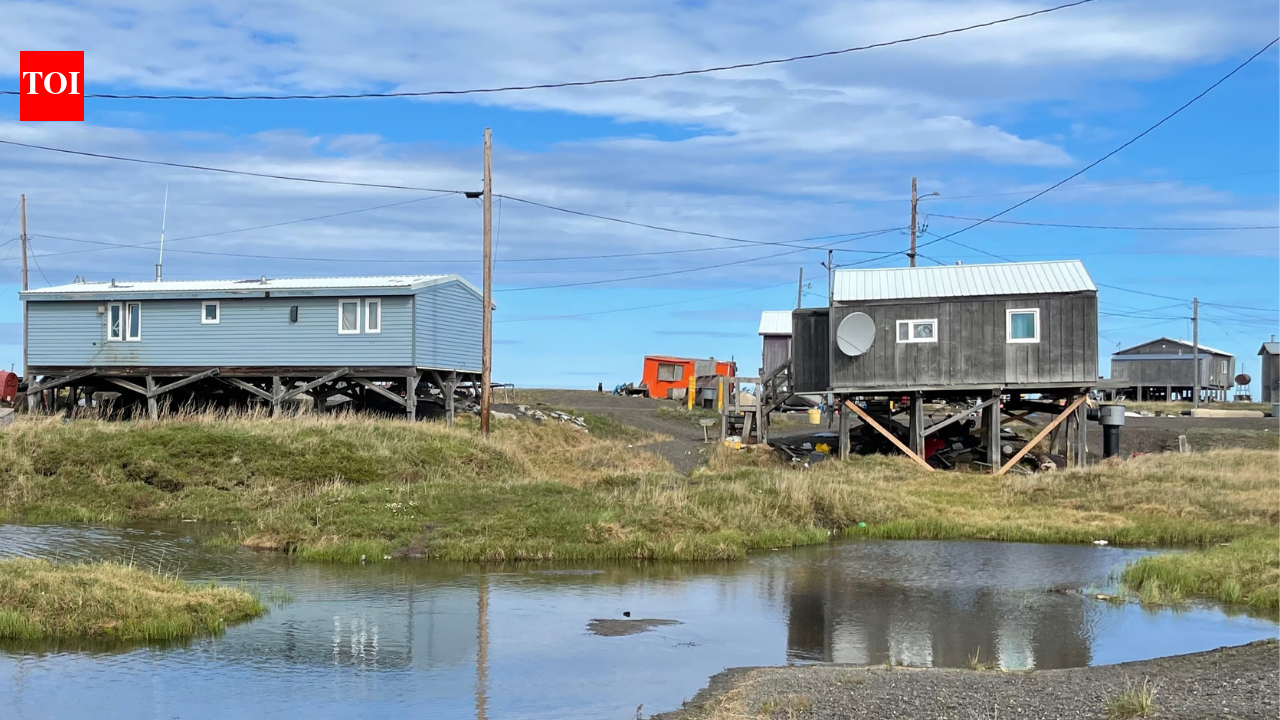
Why this remote Alaska village is slowly sinking What happens when frozen ground begins to thaw This is part of a much bigger Alaska problem Thawing ground can become much more permeable The threat is not just about carbon Point Lay offers a warning for other Arctic communities A remote village on Alaska’s North Slope is facing a growing threat from beneath its feet. In Point Lay, also known as Kali, thawing ice-rich ground is causing the land to sink unevenly, damaging buildings and essential infrastructure. Researchers studying the community have documented widespread ground subsidence and found that large quantities of ice are frozen within the soil beneath the village. As that ice melts, the ground can lose volume and stability, leaving foundations and utility systems vulnerable. But the problem extends far beyond the village itself. The frozen soil also contains ancient organic material that has remained trapped for thousands of years. As the ground thaws, microbes can break down that material and release carbon dioxide and methane, adding to concerns about climate change.Point Lay is a small Iñupiat community on Alaska’s North Slope, where much of the ground remains frozen for most or all of the year. The frozen soil contains large amounts of ground ice, including ice wedges that formed over long periods. As temperatures rise, that ice can melt and leave empty spaces underground.The surrounding soil then settles into those spaces, causing the surface to sink or deform. Researchers have observed signs of this process across Point Lay, with uneven ground affecting buildings, roads and buried utilities. Some structures have become tilted as the land beneath them changes, turning what once appeared to be a stable foundation into a moving landscape.A detailed study published in Environmental Research: Communications examined Point Lay using field investigations, boreholes, ground-temperature measurements, remote sensing and interviews with local residents. Researchers found widespread thermokarst development and ground subsidence associated with thawing ice-rich permafrost. In parts of the community, excess ice made up roughly 40% of the ground investigated, while some ice wedges extended more than 12 metres below the surface.
The researchers also identified evidence that the seasonally thawed active layer has become deeper over time, with particularly pronounced changes during the 21st century. These findings provide direct evidence that warming is changing the physical structure of the ground beneath the community.Permafrost is ground that remains at or below 0°C for at least two consecutive years. It can contain soil, sediments and large amounts of frozen water. In areas such as Point Lay, that frozen water helps give the ground its strength and structure. When the ice melts, the soil can compact and settle. If the thaw occurs unevenly, some areas can sink much more than others, creating depressions and unstable surfaces. This process, known as thermokarst development, can damage building foundations and place stress on roads, water pipes, sewer lines and other infrastructure. The changes can happen gradually, but their effects can become increasingly difficult and expensive to manage.The consequences in Point Lay are not limited to scientific measurements. The community has experienced problems involving water, sanitation and infrastructure as the ground becomes less stable. The University of Alaska Fairbanks has documented past incidents linked to permafrost degradation, including the drainage of the community’s freshwater drinking lake in 2016 and damage involving water infrastructure. Residents have also reported changes to the landscape that affect travel and access across the area. For a community in a remote Arctic environment, damage to basic infrastructure can be particularly difficult because repairs are expensive, specialised equipment is often required and transportation options are limited.Point Lay is one example of a wider challenge facing communities throughout Alaska. A study published in Communications Earth & Environment assessed buildings and roads in 285 Alaskan communities and estimated that permafrost-related damage could cost the state between $37 billion and $51 billion by 2055 to 2064, depending on the future emissions pathway. The researchers mapped about 53 million square metres of building footprints and more than 50,000 kilometres of roads. Their findings suggest that the financial consequences of thawing ground could be far greater than previously estimated because large amounts of infrastructure are exposed to changing soil conditions.The physical damage is only part of the concern.
 The BriefWire