The map war: Why India is naming places in Arunachal Pradesh, and China is upset
A place name may seem harmless. But on the India-China border, it can be a political statement. New Delhi has formally standardised names of 27
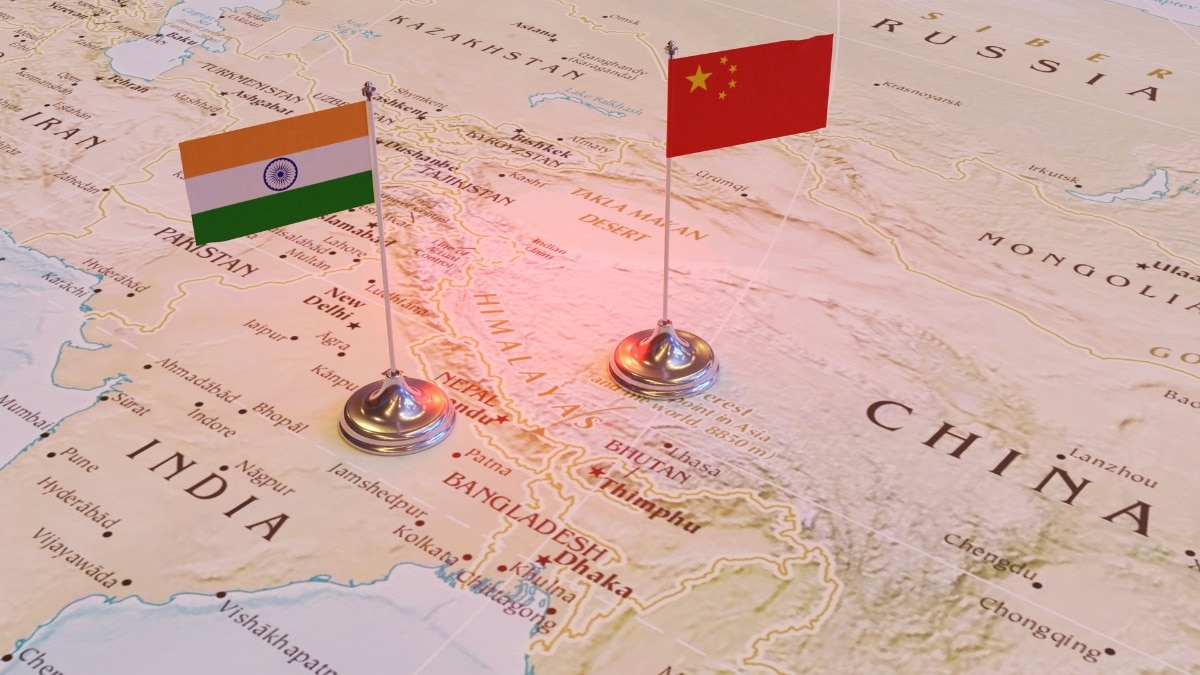
A place name may seem harmless. But on the India-China border, it can be a political statement. New Delhi has formally standardised names of 27 locations and geographical features in Arunachal Pradesh on India’s official maps, prompting a sharp response from Beijing. China has called the move unilateral and “null and void” while reiterating its claim over Arunachal Pradesh, which it refers to as ‘Zangnan’ or southern Tibet. Read Full Story India’s response has been equally clear. The ministry of external affairs (MEA), on August 11, reiterated that Arunachal Pradesh is an “inalienable and integral” part of India and that attempts to alter the nomenclature cannot change that reality. The ministry made it clear that maintenance of peace and tranquillity in these areas was of utmost importance, adding that the state of the border affairs would reflect on the state of wider bilateral ties. The latest exchange is the newest chapter in a long-running contest over maps, names and territory between India and China. For New Delhi, the logic is straightforward: India is not naming foreign territory. It is standardising the names of places in a state that it administers and considers an integral part of the country. For Beijing, however, the move is another attempt by India to strengthen its claim over territory that China says belongs to it. Military observers believe this is a tit-for-tat response to China’s practice of attempting to bolster territorial claims by renaming Indian territory and subsequently issuing official or legal documents to reinforce those claims. Such cartographic and administrative measures are part of a well-established Chinese standard operating procedure. Sriparna Pathak, professor, China studies, OP Jindal Global University, maintained that India’s formal naming of 27 locations in Arunachal Pradesh on official Survey of India maps is a decisive assertion of sovereignty that directly counters Beijing’s repeated cartographic aggression and attempts to invent Chinese names for Indian territory. She said this move reinforces the undeniable reality that Arunachal Pradesh is an integral and inalienable part of India, rooted in the McMahon Line established at the 1914 Simla Convention between British India and Tibet.
“Sites such as Longju—scene of the 1959 Chinese intrusion—and Thag La—where major battles erupted in the 1962 India-China war—carry deep historical significance as markers of India’s defence of its frontiers against expansionism. Memorials like Jaswant Garh and the Sher-e-Thapa Memorial further honour the sacrifices of Indian soldiers who stood firm in those conflicts, embedding national memory into the official map,” said Pathak. She added that China’s so-called “map war” through fictitious renaming was a clear attempt to manufacture claims over land it never controlled and that this cannot alter the ground reality of Indian sovereignty. Experts pointed out that by standardising these names in consultation with the Arunachal Pradesh government, India had strengthened public awareness, administrative clarity and strategic resolve along the Line of Actual Control (LAC). This firm response upholds India’s territorial integrity and signals that no amount of Chinese propaganda will ever change the fact of Arunachal’s permanent place within the Indian Union. Major General A.P. Singh (retd), who served extensively with the Indian Army's Leh-based XIV Corps, believes cartographic salami-slicing is a form of Chinese aggression and appears to be part of a broader strategy to physically occupy tactically advantageous positions in Arunachal Pradesh and East Sikkim, including the Jampheri Ridge (located on the contentious Doklam Plateau). “Indian planners have now initiated a tit-for-tat response by naming these 27 locations. We must also aggressively develop and settle forward areas—not merely to reinforce our claims but to also create durable bases for our patrols and other activities,” Maj. Gen. Singh said. The dispute over names is not new. China began its current series of naming exercises in Arunachal Pradesh in 2017 when it announced Chinese names for six locations. It followed these with further lists in 2021, 2023, 2024 and 2025. In April 2024, Beijing announced names for 30 more locations. India rejected each exercise, saying that changing the names of places could not alter their status.
 The BriefWire