India: Data centers boom as water supply runs low
More than half of India's data centers are in regions that are already water-stressed ― and the country is racing to build more. Residents of
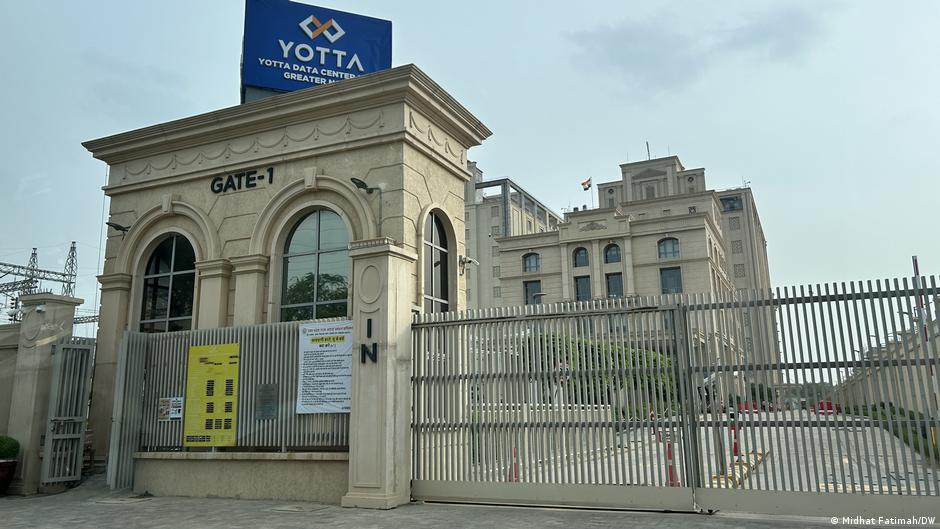
More than half of India's data centers are in regions that are already water-stressed ― and the country is racing to build more. Residents of Khora, a densely populated area in the city of Ghaziabad, just outside New Delhi, have long struggled to obtain a reliable water supply. "We are dependent on groundwater. In some parts, one has to dig 1,000-1,200 feet (305-366 meters) to extract water," said Deepak Joshi, president of the Khora Residents' Association. "The residents have been trying to get the water issue in Khora resolved for the last 10 years, but nothing has changed," he told DW. Now, several data centers have been built in the area. Companies around the world are still scrambling to set up new AI infrastructure and India is increasingly positioning itself as a data center hub — but the new sites demand enormous quantities of water to cool the servers. Why people are throwing AI data centers into the ocean To view this video please enable JavaScript, and consider upgrading to a web browser that supports HTML5 video Many of India's water-stressed regions, including Khora, are feeling the bite. Paying for well access Carpenter Naeemuddin Saifi has been living in Khora colony for the last 35 years, but he still does not own his water connection. Like many in the locality, he relies on a shared borewell connection and pays 1,000-1,200 rupees ($10.5-$12.5, €9.1-€10.9) every month for it. Saifi is paying a monthly fee to get water from a communal well Image: Midhat Fatimah/DW "I cannot afford it alone," he said. Joshi says each borewell costs around half a million rupees, or some $5,250. Many families here simply don't have that kind of money. "Even a borewell is not a permanent solution. The levels of water could drop anytime. Maybe in two months, or it could take six months; we don't know," Joshi said. The situation is so dire that many families have moved out, according to Joshi.
Water extraction at over 270% of recommended level More than half of India's data centers are located in water-stressed regions, according to a recent report by World Resources Institute (WRI) India. The city of Ghaziabad is one of the regions where groundwater remains overexploited. India's AI expansions stress water supplies near Delhi To view this video please enable JavaScript, and consider upgrading to a web browser that supports HTML5 video According to the Central Ground Water Board, its annual extractable groundwater resources stood at around 2,714 hectare metres (ham), but the amount of water taken out in 2024-2025 was around 272% of the recommended share. "When the Ghaziabad and Noida region started urbanizing, the biggest thing that they started marketing … is that there is an abundance of water because of the canal water, the river water, and the groundwater," Ranjana Ray Chaudhuri, head of the Department of Natural and Applied Sciences at TERI University, said. But rapid urbanization has changed the equation, she said. Now, the region is also required to support data centers, which need substantial cooling, and the heat expunged by cooling systems can affect the local microclimate, she said. Higher temperatures could in turn increase air-conditioning demand in surrounding buildings. "Overall, there is an increase in the use of water, and that water use is not just groundwater use, it is also because of the surrounding areas needing to use more water," Chaudhuri said. At the same time, Chaudhuri cautioned there is still not enough data to fully assess the local impact of large data centers. Uttar Pradesh pledges uninterrupted water supply for data centers In 2025, the authorities officially called off a long-demanded project which would have rerouted some of the Ganges water directly to Khora. An executive officer in Ghaziabad Municipal Council told DW an alternative water project was in the works. But Joshi says residents received no updates on the alternative solution.
 The BriefWire