Will AI Be Killed By OI? How ‘Mini Human Brains’ Are Powering The Rise Of Organoid Intelligence
News world Will AI Be Killed By OI? How ‘Mini Human Brains’ Are Powering The Rise Of Organoid Intelligence Will AI Be Killed By OI?
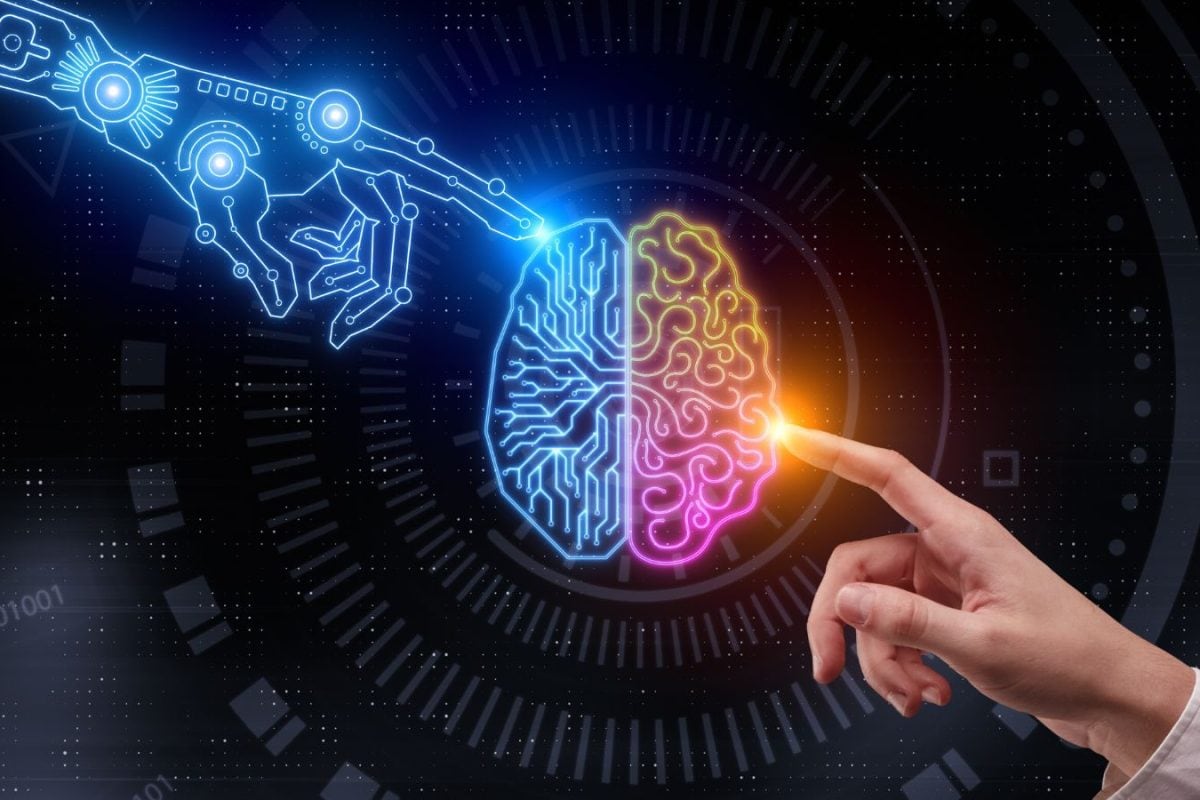
News world Will AI Be Killed By OI? How ‘Mini Human Brains’ Are Powering The Rise Of Organoid Intelligence Will AI Be Killed By OI? How ‘Mini Human Brains’ Are Powering The Rise Of Organoid Intelligence Written By, Last Updated: August 12, 2026, 18:51 IST OI aims to harness the raw processing power, unmatched energy efficiency, and adaptive learning capabilities of living human tissue to create a new generation of biocomputers Biocomputers could revolutionise pharmaceutical research by allowing scientists to test drugs directly on living human brain models, accelerating treatments for Alzheimer’s, autism, and Parkinson's disease without animal testing. Representational image While artificial intelligence consumes massive amounts of energy and relies on rigid silicon microchips, a quiet revolution in biological computing is taking place across global laboratories. Researchers are cultivating living, three-dimensional clusters of human brain cells—known as cerebral organoids—and wiring them to silicon hardware.
This emerging field, termed Organoid Intelligence (OI), aims to harness the raw processing power, unmatched energy efficiency, and adaptive learning capabilities of living human tissue to create a new generation of biocomputers. What Are Brain Organoids? Grown from human-induced pluripotent stem cells—often repurposed from adult skin or blood samples—brain organoids are millimetre-scale, 3D biological structures. Containing upwards of 100,000 to millions of functional neurons and supporting glial cells, these mini-brains form active synaptic networks that spontaneously fire electrical impulses. When mounted onto specialised microelectrode arrays, scientists can send electrical signals into the organoid and record its real-time neural responses, effectively creating a two-way interface between living human tissue and digital software. Biology versus Silicon: The Efficiency Advantage Today’s most advanced artificial intelligence models require vast server farms consuming megawatts of power to process massive datasets. In contrast, the human brain operates complex pattern recognition, decision-making, and continuous learning on roughly 20 watts of power—barely enough to light a standard household bulb.
Organoid intelligence leverages this bio-computational efficiency. Where digital AI requires millions of training samples to recognise simple patterns, living neural networks can adapt and learn tasks from just a handful of trials, offering a vastly superior framework for complex data processing with a fraction of the energy footprint. Real-World Applications and the Ethical Frontier The potential applications of OI extend far beyond replacing silicon chips. Biocomputers could revolutionise pharmaceutical research by allowing scientists to test drugs directly on living human brain models, accelerating treatments for Alzheimer’s, autism, and Parkinson’s disease without animal testing. However, growing functional human brain tissue presents profound ethical questions regarding cellular consent, potential sentience, and commercial ownership. As research teams expand these living networks, international governance frameworks are being developed to ensure that biological computing develops safely, transparently, and ethically. News18 Newsletter Handpicked stories, in your inbox A newsletter with the best of our journalism submit About the Author Pathikrit Sen Gupta Pathikrit Sen Gupta is a Senior Associate Editor with News18.com and likes to cut a long story short.
 The BriefWire