Top Iranian commander visited Iraq to discuss disarmament plan: Source
Esmail Qaani, head of the IRGC’s Quds Force, held meetings over the Iraqi government’s plan to disarm armed groups and bring weapons under state control
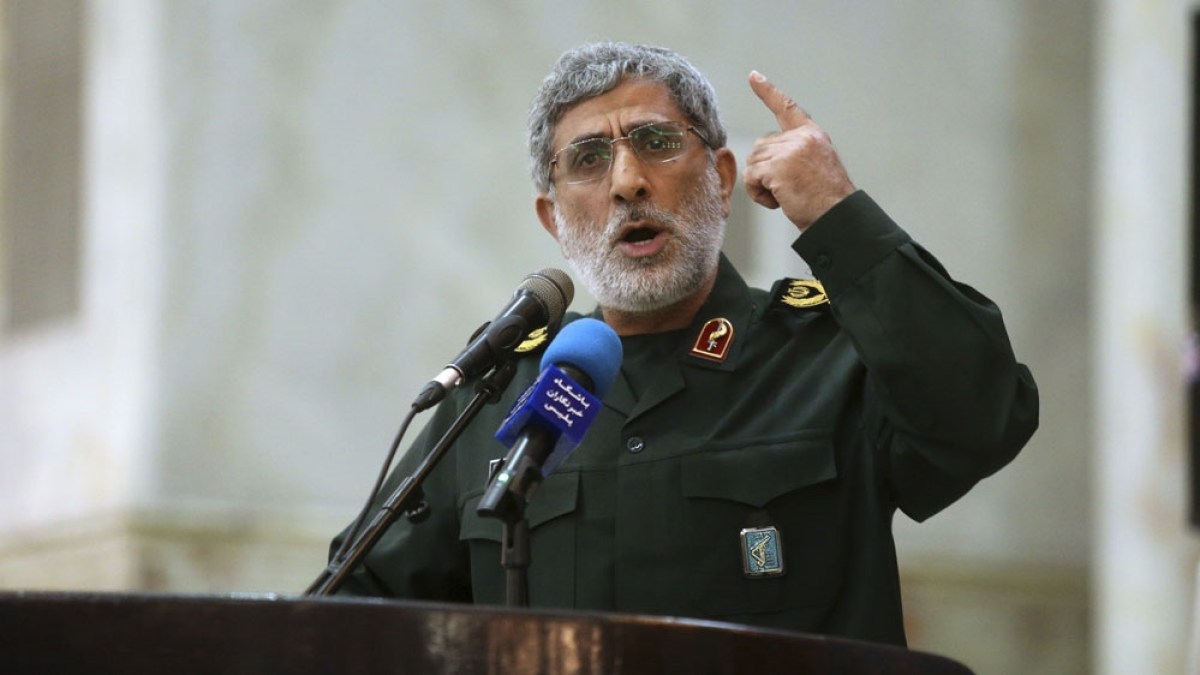
Esmail Qaani, head of the IRGC’s Quds Force, held meetings over the Iraqi government’s plan to disarm armed groups and bring weapons under state control, source tells Al Jazeera. Baghdad, Iraq – An Iraqi source from within the leading Coordination Framework, an umbrella for Shia Iraqi parties, has told Al Jazeera that the commander of the Quds Force in the Islamic Revolutionary Guard Corps (IRGC), Esmail Qaani, made an unannounced visit to Baghdad earlier this week. The source, speaking on condition of anonymity, said Qaani held behind-the-scenes meetings with Iraqi political and security leaders, as well as commanders of Shia paramilitaries, on Monday to discuss the Iraqi government’s plan to disarm the armed groups and bring weapons under state control. “Tehran sent a message via Qaani … no handing over of weapons of the factions at the present time,” the source said, adding that Iran estimates that a new round of war could break out. “The Iranian message stressed on finding a political compromise instead of sliding into confrontation between the government and the armed factions that refuse to hand over their weapons,” the source said, adding that Iraqi political parties oppose the use of force to implement the government’s plan. Iraqi Prime Minister Ali al-Zaidi is facing a mounting political and security crisis as a September 30 deadline to restrict all weapons to state control approaches.
He told parliament that his government is eager to implement a 2024 deal made with the United States-led coalition’s military mission in Iraq to end its presence as combat forces by the end of September. The Iraqi government’s push for a monopoly on arms and the disarmament of pro-Iran armed factions, as well as Baghdad’s relationship with Tehran, were among the topics discussed during al-Zaidi’s visit to the US last month, his first foreign trip since taking office in May. Days after meeting US President Donald Trump, al-Zaidi also headed to Tehran, where he held talks with Iranian President Masoud Pezeshkian. On Tuesday, al-Zaidi directed the parliament’s Security and Defence Committee to prepare a draft law to restrict weapons to the state in accordance with constitutional contexts. He warned that unregulated weapons represent the most dangerous threat to the state as they undermine the authority of the law and the standing of security institutions. But while a number of armed groups have agreed to integrate into the state’s armed forces, the defiant stance of some powerful Shia paramilitaries, including Kataib Hezbollah and Harakat al-Nujaba, threatens to derail the government’s efforts. In a meeting earlier this month, the State Administration Coalition – which includes the most prominent Shia parties, as well as some Sunni and Kurdish political parties – called for the necessity of restricting weapons to the state, and considered the entities carrying out activity that threatens the country’s security outside the official institutions to be “outlaws that must be fought”.
 The BriefWire