Six planets to line up in the sky on August 13: How and when to watch
Skywatchers have another reason to look up in the skies, beyond the total solar eclipse, as a rare planetary parade brings six planets in a
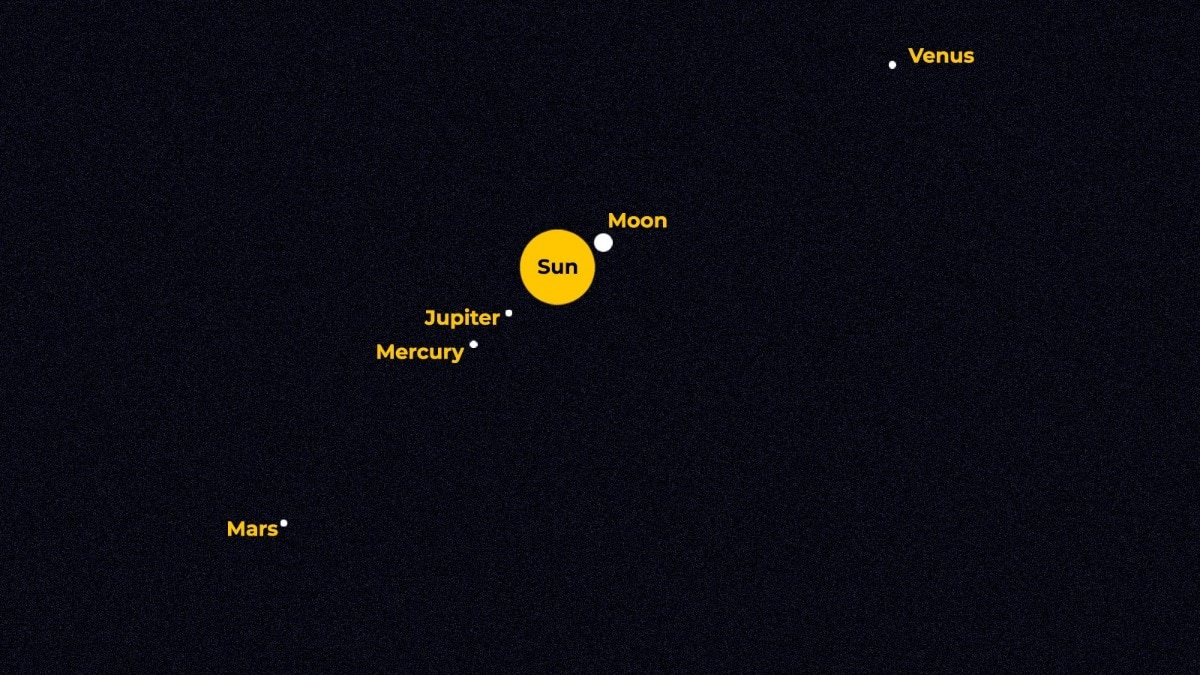
Skywatchers have another reason to look up in the skies, beyond the total solar eclipse, as a rare planetary parade brings six planets in a single file, alongside the Perseid meteor shower. The six planets taking part are Mercury, Jupiter, Mars, Saturn, Uranus and Neptune. They will appear spread along the sky's familiar ecliptic, the apparent path followed by the Sun and planets, creating the impression of a celestial lineup. Read Full Story The best opportunity to see the planetary parade is roughly 30 to 60 minutes before local sunrise on August 13, when the sky is still dark enough for the brighter planets to stand out while the eastern horizon begins to brighten.
However, not all six worlds will be equally easy to spot. Mercury, Jupiter, Mars and Saturn are bright enough to be visible without optical aid under favourable conditions, although Mercury's low position near the horizon can make it difficult to find. Uranus and Neptune are much fainter and generally require binoculars or a telescope. NASA notes that claims of si or seven-planet parades should be understood with this important visibility limitation. A planetary parade does not mean the planets have physically formed a straight line in space. Instead, because the planets orbit the Sun in roughly the same plane, they can appear grouped along the ecliptic when viewed from Earth.
NASA describes these apparent alignments as a result of the geometry of the Solar System rather than the planets actually lining up in a perfect row. The timing makes this particular event especially interesting. August 12 also brings the year's total solar eclipse, while the Perseid meteor shower reaches its peak around the same period. The combination creates an unusually busy 24-hour window for skywatchers. For those hoping to catch the planetary parade, an unobstructed view towards the eastern sky will be important. Binoculars or a advanced telescope can significantly improve the chances of spotting the fainter outer planets.
So, if you're planning to watch the skies on August 12, set the alarm before sunrise, the morning could offer a rare chance to see six worlds sharing the same celestial stage. Ends
 The BriefWire