465 Soviet gold bars sank in 1942. 40 years later, divers found them
Representative AI image How 465 Soviet gold bars ended up on a British warship Keith Jessop and the search for the sunken gold Divers spent
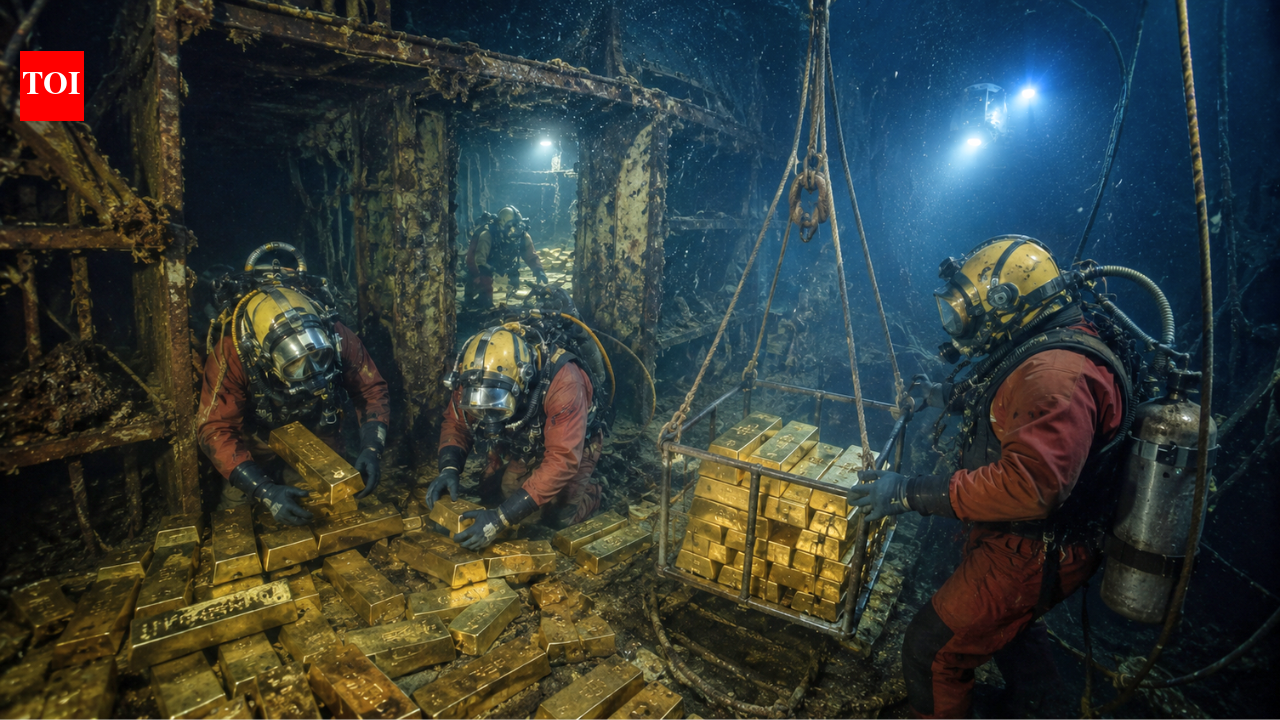
Representative AI image How 465 Soviet gold bars ended up on a British warship Keith Jessop and the search for the sunken gold Divers spent weeks underwater to recover the gold 460 bars were eventually recovered, but five remain missing In 1942, British light cruiser HMS Edinburgh sank in the Barents Sea after being badly damaged by German torpedoes, taking 58 crew members and 465 Soviet gold bars with it. The bullion, weighing about 4.6 tonnes, was being carried as part of wartime payment for supplies and equipment. The wreck settled about 800 feet below the surface, where the gold remained for almost four decades. In 1981, British salvage diver Keith Jessop led an ambitious expedition to locate the ship and recover its cargo. After weeks of dangerous saturation diving in freezing Arctic waters, divers finally reached the bomb room and recovered hundreds of gold bars from the wreck.The gold was being transported as part of wartime financial arrangements between the Soviet Union and its Allies. HMS Edinburgh left Murmansk on April 28, 1942, carrying 465 gold bars connected to Soviet purchases of wartime supplies, including equipment from the United States. The bullion was worth around £1.5 million at the time and was covered by a 1942 War Risks Insurance agreement. The journey soon turned into a disaster when German forces detected the convoy.
The submarine U-456 fired torpedoes at HMS Edinburgh, with two striking the cruiser and severely damaging it.The attack killed 58 sailors and left the ship crippled. British vessels attempted to tow it towards safety, but another German attack made recovery impossible, and the damaged cruiser was eventually scuttled in the Barents Sea. The ship sank with the gold stored in its bomb room and became the final resting place of the sailors who died. A salvage contract was prepared as early as 1954, but the operation was delayed because of political difficulties involving the Soviet Union, concerns about disturbing the wartime grave and doubts about the technology available to recover the bullion safely. The gold therefore remained underwater for decades.Interest in the lost fortune returned in the late 1970s as gold prices increased sharply. British salvage diver Keith Jessop assembled a consortium of specialist companies and secured a contract with the British government under a "no cure, no gain" arrangement. The agreement meant the consortium would receive nothing if it failed to recover the gold but would receive a substantial share of its value if the operation succeeded. The team combined survivor accounts, historical records and information from Norwegian fishermen whose nets had become caught on underwater obstructions to identify a likely search area. In April 1981, they began searching using sonar and echo-sounding equipment.
 The BriefWire