Astronomers catch massive star exploding and track supernova for 3 months
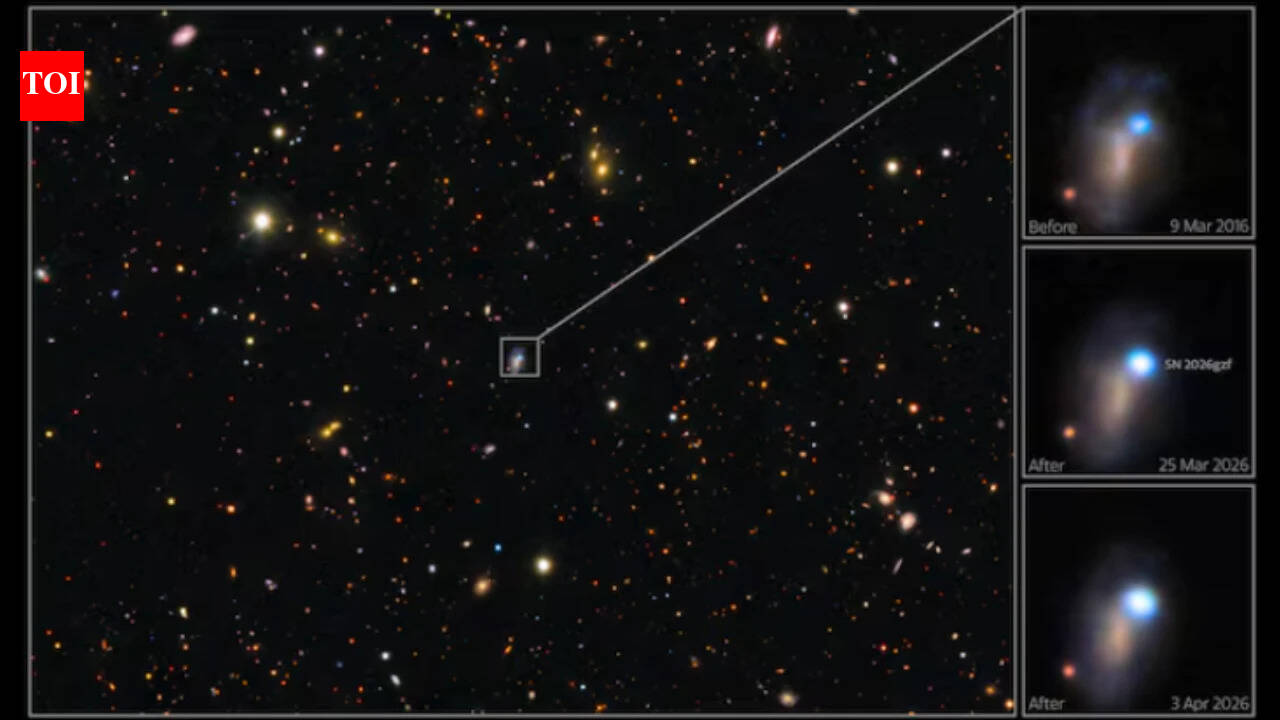
A combination of images show the evolution of supernova SN 2026gzf, which was first detected by the Einstein Probe on March 21, 2026. Images taken
A combination of images show the evolution of supernova SN 2026gzf, which was first detected by the Einstein Probe on March 21, 2026. Images taken on March 25 and April 3, 2026, show the supernova brightening.
An archival image of the host galaxy from March 9, 2016, reveals a bright blue source at the location of the supernova, which scientists say likely represents a compact, extreme star-forming region in the host galaxy, combined with pre-explosion activity of the star before its death.
CTIO/NOIRLab/DOE/NSF/AURA Image Processing: D. de Martin & M. Zamani (NSF NOIRLab)/Handout via REUTERS THIS IMAGE HAS BEEN SUPPLIED BY A THIRD PARTY. NO RESALES. NO
ARCHIVES. MANDATORY CREDIT
 The BriefWire