A funeral under tarpaulin: Thane tribal hamlet still awaits cremation ground
Heavy rain poured over an open field as villagers struggled to give a dignified farewell to a woman who had spent her life in a
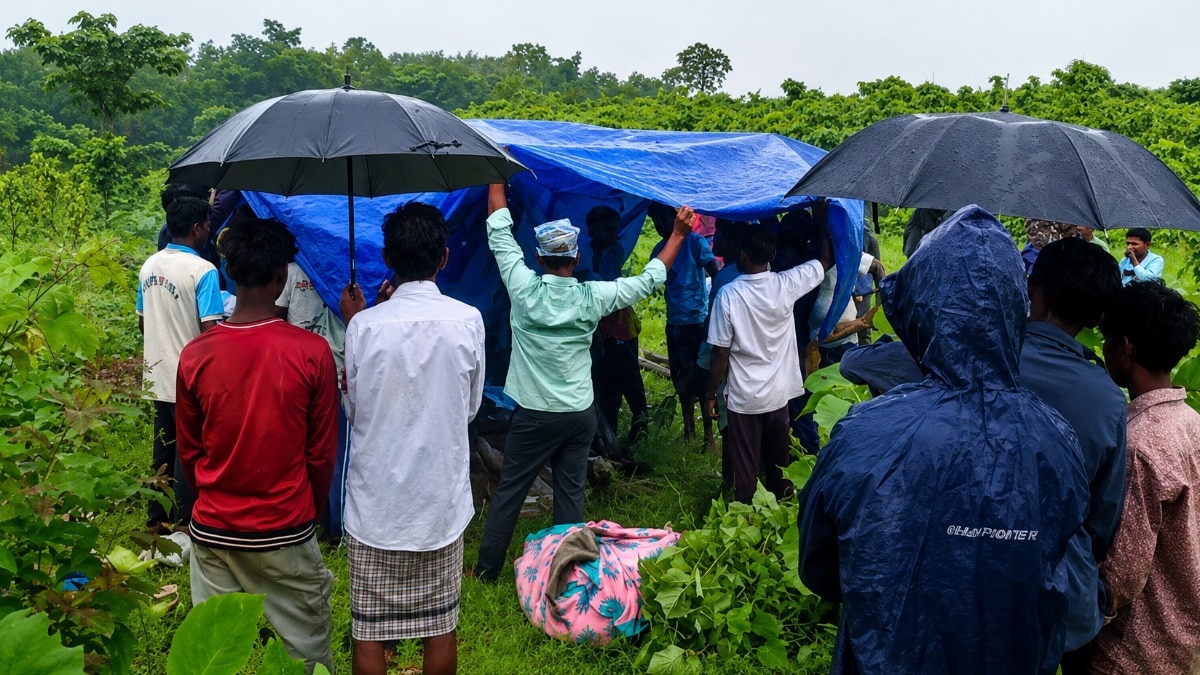
Heavy rain poured over an open field as villagers struggled to give a dignified farewell to a woman who had spent her life in a tribal settlement in Maharashtra's Thane district that, even 79 years after Independence, does not have a proper cremation ground. When Jayabai Wagh, a gram panchayat committee member, died, her final journey ended not at a designated cremation ground but in the open field. Read Full Story As the rain showed no respite during her funeral on Tuesday, villagers had no choice but to hold up tarpaulin and plastic sheets over the pyre in an effort to keep it alight.
The distressing incident captures a reality that villagers say they have been living with for years: There is simply no proper place in the primitive Umbharai settlement. The locals claim that they have been approaching the administration for nearly two years for a cremation ground. Around two years ago, an official came to inspect a proposed site and assured the residents that a cremation ground would be constructed. But the promise, villagers allege, has remained unfulfilled. The Umbharai settlement has a population of around 100 people. Residents say that every funeral forces them to depend on whatever open space is available, regardless of the weather or terrain.
Meanwhile, the plight of Umbharai is not an isolated one, villagers and social organisations claim. They allege that more than 250 villages and hamlets across Shahapur taluka, where Umbharai is located, face problems related to the availability of cremation grounds. In some places, land is unavailable, while in others, funds and basic infrastructure are lacking. Several remote settlements remain poorly connected by roads, making even the transportation of a body to a cremation ground difficult during the monsoon. In some areas, villagers have to cross streams and rivers to reach places where last rites can be performed.
The contrast is stark: even as projects worth crores of rupees are announced and development is discussed, several tribal settlements continue to struggle for essentials such as roads, drinking water, electricity, healthcare — and now, a place to cremate their dead. Jayabai Wagh's funeral has once again brought that gap into painful focus. Ends
 The BriefWire