From Hindu Nationalism To ‘Oneness’: How Mohan Bhagwat Is Recasting RSS For US
News india From Hindu Nationalism To ‘Oneness’: How Mohan Bhagwat Is Recasting RSS For US From Hindu Nationalism To ‘Oneness’: How Mohan Bhagwat Is Recasting
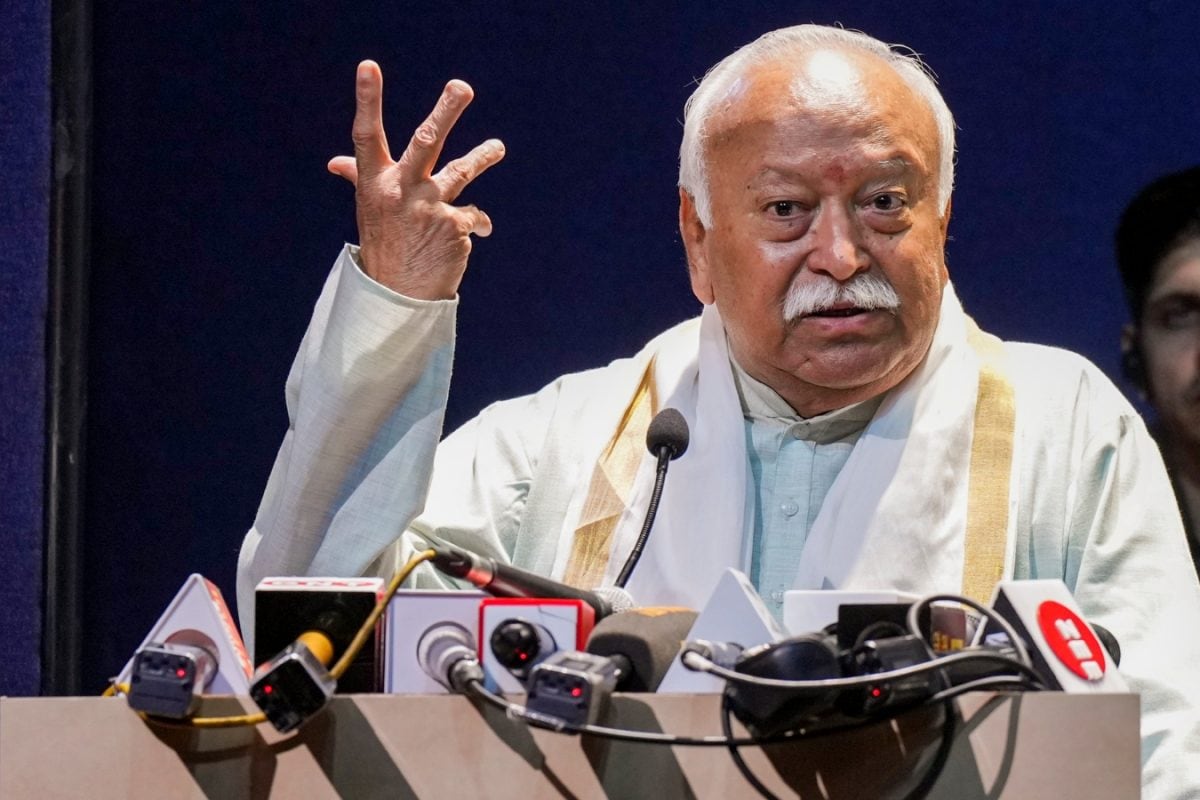
News india From Hindu Nationalism To ‘Oneness’: How Mohan Bhagwat Is Recasting RSS For US From Hindu Nationalism To ‘Oneness’: How Mohan Bhagwat Is Recasting RSS For US Reported By, Last Updated: August 12, 2026, 08:31 IST With the RSS chief in New York, the Sangh is taking its civilisational message abroad, framing Hindu identity through pluralism, civic participation, service and global harmony Rapid Read Mohan Bhagwat's recent outreach in India has increasingly sought to engage constituencies beyond the RSS’s traditional organisational base. (PTI) Ahead of his upcoming US tour as part of the RSS’s global outreach, chief Mohan Bhagwat’s messaging appears to be shifting away from political nationalism towards pluralism, civic participation, service and the idea of Vasudhaiva Kutumbakam, signalling a deliberate attempt to widen the global conversation around Hindu identity. The choice of words is revealing. When Bhagwat addresses a large gathering in New York on August 29, the spotlight will inevitably be on him speaking. But the more interesting story may lie in how his message is being packaged for the American audience. The event, organised by American Hindus for Engagement and Dialogue (AHEAD), has been titled as the ‘Universal Oneness Celebrations’. The programme coincides with Raksha Bandhan and promises the participation of hundreds of cultural, spiritual, service, faith and community organisations. Yet, the language of the announcement is strikingly different from the political-social-cultural vocabulary usually associated with the RSS in India. The statement, issued by the RSS, foregrounds pluralism, civic participation, interfaith understanding, global harmony, mutual respect, shared responsibility and service. And at the centre of that framing is Vasudhaiva Kutumbakam—the world is one family. This is not merely a change in terminology.
It potentially reflects a larger recalibration of how the RSS wants its civilisational message to travel beyond India. Speaking with News18, Ratan Sharda, author and RSS ideologue, said: “This programme is meant more for the people who are not connected with Hindutva and Hindu philosophy or the RSS. There is no requirement that they be in sync with Hindutva. The idea of ‘oneness’ is being presented as a universal proposition, that we are all interconnected, that diversity need not mean division." “The word nationalism has acquired a negative connotation in much of the West; oneness is a civilisational idea that can travel beyond national boundaries. Vasudhaiva Kutumbakam is about finding commonality while accepting that people will express themselves in diverse ways," he explained. Possible Impact On India The RSS has spent decades building a vast organisational ecosystem in India around service, social work, cultural identity and community mobilisation. Now in the West, the language appears to be shifting towards cultural participation and engagement, presenting Hindu thought as something that can contribute to the public sphere rather than merely define a community within it. The distinction matters. “There have been sustained attempts to portray Hindus in a negative light and create what can only be described as a kind of Hindu phobia. One of the important outcomes of such a programme by Mohan Bhagwat-ji would be to give Hindus and Hindu Dharma a positive articulation of their own civilisational tradition," said Sharda. “Hindu dharma does not insist that there is only one path or one way of understanding the truth; it has historically accommodated diversity. At a time when conflicts are often rooted in exclusivism, the idea of universal oneness can offer an alternative, and that can ultimately be good not just for Hindus, but for humanity," Sharda added.
 The BriefWire