You know him or do you? Meet Manu Rishi Chadha, Musharraf of Operation Safed Sagar
By now, if you have watched Operation Safed Sagar, you know actor Manu Rishi Chadha as the man behind Pervez Musharraf - the calculating Pakistani
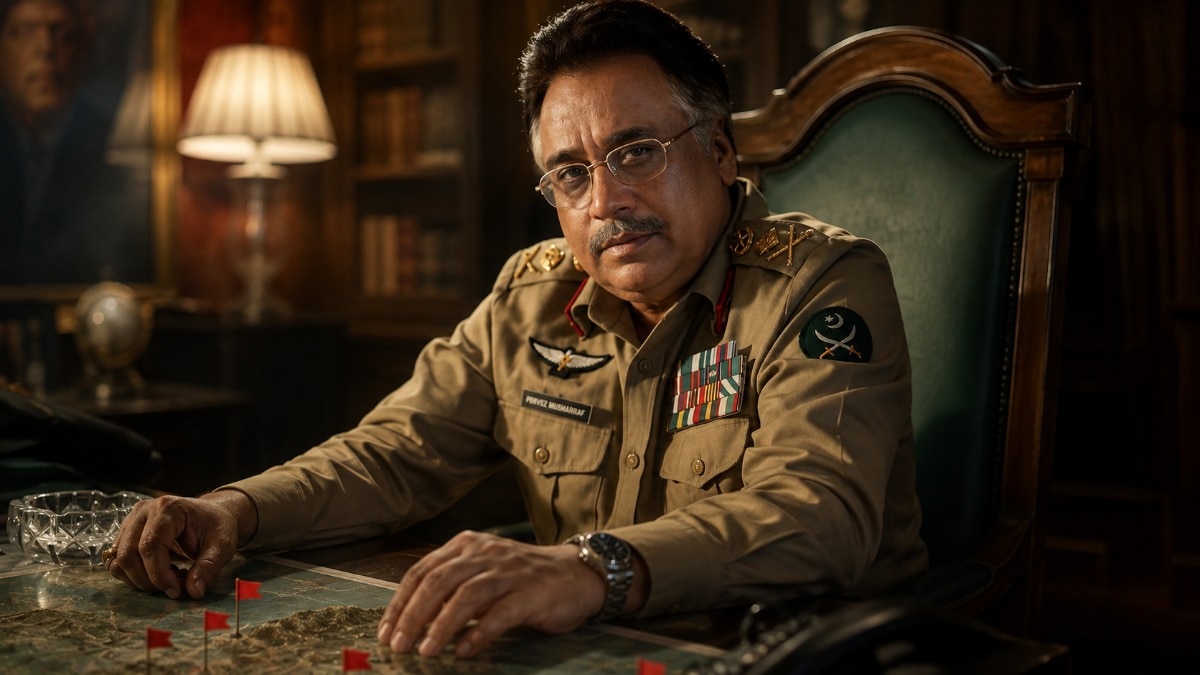
By now, if you have watched Operation Safed Sagar, you know actor Manu Rishi Chadha as the man behind Pervez Musharraf - the calculating Pakistani Army chief quietly plotting his moves while the Kargil conflict unfolds. But there is a reason the performance may feel so familiar. Chadha has spent years playing the men who walk into a scene, make an impression and leave before you realise they have actually done. As Musharraf, he does not play the obvious villain. There is no loud posturing or exaggerated menace. Instead, Chadha keeps the character measured and watchful. The calculation sits in his expression. Even when he says little, you sense that he is already thinking several moves ahead. Actor Gajraj Rao, who is also Chadha’s longtime friend, picked up on that quality. Sharing his thoughts on Instagram, Rao praised Chadha for playing Musharraf without turning him into “a typical villain or a caricature”. He wrote that the actor gets “under the skin” of the character and brings out his cunning, strategic mind and determination. For Chadha, that kind of restraint is hardly new.
It has been the quiet thread running through his career. Photo: Netflix India Long before Musharraf, there was theatre. Born in New Delhi on January 3, 1971, Chadha was expected to join his father’s automobile spare-parts business. Instead, he chose the stage. He left college and joined Arvind Gaur’s Asmita Theatre group, spending nearly a decade performing in more than 40 plays. The theatre experience gave him something that would become useful on screen: an understanding of silence, rhythm and presence. His work included plays by Girish Karnad, Mahesh Dattani, Shakespeare and Dario Fo. It was a long apprenticeship, but one that shaped the actor he would become. In 2001, Chadha moved to Mumbai. His first film appearance came in Saathiya, where he had a small role as a doctor. There were more supporting parts after that. They were not always the roles audiences walked into a theatre to see, but Chadha had a knack for making them count. Read Full Story Then came Oye Lucky! Lucky Oye! in 2008. The film changed the way the industry saw him.
As Abhay Deol's partner-in-crime, Chadha was not just an actor in the film. He wrote its dialogues and lyrics, earning Filmfare and IIFA awards for Best Dialogue. It also revealed another side of him: his ear for language and his instinct for characters who sound like real people. That instinct has travelled across genres. There is the easy humour of Phas Gaye Re Obama, where he played Anni Rastogi, a member of the kidnapping gang. In Ankhon Dekhi, he was Sharma Ji, bringing warmth and eccentricity to the character. In Kya Dilli Kya Lahore, he played Samarth Pratap, one of the soldiers caught on opposite sides of the India-Pakistan border. Then came films such as Rajma Chawal, where he played Mittal, Angrezi Medium, in which he appeared as Bheluram, and Shubh Mangal Zyada Saavdhan, where he played the homophobic uncle Chaman Chacha, continuing to bring texture to supporting roles. Streaming gave him even more room to stretch. His work in Mirzapur, where he played IG Vishuddhanand Dubey, Inside Edge, as businessman Handa, Candy, as corrupt MLA Money Ranaut, and Maharani, as Balmukund Chaudhary, showed that the actor known for comedy could also make menace feel effortless.
 The BriefWire