Border will define ties: India to China over reports of troop activity in Arunachal
India on Tuesday said it treats issues related to the border with China as "most serious" and stressed that maintaining peace and tranquillity along the
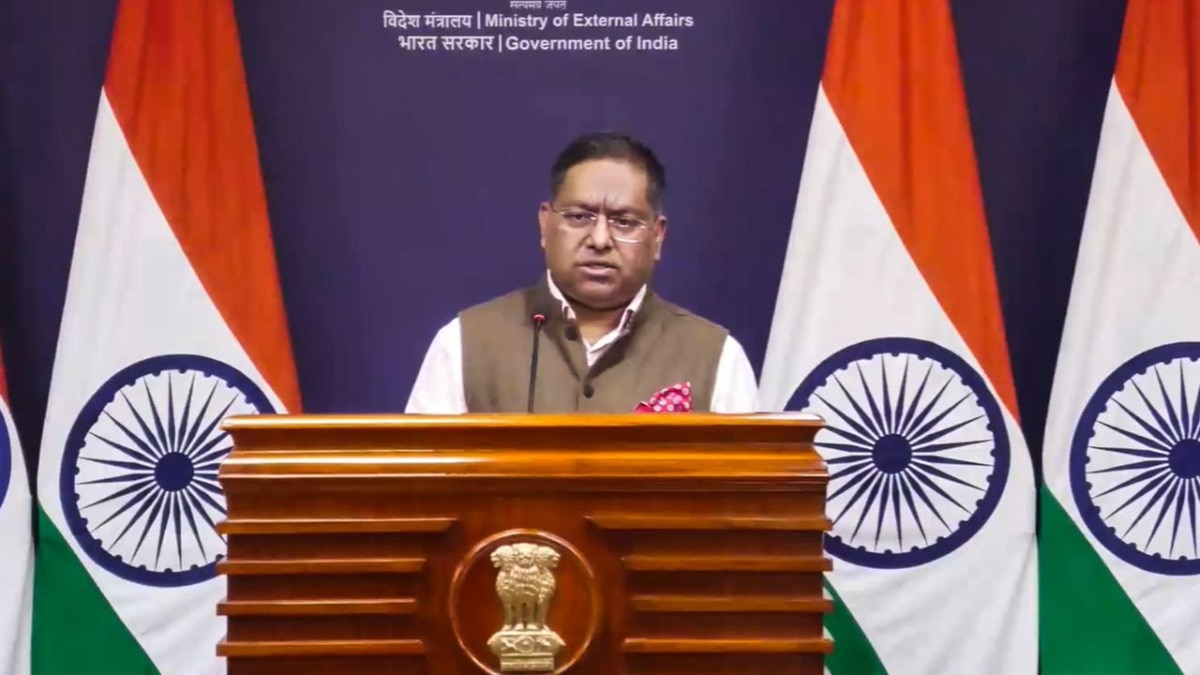
India on Tuesday said it treats issues related to the border with China as "most serious" and stressed that maintaining peace and tranquillity along the Line of Actual Control is of "utmost importance". The Ministry of External Affairs also said the situation on the border will shape the broader course of India-China ties. The remarks came amid reports of aggressive posturing by Chinese troops in Arunachal Pradesh's Upper Subansiri region. India also rejected China's criticism of its decision to formally identify 27 places and geographical features in Arunachal Pradesh by their standard names, saying the state is an "inalienable and integral" part of India. Read Full Story At his bi-weekly media briefing, MEA spokesperson Randhir Jaiswal said, "In matters relating to the border areas between India and China, we have always emphasised in discussions with the Chinese side that we consider these issues as most serious and that the maintenance of peace and tranquillity in these areas is of the utmost importance." He added, "We have also stated that the state of the border affairs will reflect on the state of our larger bilateral ties." Jaiswal was responding to questions on reports of a standoff between the two sides in Upper Subansiri late last month and whether the matter had been taken up diplomatically with China.
There was no comment from the Indian Army on the reports. The spokesperson said India had again flagged the need for peace and tranquillity in the border areas during the latest round of diplomatic talks with China. "This was also reiterated at the recently held 36th meeting of the Working Mechanism for Consultation and Coordination on India-China border affairs (WMCC) on August 6," he said. Jaiswal said the two sides held frank discussions and reviewed the situation along the LAC. "The Indian side again underlined that maintaining peace and tranquillity in the border areas is essential for the overall development of bilateral relations." He added, "It was agreed to continue to use existing diplomatic and military channels, including the WMCC, local commander-level meetings and other agreed mechanisms, to resolve outstanding issues and avoid misunderstanding and miscalculation along the LAC." On Arunachal Pradesh, Jaiswal rejected Beijing's criticism of New Delhi's move to standardise names of 27 places and geographical features in the state.
"Arunachal is inalienable and integral part of India and this is a fact which is self-evident. At the same time, let me also underline that nothing can change this indisputable reality," he said. India and China have rolled out a series of measures over the last year to rebuild ties after relations came under severe strain following the deadly Galwan Valley clashes in 2020 and the military face-off that continued for over four years. In October 2024, the two sides finalised a disengagement pact for Depsang and Demchok, the last two friction points in eastern Ladakh. Days later, Prime Minister Narendra Modi and Chinese President Xi Jinping met in Kazan and took a number of decisions to improve ties. In August last year, Modi travelled to Tianjin for the annual SCO summit, where he and Xi held extensive talks. Modi said at the meeting that India is committed to taking forward ties with China based on mutual trust, respect and sensitivity.
 The BriefWire