A diver found a $3 million gold cross in a Spanish shipwreck
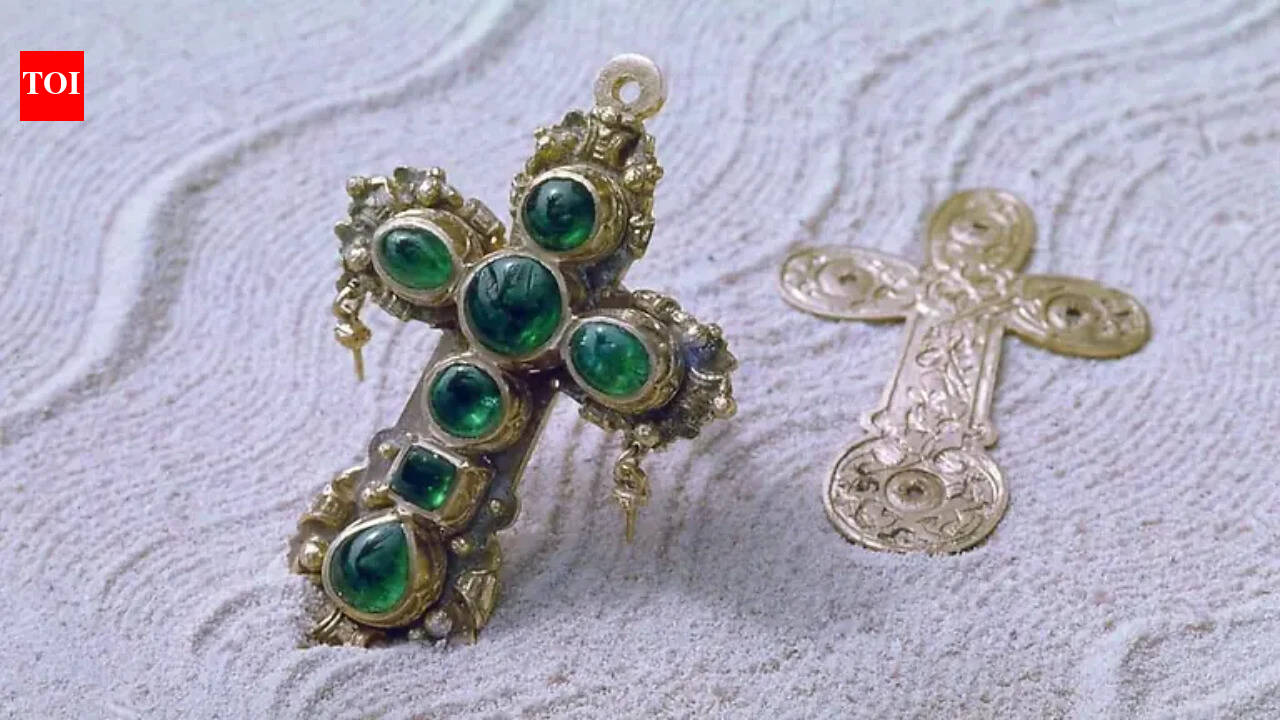
Golden Emerald Cross From 16th‑Century Shipwreck, PC: Teddy Tucker How Teddy Tucker found the wreck that changed his life Why the ship's exact identity remains
Golden Emerald Cross From 16th‑Century Shipwreck, PC: Teddy Tucker How Teddy Tucker found the wreck that changed his life Why the ship's exact identity remains disputed What made the cross so exceptional among shipwreck treasures How the theft unfolded just before a royal visit Why the mystery has never been solved In 1955, a Bermudian diver named Teddy Tucker pulled a gold cross studded with seven emeralds from the wreck of a sixteenth-century Spanish galleon resting in the reefs off Bermuda. It would go on to be called one of the most valuable single objects ever recovered from a shipwreck. Tucker eventually sold the entire haul to the government of Bermuda so the treasure could stay on the island, and the cross went on public display, first at the Bermuda Aquarium and later at the Bermuda Maritime Museum. Then, in 1975, just before Queen Elizabeth II arrived for a scheduled visit to the museum, the real cross vanished from its case and was replaced with a near-identical plastic replica. Decades of investigation followed, yet the original has never been recovered, and no one has ever been charged.Tucker was a former British Royal Navy diver trained in underwater demolition during the Second World War, and after returning home to Bermuda, he built a career as a salvage diver, working closely with local fishermen and following long-standing rumours of ships lost on the island's reefs.
In 1950, while cruising Bermuda's outer reefs, he spotted six cannons lying in the sand between two reefs, marking his first sighting of the wreck.He returned five years later, in 1955, for a proper excavation, and over repeated dives that year recovered ship's timbers, porcelain, coins, gold ingots, pearl-studded gold buttons and finally the cross itself, found beneath a plank of the ship's hull. According to the Museum of Bermuda's own account of its collection, items from the wreck, including a Ligurian majolica plate now held by the museum, were recovered from the San Pedro, a Spanish vessel that wrecked off Bermuda in 1596 while returning to Spain from Cartagena, Colombia.Pinning down precisely which ship Tucker found has proven difficult, since San Pedro was a common name for Spanish vessels during this period, and several ships carrying it wrecked in the general area around the same decade. Tucker himself believed the wreck belonged to a San Pedro lost in 1594, based on the location of the find and markings on some of the recovered items, though other researchers have argued the ship dates closer to 1596. Sixteenth-century Spanish and Portuguese fleets typically sailed return routes linking ports such as Cartagena, Havana, Portobelo and Veracruz back toward Seville, Lisbon or the Azores, and Bermuda's position along the Gulf Stream made it a notorious hazard for ships pulled off course on those journeys, which only adds to the difficulty of matching this particular wreck to a single confirmed voyage in the historical record.Made of 22-karat gold and set with seven emeralds, the cross stood out immediately for both its craftsmanship and value.
 The BriefWire