Inalienable part of India: Govt hits back at China over Arunachal mapping row
India on Tuesday rejected China’s latest objection to New Delhi formally marking 27 locations in Arunachal Pradesh on its official maps, asserting that the northeastern
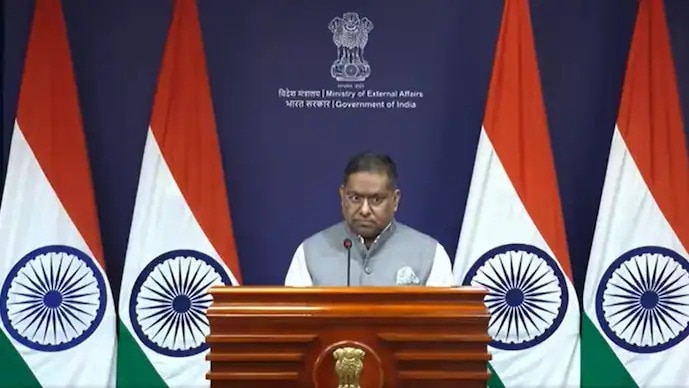
India on Tuesday rejected China’s latest objection to New Delhi formally marking 27 locations in Arunachal Pradesh on its official maps, asserting that the northeastern state is an “inalienable and integral part of India” and that nothing could change that reality. Responding to Beijing’s criticism of the mapping exercise, Ministry of External Affairs spokesperson Randhir Jaiswal said India’s position on Arunachal Pradesh remained unequivocal. Read Full Story “Arunachal is an inalienable and integral part of India and this is a fact which is self-evident. At the same time, let me also underline that nothing can change this indisputable reality,” Jaiswal said. The response came a day after China objected to India assigning standard names to 27 locations in Arunachal Pradesh and reiterated its territorial claim over the state. Beijing refers to Arunachal Pradesh as “Zangnan” and does not recognise India’s sovereignty over the region, a position New Delhi has consistently rejected. INDIA, CHINA TRADE BARBS OVER ARUNACHAL Chinese Foreign Ministry spokesperson Guo Jiakun had called India’s move “illegal, null and void” while reiterating Beijing’s claim over Arunachal Pradesh.
“Zangnan region is China’s territory,” Guo said, rejecting what Beijing describes as the “so-called Arunachal Pradesh." China also objected to India assigning standard names to locations in the state, maintaining that the exercise would not alter Beijing’s territorial position. India, in response, made it clear that China’s objections would have no bearing on the status of Arunachal Pradesh. The latest exchange is part of a long-running cartographic dispute between the two countries. China has repeatedly issued Chinese names for locations in Arunachal Pradesh, while India has rejected such exercises, maintaining that assigning new names cannot alter territorial sovereignty. Earlier this year, Beijing issued another list of names for locations in what it calls Zangnan, prompting another rejection from New Delhi. INDIA FORMALLY MAPS 27 LOCATIONS The latest row was triggered after India formally identified 27 locations and geographical features in Arunachal Pradesh by their standard names on official Survey of India maps.
The exercise covers strategically and historically significant settlements, mountain passes, a lake and a war memorial, including several locations associated with the India-China border dispute and the 1962 war. Among them are Longju, an early flashpoint in India-China tensions in 1959, and Thag La, which is associated with the opening phase of the 1962 war. Other locations include Jairampur, Jaswant Garh, Sambho Sarovar, Bara Kundun, Chhota Kundun, Dhan Bari, Pritnagar, Teritnagar, Ramnagar, Sagar, Padma, Jyotinagar and Baisakhi. The Sher-e-Thapa Memorial has also been formally marked. The government has maintained that the exercise is aimed at ensuring precise identification of the locations and improving public awareness, rather than redrawing India’s boundaries. BORDER PEACE KEY TO LARGER TIES: INDIA Even as the two sides trade sharp statements over Arunachal Pradesh, India has stressed that peace along the Line of Actual Control remains essential for improving the broader bilateral relationship. Jaiswal said India has consistently conveyed to China that border-related issues are treated with the “utmost seriousness” and that the state of the border will have a bearing on the wider relationship.
 The BriefWire