Do political parties understand youth concerns? What C-Voter Gen Z poll reveals
Dharmendra Pradhan's dramatic resignation marked the first time that one of Narendra Modi's ministers was forced to step down due to public pressure. The development
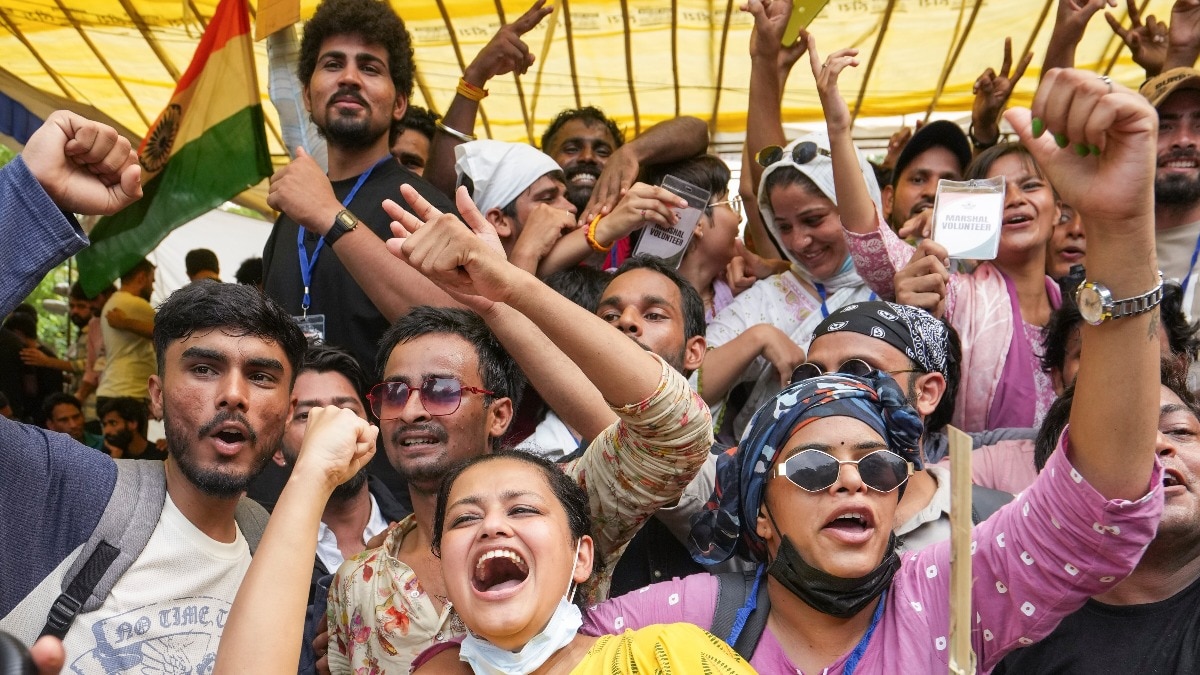
Dharmendra Pradhan's dramatic resignation marked the first time that one of Narendra Modi's ministers was forced to step down due to public pressure. The development showed that the voice of India's Gen Z could not be ignored. Now, a CVoter snap poll has revealed that nearly six in 10 youngsters do not think that political parties understand the concerns of Gen Z, referred to as those born between 1996 and 2010. Read Full Story The survey comes against the backdrop of the recent student protests, which were spearheaded by the Cockroach Janta Party (CJP), and offers a glimpse into how India's Gen Z view the political parties, electoral issues, nationalism and how much social media shapes their opinions. After all, the movement has shown that Gen Z has an aura -- and a language -- of its own. So, through this survey, we give you a closer look at what shapes the thinking and priorities of India's youth. As per the survey, conducted among those aged between 18-35 years, as many as 58.7% of the respondents said political parties do not understand the concerns of Gen Z. Only 20.7% felt they do.
Another 20.5%, however, remained neutral or preferred not to say. Around 1,270 people were surveyed for the CVoter snap poll. Interestingly, the perception cuts across political preferences. Among the respondents aligned with the BJP-led NDA, 54% said political parties do not understand Gen Z concerns. Only 26% replied in the affirmative. The figure was significantly higher among those supporting the opposition. Around 64% said political parties were out of sync with India's youth. Around 58.5% of those backing other parties held the same view. EDUCATION, HEALTH TOP GEN Z'S CONCERNS The recent protests at Delhi's Jantar Mantar, and the subsequent agitations in Punjab and Jharkhand, have shown how much importance Gen Z places on education. The CVoter survey reveals that the youth are focused more on everyday issues. An overwhelming 53% of the respondents revealed that employment, education and health were the biggest electoral issues. Inflation was the second-biggest factor (13.1%), followed by corruption (11.9%). The age-old issues of bijli, paani, sadak (electricity, water and roads) were important to 8.2% of the Gen Z respondents. For 4.8% of those surveyed, law and order and women's safety were the most important electoral issues.
security was important for just 2.7% of India's Gen Z. The survey also gave a glimpse into the voting preferences of Gen Z. Around 33.3% underlined that "issues" were the key basis for deciding their vote. The choice of a leader was secondary for India's Gen Z (20%). Only 13.9% of the Gen Z respondents said they would primarily base their vote on the party. Only a mere 7.7% said the candidate would be the key factor in their decision. GEN Z ON SOCIAL MEDIA, NATIONALISM The survey has revealed that social media plays a significant role in shaping political opinion among Gen Z. Nearly half of the respondents - 49.3% - asserted that social media played a key role. No surprises here. The surprise was in the next question. When asked whom they trust most on matters affecting their lives, 'parents' were the overwhelming choice for Gen Z at 75.1%. Friends were a distant second at 6.9%, followed by social media influencers at 6.8%. Gen Z also wants greater youth representation in politics. Nearly three-fourths of those surveyed (74.6%) said they would vote for young candidates if political parties fielded them in elections.
 The BriefWire