Afghanistan five years of Taliban rule: Has Germany kept its promises?
After the Taliban retook power in Afghanistan on August 15, 2021, Berlin promised to bring all the Afghan local staff members to Germany. But people
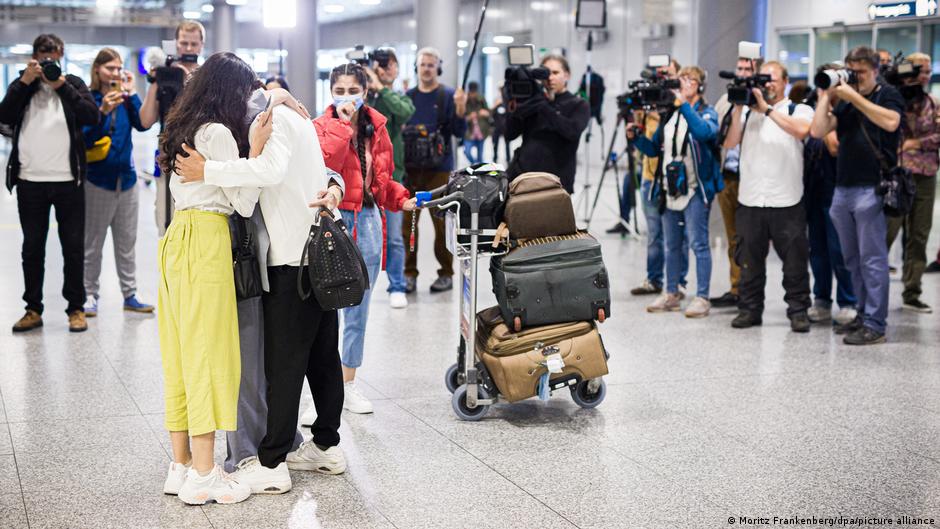
After the Taliban retook power in Afghanistan on August 15, 2021, Berlin promised to bring all the Afghan local staff members to Germany. But people are still waiting to leave in Pakistan and Afghanistan. It is hard to know which promise from German politicians the "local staff" — Afghans who assisted German efforts in the country — relied on most. Perhaps that from then-Foreign Minister Heiko Maas, who on August 26, 2021, 11 days after the Taliban took power, said: "Our work continues until all those for whom we carry responsibility in Afghanistan are safe." By June this year, more than 37,000 Afghan nationals had arrived in Germany since the Taliban retook power. These are people who worked alongside Germany's Bundeswehr armed forces or German aid programs, plus their relatives. It also includes people who are especially at risk, such as activists and journalists who advocated for human rights and against the Taliban. For Ahmad Samid, who worked for the Bundeswehr as an audio engineer, Germany kept its promise. For Javad Niazi, who worked for the Ministry for Economic Cooperation and Development (BMZ), it did not. He remains stuck in the city of Peshawar in Pakistan. Both are using false names because they still fear the Taliban and possible repercussions for themselves and their families. Hundreds of Afghans still waiting Samid works as a receptionist at a hotel in a large German city and told DW in very good German: "I am very grateful to Germany. But if someone says, 'I will help you,' then it must remain that way. One must keep a promise." In August 2026, 5 years after the Taliban quickly seized back power in Afghanistan, it seems that Germany no longer wants to know about the big promises it made. In the case of Javad Niazi, Germany has, one must say, broken its promise.
He is in the same position as 600 other Afghans who are desperately holding out in Peshawar and in Kabul, continuing to hope that they can leave for Germany. He and his family say they feel trapped in a small cage, he told DW. Their savings have been used up, he has no residence permit for Pakistan and he cannot leave his temporary accommodation for fear of Pakistani security forces, who arrest and deport Afghan nationals daily. "My 14-year-old son goes shopping when it gets dark here. We cannot go to any bazaar, park, or hospital; my children cannot go to school. It is an enormous strain on us. We never would have thought that a country like Germany would take back its decision, it's unbelievable." Afghan refugees at risk as deportations surge in Pakistan To view this video please enable JavaScript, and consider upgrading to a web browser that supports HTML5 video New government does not want to take in any more local staff Taking back its decision, as Javad Niazi put it, is what the new German government, comprising the conservative bloc of Christian Democratic Union and Christian Social Union (CDU/CSU) and the center-left Social Democrats (SPD) under Chancellor Friedrich Merz did in May 2025 with its coalition agreement to scrap the resettlement programs. Half a year later, those who had been left behind appealed to the chancellor directly for help in a two-page letter calling for help: "We wanted and needed to escape Taliban rule to survive. We cannot go back to Afghanistan. It would end brutally and violently for many of us," they wrote. But the German government remains firm and, in the meantime, is cooperating with the Taliban "on a technical level" via the Afghan diplomatic mission in Germany to send Afghan nationals who have committed crimes in Germany back to Afghanistan — and recently also the first person from Afghanistan with no criminal record.
 The BriefWire