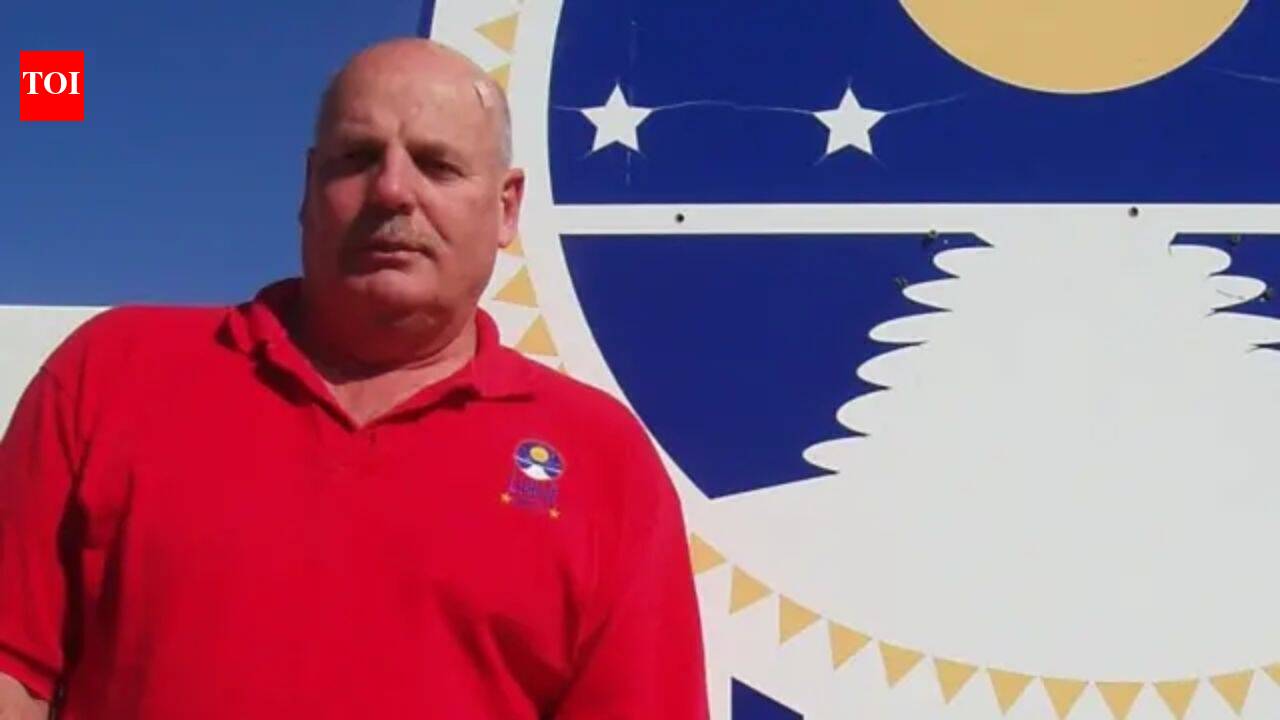
Meet Dennis Hope: The man who claimed the Moon and made millions
How an unemployed man turned the moon into a property idea The legal challenge behind Hope’s claim to the moonz The surprisingly low price of
How an unemployed man turned the moon into a property idea The legal challenge behind Hope’s claim to the moonz The surprisingly low price of owning an acre on the moon Hope's property empire went far beyond the moon Why Hope claimed rights to the moon’s valuable resources Why Hope said some lunar areas should be protected The man behind the moon certificates became a documentary subject The business kept growing despite the legal uncertainty For centuries, owning land has meant having a place that can be measured, divided and legally transferred. Dennis Hope thought he had found an exception. In the late 20th century, while considering how to make money from property, the unemployed American turned his attention away from land on Earth and towards the moon. He had read the 1967 United Nations Outer Space Treaty, which prevents countries from claiming celestial bodies as their territory. Hope believed the wording left an opening for a private individual. He declared the moon his property, divided it into parcels and began selling certificates to customers around the world. The idea attracted buyers, but it also raised a basic legal question: can anyone actually own a piece of the moon?Hope's story started when he was out of work and thinking about how he might make money from property. Real estate seemed familiar enough, but there was a problem: conventional land was already owned, divided and priced by somebody else. The moon presented a rather different possibility.During his university years, Hope had encountered the 1967 United Nations Outer Space Treaty. The agreement established that nations could not claim sovereignty over celestial bodies such as the moon. Hope interpreted the wording as leaving room for a private individual to make a claim.He eventually sent a declaration to the United Nations stating that he intended to claim the moon, divide it into parcels and sell them.
He expected that the organisation might respond with a legal objection. According to Hope, no answer arrived.The Outer Space Treaty does not simply say that governments cannot own the moon while leaving private citizens free to do so. Its provisions are concerned with national activities in outer space, and legal scholars have argued that the restrictions on appropriation extend beyond governments acting in their own name.As reported by Geographic, Tanja Masson-Zwaan, then president of the International Institute of Space Law, explained the issue in comments cited by Geographic. In her view, the treaty's restrictions could not be bypassed simply by putting the claim in the hands of a private individual.That distinction matters because buying a document from Hope does not establish internationally recognised ownership of lunar land. His business has nevertheless continued for decades.The unusual legal argument became part of the appeal. Customers were not being offered a conventional piece of real estate in the sense recognised by terrestrial property law. They were buying certificates based on Hope's claimed ownership system.Hope's prices were designed to make lunar ownership accessible to ordinary customers. An individual acre was at $19.95, with the total rising once additional charges, including shipping and what was described as a lunar tax, were included. Larger purchases came with discounts. As reported by US News & World Report, at one stage, Hope reportedly sold a parcel of about 2.66 million acres for $250,000.The numbers were difficult to compare with ordinary property markets because the underlying ownership itself was not recognised in the conventional legal sense. Reportedly, Hope said he had sold more than 611 million acres of lunar land. Among the people he counted as owners were former US presidents George H.W. Bush, Jimmy Carter and Ronald Reagan.The certificates offered something that ordinary property could not: a tangible connection to a place that most people could only ever experience from a distance.Hope claimed rights over several other celestial bodies, including Mars, Venus, Mercury, Jupiter's moon Io and Pluto.
 The BriefWire