Bulgaria: What does the Ukrainian drone incursion reveal?
The explosion of a Ukrainian decoy drone in Bulgaria near the Romanian border reveals gaps in Bulgaria's defenses, raises questions and shines a light on
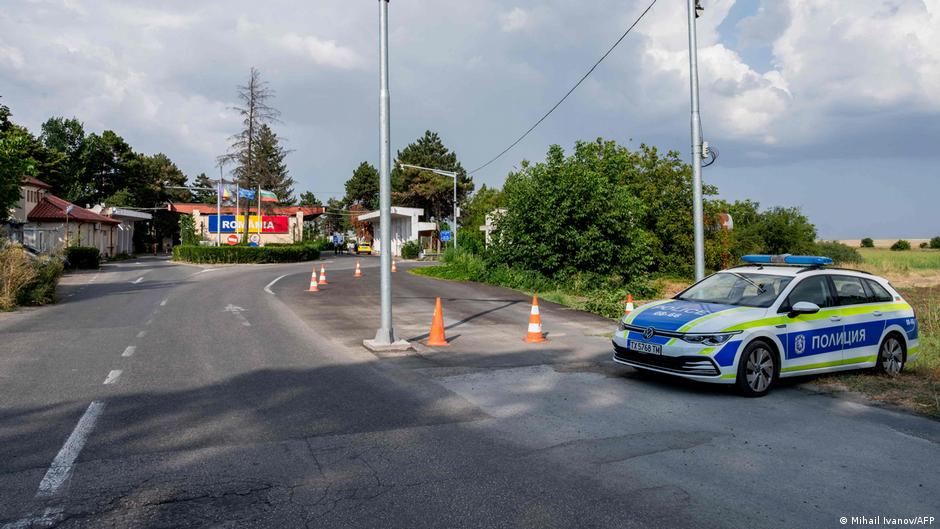
The explosion of a Ukrainian decoy drone in Bulgaria near the Romanian border reveals gaps in Bulgaria's defenses, raises questions and shines a light on the country's policy shift on the war in Ukraine. When a drone entered Bulgaria's airspace on Saturday and exploded in a sunflower field near the northeastern village of Kardam and about 100 meters (328 feet) from a border checkpoint with Romania, the immediate question was where the aircraft had come from. Following an on-site check, the Bulgarian Defense Ministry said the drone was a Ukrainian-manufactured Maya decoy aircraft used to activate and deceive the enemy's drone systems. And while both Bulgarian and Ukrainian officials confirmed that the first drone explosion on Bulgarian territory since Russia's full-scale invasion of Ukraine in 2022 was in no way deliberate, the case quickly became politically charged. The Kardam border crossing (pictured here) is close to a Bulgarian compressor station on the Trans-Balkan gas pipeline route, which connects Turkey and Ukraine Image: Mihail Ivanov/AFP The Bulgarian Foreign Ministry summoned Ukraine's ambassador on Monday and stressed that "any unauthorized entry into Bulgarian airspace is unacceptable." Kyiv promised to cooperate fully in clarifying the circumstances of the incident. What is known about the incident? At 8:10 a.m. local time on Saturday, a blast was heard by a police patrol near the Kardam checkpoint on the border between Bulgaria and Romania. Police and military units cordoned off the area once the exact location of the fallen drone was established in a field. In his first statement, Bulgarian Prime Minister Rumen Radev said that there had been neither casualties nor damage to infrastructure but claimed that the drone had been carrying a "significant amount of explosives." Officials on the ground painted a less dramatic picture, saying the explosion did not even create a crater and that only a few sunflowers had been damaged.
Drone came down near gas pipeline The incident occurred approximately a kilometer (0.6 miles) from Bulgaria's compressor station on the Trans-Balkan gas pipeline route, which connects Turkey and Ukraine, and in close proximity to a Romanian station. Bulgarian Defense Minister Dimitar Stoyanov (left, pictured here with Prime Minister Rumen Radev) has said that Bulgaria needs 'new (anti-drone) systems that need to be bought fast' Image: BGNES This initially raised questions about whether this key infrastructure could have been a potential target. Prime Minister Radev said that neither Romanian, Bulgarian nor other NATO radars had detected the drone, pointing to the country's lack of advanced equipment capable of detecting the traces of such small aircraft, which usually fly very low. A wake-up call for Bulgaria Saturday's drone incident has been a wake-up call for Bulgaria in terms of its defense capability. "Yes, we need new (anti-drone) systems that need to be bought fast," Defense Minister Dimitar Stoyanov said on Monday in an interview with public broadcaster BNT. While Bulgaria recently reinforced its aerial defense capacity in the northeastern part of the country following an increase in the number of drone incursions in neighboring Romania, these defenses did not prevent the airspace breach. Minister Stoyanov said that Bulgaria is seeking to acquire up to 10 anti-drone and electronic warfare systems through the EU's SAFE mechanism and speed up radar purchases. He admitted that this number would still be insufficient to provide "comprehensive coverage" of the country's territory. "Drone wars have been waged next to us since 2023, and no concrete measures have been adopted," Defense Minister Stoyanov said, adding that Bulgaria does not currently have an anti-drone strategy but that his ministry will prepare one.
 The BriefWire