No Ethanol In Diesel, But In Kitchens? Why India Is Rethinking Its Biofuel Push
News explainers No Ethanol In Diesel, But In Kitchens? Why India Is Rethinking Its Biofuel Push No Ethanol In Diesel, But In Kitchens? Why India
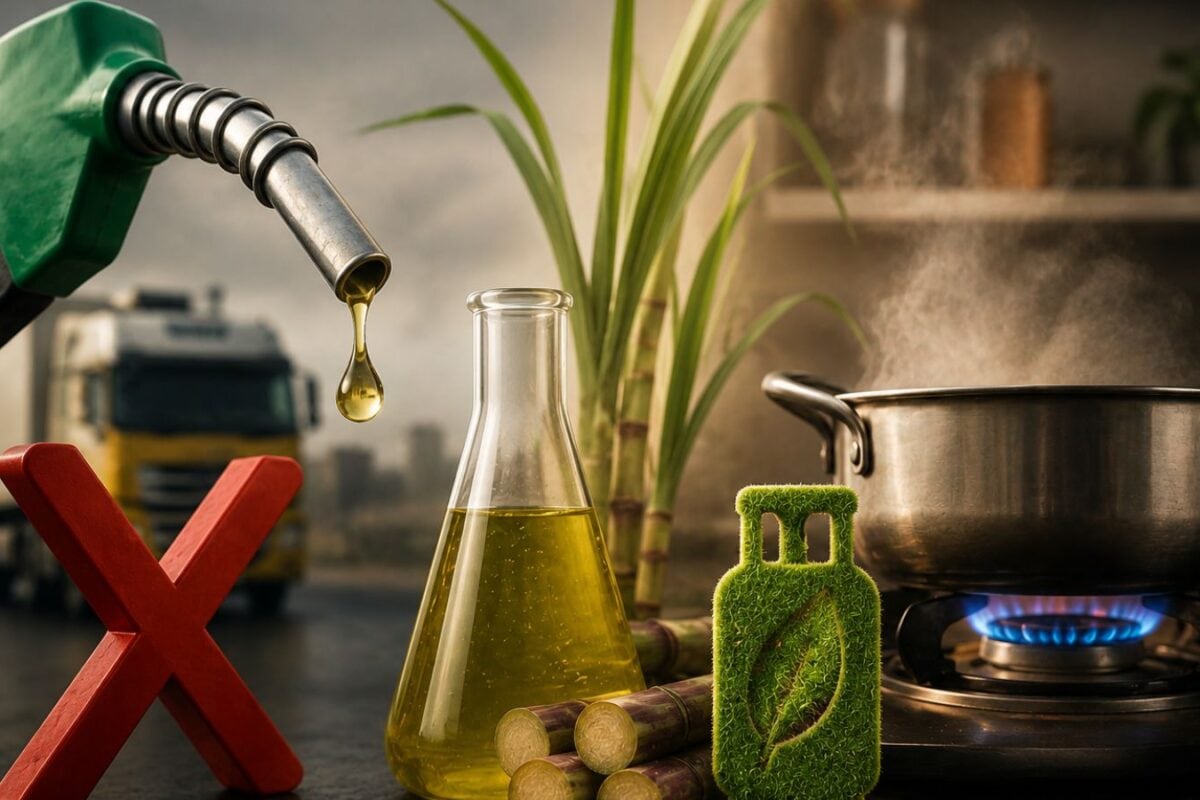
News explainers No Ethanol In Diesel, But In Kitchens? Why India Is Rethinking Its Biofuel Push No Ethanol In Diesel, But In Kitchens? Why India Is Rethinking Its Biofuel Push Written By, Last Updated: August 11, 2026, 15:37 IST Ethanol blending in diesel has failed safety tests over a sharp drop in flash point. Now, government is exploring ethanol as a possible cooking fuel to cut LPG import dependence Rapid Read The government is now examining whether ethanol can be used as an alternative cooking fuel. (AI-Generated Image) India has, of late, been pushing ethanol as a way to reduce its dependence on imported crude oil, cut emissions and create an additional market for domestic agricultural output. But the government has now ruled out wider use of ethanol-blended diesel for the time being, after tests found that adding ethanol significantly reduced diesel’s flash point and caused the blend to fail required safety specifications. At the same time, the government is exploring a very different use for ethanol: as a cooking fuel that could potentially reduce India’s dependence on imported LPG. The two developments underline a larger shift in India’s ethanol strategy: from simply increasing blending in transport fuels to finding new uses for the growing domestic ethanol supply. Why Did Ethanol-Blended Diesel Fail The Test? Minister of State for Petroleum and Natural Gas Suresh Gopi told Parliament that public-sector oil marketing companies (OMCs) had conducted scientific assessments of ethanol blending with diesel through their R&D centres, working with accredited laboratories and automobile manufacturers. The tests found that ethanol-blended diesel did not meet the required flash-point specification, because the addition of ethanol caused the flash point to fall sharply. That finding effectively rules out wider deployment of ethanol-diesel blends for now.
What Is A Flash Point? The flash point is the lowest temperature at which a liquid produces enough vapour to ignite when exposed to an ignition source. In simple terms, a lower flash point means a fuel can produce ignitable vapour at a lower temperature. That makes flash point an important fuel-handling and storage safety parameter. Diesel is deliberately specified to have a relatively high flash point compared with more volatile fuels such as petrol. If blending another component significantly lowers it, the resulting mixture has to be assessed against the applicable safety and fuel-quality standards before it can be used widely. That is precisely where the ethanol-diesel experiment ran into trouble. So, Is Ethanol-Diesel Off The Table Completely? For now, wider use is effectively ruled out. The government has not indicated that it will pursue a commercial ethanol-diesel blending programme after the failed safety assessment. Gopi also told Parliament that isobutanol is not currently being blended with diesel. This is significant because India has been looking at different biofuel pathways rather than relying exclusively on ethanol. Why Was India Exploring Ethanol In Diesel Anyway? India’s ethanol programme has primarily focused on petrol, not diesel. The objective has been to reduce crude-oil imports, lower the petroleum import bill, create an additional market for ethanol producers and support agricultural supply chains. India has already moved to a 20 per cent ethanol blending target for petrol, and the government has not yet decided to raise that target beyond 20 per cent. Any increase, Gopi said, would follow further scientific and technical studies and consultations with automakers, OMCs and research institutions. The push has also resulted in substantial expansion of ethanol procurement. According to Gopi’s parliamentary response, state-run OMCs floated their first tender in September 2025 for around 10.5 billion litres of ethanol for the 2025-26 supply year.
 The BriefWire