Banarasi saree exports rise 5 times as Varanasi's weaving industry gets a boost
Varanasi's iconic Banarasi saree is finding a bigger market beyond India, with exports increasing fivefold since the Uttar Pradesh government's One District, One Product (ODOP)
Varanasi's iconic Banarasi saree is finding a bigger market beyond India, with exports increasing fivefold since the Uttar Pradesh government's One District, One Product (ODOP) scheme was launched in 2018. The growth has come alongside a broader push to strengthen the traditional weaving ecosystem in Varanasi, with artisans receiving subsidised loans, training, machinery support and access to common processing facilities under the scheme. Read Full Story Launched on January 24, 2018, ODOP was designed to promote products associated with individual districts and provide traditional artisans and small entrepreneurs with financial and institutional support. Varanasi's key products under the scheme include Banarasi sarees, pink meenakari and wooden toys. According to Abhishek Priyadarshi, Deputy Commissioner of Industries at the District Industries Promotion and Entrepreneurship Development Centre in Varanasi, the city's Banarasi saree industry has recorded a steady rise in exports since the scheme was introduced. "The Gulf War certainly caused some difficulties. However, since the scheme's launch, exports have increased fivefold," he said, adding that the growth also includes interstate trade. The government says the broader objective is to help traditional artisans move up the economic ladder – from artisans to entrepreneurs, and from small and micro enterprises to larger businesses – while expanding their access to domestic and international markets. SUBSIDISED LOANS, TRAINING HELP WEAVERS EXPAND Under the ODOP margin money scheme, 820 saree traders in Varanasi have so far received loans.
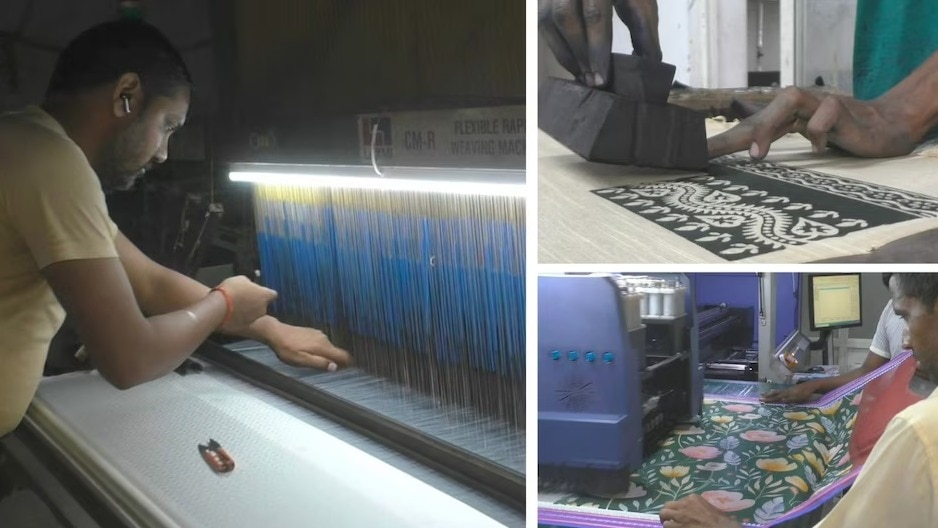
The government has provided subsidies worth around Rs 31 crore against loans amounting to Rs 126 crore, according to Priyadarshi. The scheme also provides training and tool kits to existing artisans. Around 2,500 people have been trained and provided support, while further expansion is being facilitated through loans under the Chief Minister's scheme. For weavers such as Shailesh Singh, who operates a machine under the ODOP initiative in Bhatti village in Lohta, the financial support has translated into higher production. Singh said entrepreneurs received support from banks under the scheme, allowing him to purchase machinery and increase production. The benefits, he said, have extended beyond him to workers associated with his unit. He also received a 25 per cent subsidy, capped at Rs 10 lakh, under the scheme. Singh said the increase in production and marketing of Banarasi sarees and dress materials has improved his financial position as well as his relationship with banks. "ODOP has also benefited the entire society," he said. ONE ROOF FOR PRINTING, DYEING AND FINISHING Another major intervention has been the ODOP Common Facility Centre (CFC) in Jagatpur, where weavers from Varanasi and surrounding areas can access multiple processing facilities under one roof. The centre provides digital printing, screen printing, block printing, dyeing and finishing services at subsidised rates. Namita Bharadia, director of the ODOP-CFC, said the centre uses machines to make these processes faster and easier for weavers.
 The BriefWire