In 1970, Sylvia Earle led five women into an underwater lab for 14 days
Sylvia Earle’s childhood love of nature led her to marine science Sylvia Earle took her marine biology research beyond the laboratory The underwater laboratory that
Sylvia Earle’s childhood love of nature led her to marine science Sylvia Earle took her marine biology research beyond the laboratory The underwater laboratory that put her in the public eye PC: Geographic The dive that took her 1,250 feet down Sylvia Earle turned ocean exploration into underwater technology A government role brought the condition of the sea into sharper focus Sylvia Earle turned ocean exploration into a global conservation mission The sea can feel distant even to people who live hundreds of miles from a coastline. It sits beyond the horizon, beneath ships and far below the surface, largely hidden from ordinary view. Sylvia Earle spent much of her life trying to make that hidden world less remote. Born in New Jersey in 1935, she grew from a child fascinated by wild plants and animals into a marine biologist, deep-sea explorer, inventor and conservationist. Her career unfolded alongside major changes in underwater technology, allowing her to spend thousands of hours beneath the surface. She lived in an underwater habitat, explored the deep sea in submersibles and became the first woman to serve as chief scientist of the US Oceanic and Atmospheric Administration.Sylvia Earle was born on August 30, 1935, in Gibbstown, New Jersey. Her early surroundings were not especially exotic. Her family lived on a small farm near Camden, where she spent time outside exploring woods and paying attention to the plants and animals around her.Her parents had not attended university, but they shared an interest in nature. They encouraged their daughter to treat unfamiliar creatures with curiosity rather than fear.When she was 13, the family moved to Clearwater, Florida, placing her close to the Gulf of Mexico. Earle began spending more time studying the coast and its wildlife, and the ocean gradually became the natural world she most wanted to understand.
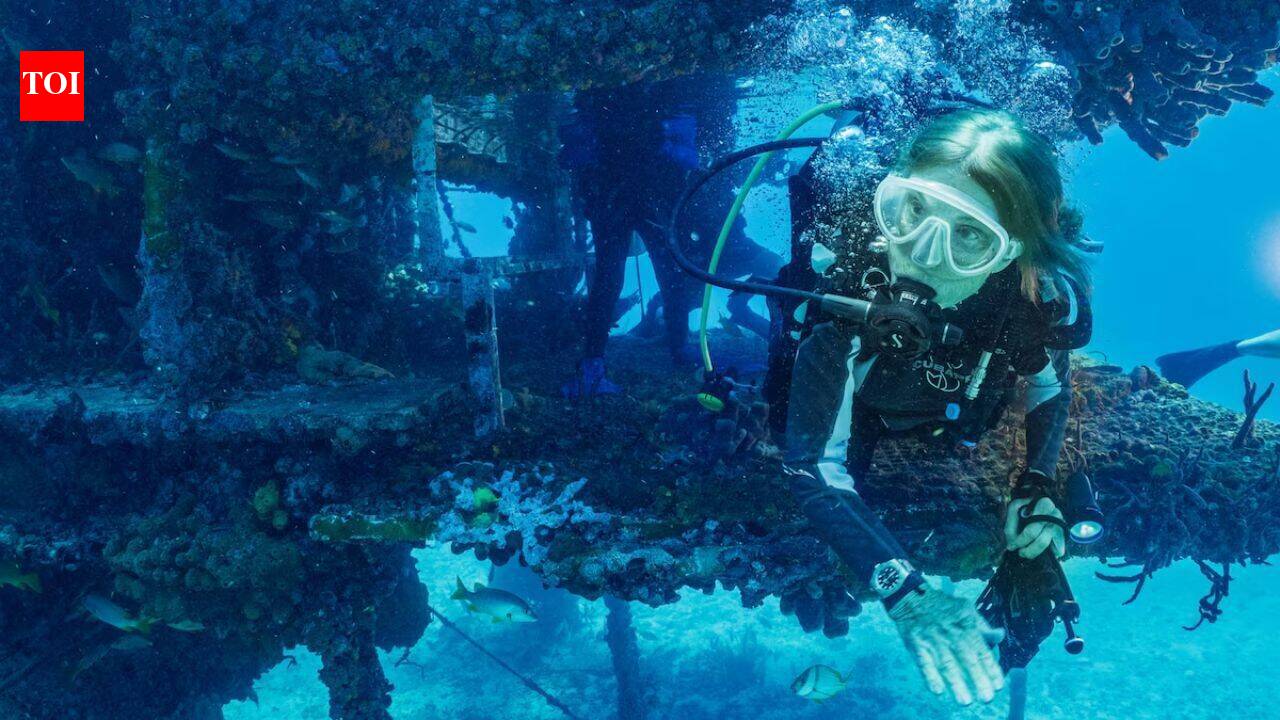
Earle attended Florida State University and supported herself in part through laboratory work.Earle chose botany as her speciality, concentrating on marine plants and the role vegetation plays within an ecosystem. She later completed postgraduate study at Duke University, earning a master's degree and, in 1966, a doctorate.Her doctoral research examined the brown algae of the eastern Gulf of Mexico. Earle was interested not merely in identifying organisms but in understanding the communities in which they existed. Her scientific career was already developing while she was raising a family. In 1964, when her children were two and four, she spent six weeks aboard a Science Foundation expedition in the Indian Ocean. After completing her doctorate, Earle worked as a research fellow at Harvard before becoming resident director of the Cape Haze Marine Laboratory in Florida.In 1968, she descended roughly 100 feet in the Bahamas aboard the submersible Deep Diver. She was four months pregnant at the time.By the end of the 1960s, Earle had already accumulated more than 1,000 hours underwater. She applied to take part in Tektite, an ambitious project that placed scientists in an underwater habitat off the Virgin Islands.The project had several purposes. Scientists could study marine environments while living beneath the surface for extended periods, while NASA was also interested in what the experience might reveal about people living and working in isolated environments. NOAA's historical records describe Tektite II as an important stage in the development of underwater habitats and saturation diving.In 1970, Earle led an all-female team of five scientists in Mission 6. The women spent two weeks in the underwater habitat, around 50 feet below the surface near St John in the US Virgin Islands. NOAA records the group as the first all-female saturation team associated with the programme.Life inside the habitat was not quite the austere experiment that might be imagined.
 The BriefWire