Why a soccer field in one German city may become a flood zone
Western Europe has recorded its hottest-ever June and July, and extreme weather from wildfires to storms are here to stay. How can we adapt to
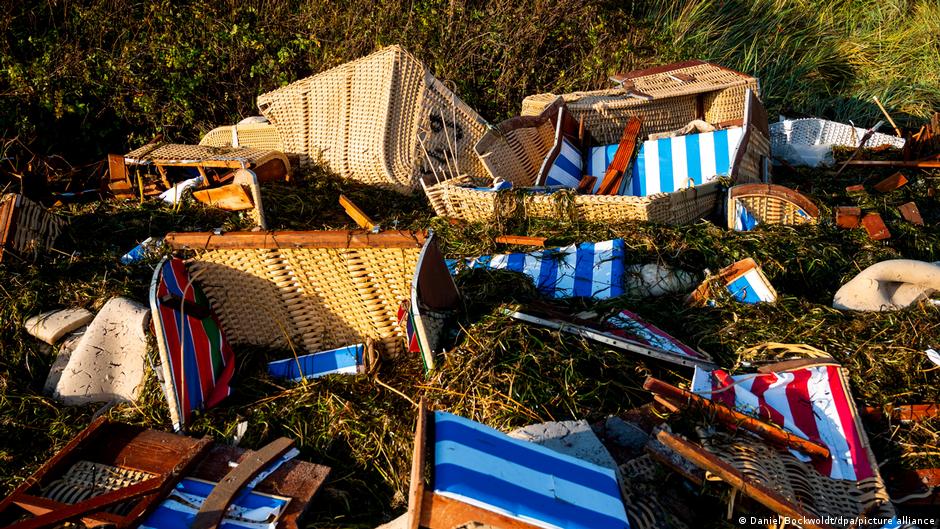
Western Europe has recorded its hottest-ever June and July, and extreme weather from wildfires to storms are here to stay. How can we adapt to what seems to be the new normal? Cities like Kiel in Germany are trying. In October 2023, the worst storm surge in more than 150 years hit the Baltic Sea coast. It destroyed dikes, collapsed coastal cliffs and devastated marinas in the northern German state of Schleswig-Holstein and parts of southern Denmark. The catastrophic surge wiped away 2.68 meters (8.79 feet) of coastal bluff in Kiel, a port city and Schleswig-Holstein's capital. That was more than four times the yearly average lost over the previous two decades. Human-made climate change is supercharging extreme weather such as storms. And in coastal cities like Kiel, the consequences are already impossible to ignore. "The impacts of climate change are hardly abstract in Kiel," said Martina Baum, who heads the city's climate adaptation division. "Since at least the 2023 storm surge, we have all been reminded of the profound effects it can have on us, on our daily lives, and on the environment around us." Those effects are forcing Kiel — among the first cities to declare a climate emergency back in 2019 — to rethink how it works and is designed. It has since become a frontrunner in adapting to the realities of a changing climate, establishing Baum's division in 2025 to help make the city more resilient to weather extremes and adopting an adaptation plan in February 2026 to step up those measures. Is climate adaptation giving up on fighting climate change? For city officials like Baum, adaptation is not a substitute for cutting the fossil fuel emissions heating the planet. Climate protection remains the first line of defense, because limiting warming will reduce future damage. "For a long time, there was hesitation to engage officially with the issue of climate change adaptation.
I also felt uneasy about it at first, because it felt as though it would somehow take the pressure off climate protection efforts," Baum told DW. But the move to adaptation in Kiel reflects what's happening in other cities around the world from Santa Cruz in the US to Quezon City in the Philippines, as governments increasingly prepare for the impacts of heat, heavier rainfall and stronger storm surges that are already here. Quezon City has also intensified its adaptation plans as days are getting hotter Image: Aaron Favila/AP Photo/picture alliance That doesn't mean climate protection and adaptation always align. Installing power-hungry air-conditioning in housing, daycare or senior centers, for instance, protects vulnerable people in heat waves. But it increases energy consumption, "which would run counter to climate protection goals," Baum said. "Even if we use renewable energy, demand is not yet covered by renewable sources 100% of the time, so any additional energy we consume will ultimately result in the emission of climate-damaging greenhouse gases," added Baum. Redesigning cities for unavoidable impacts While AC will sometimes be necessary, Kiel is working on solutions that cool the city naturally. It's adding vegetation to building facades, redesigning a park to channel cooler air into the city center, and making it easier for residents to access permits, information, and grants for adaptation projects. The city is also testing which tree species can survive future conditions. A decade ago, Kiel planted five specimens each of 20 different species to find out which can best withstand heat, drought and salt spray from the nearby Baltic Sea. Kolkata's tree ambulance rushes to save urban trees To view this video please enable JavaScript, and consider upgrading to a web browser that supports HTML5 video Trees provide shade, cool streets by roughly 1.5 degrees Celsius (2.7 Fahrenheit) and improve air quality, but not every species will thrive as the climate changes.
 The BriefWire