Parliament's Monsoon Session heads for a washout as key bills remain stuck
When Parliament's Monsoon Session began on July 20, the BJP-led NDA appeared to have the numbers, the Opposition appeared divided, and the government seemed well-placed
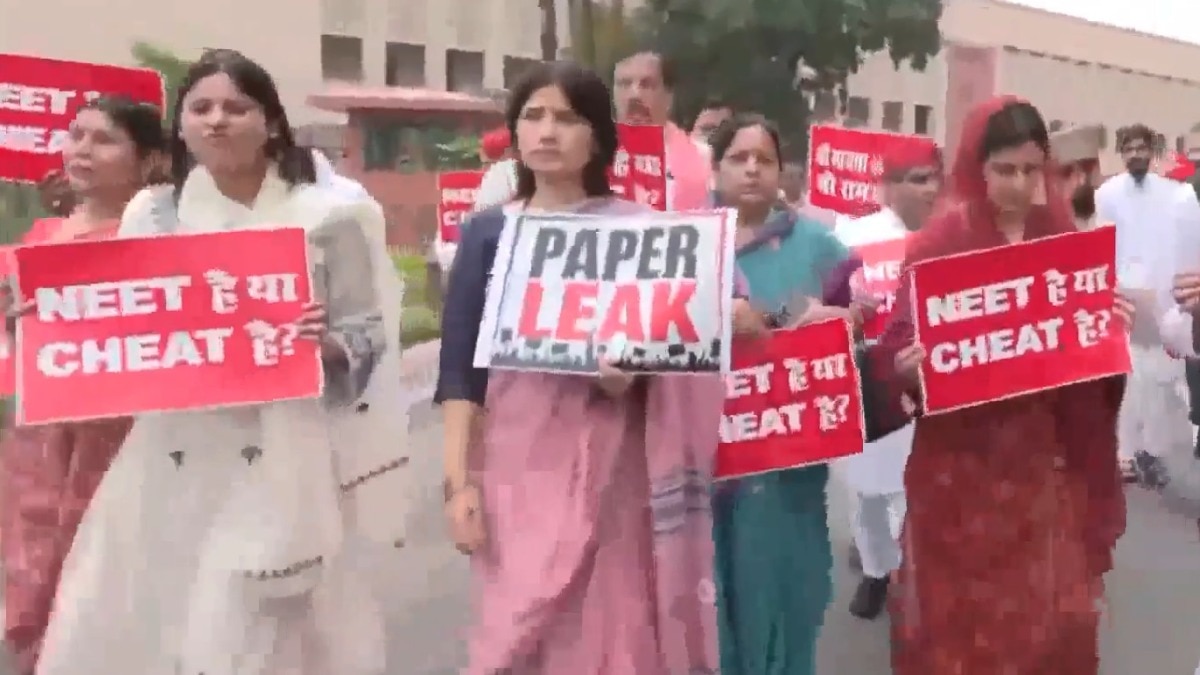
When Parliament's Monsoon Session began on July 20, the BJP-led NDA appeared to have the numbers, the Opposition appeared divided, and the government seemed well-placed to push through an ambitious legislative agenda. Three weeks later, that script has been upended. The session, which was expected to focus on major proposals including women's reservation, delimitation and tighter regulation of foreign funding, has instead been dominated by the NEET controversy, student protests and a widening confrontation between the government and the Opposition over police action against demonstrators. Read Full Story The resignation of Education Minister Dharmendra Pradhan on July 25 was the first major political fallout of the protests. But rather than drawing a line under the controversy, it shifted the battle to the Home Ministry, with the Opposition now demanding that Amit Shah explain who authorised the alleged police action against protesting students in Delhi's Jantar Mantar. The immediate trigger for the disruption was the Opposition's campaign over the NEET paper leak and the treatment of students who took to the streets. What began as a demand for accountability in the examination system widened after allegations of police excesses against protesters. Pradhan's resignation gave the Opposition fresh political ammunition, but did little to ease the standoff in Parliament. The focus has since shifted to the Home Ministry. Opposition parties have been demanding an explanation from Amit Shah over the alleged police action against protesting students in Delhi, including allegations of pellet guns and lathi-charge. The government has now offered a discussion on student protests, with Shah agreeing to respond, but the Opposition wants him to specifically address who authorised the action. This difference in approach has become the immediate obstacle to restoring normal proceedings. The government argues that it has offered the Opposition a forum to raise its concerns and has agreed to put the Home Minister in the House to respond. The Opposition, however, wants a direct answer on the Delhi police action before it agrees to move on to a broader discussion. THE POLITICAL EQUATION HAS CHANGED That standoff matters because it has consumed a session in which the government had hoped to concentrate on legislation. When the session began, the NDA's improved numbers and divisions within the Opposition had strengthened expectations that the government could advance some of its more ambitious proposals.
The political arithmetic, however, has proved less useful in practice as the Opposition has found common ground around student protests and the demand for accountability. The first major test is the proposed legislation on women's reservation and delimitation. The government wants to provide 33 per cent reservation for women from the 2029 Lok Sabha elections and link its implementation to the redrawing of parliamentary constituencies. The proposals carry political consequences well beyond the current session because delimitation could alter the representation of states in the Lok Sabha. The government also needs the numbers to pass a constitutional amendment. An earlier Constitution amendment connected to the exercise was defeated in April, with 298 members voting in favour and 230 against. The NDA's strength has since improved, but it remains short of the two-thirds majority required for such a constitutional amendment. That is where Opposition differences become important. The DMK has strongly opposed delimitation, while Congress and several of its allies have objected to the government's approach. The Shiromani Akali Dal, however, has backed both women's reservation and delimitation. The positions are therefore not neatly divided along government-versus-Opposition lines. For the government, the challenge is not simply to improve its numbers but to build a sufficiently broad political consensus around legislation that could reshape the composition of Parliament. FCRA COULD BECOME ANOTHER FLASHPOINT The Foreign Contribution (Regulation) Amendment Bill, 2026, presents a separate challenge. Introduced in the Lok Sabha on March 25, the Bill proposes tighter oversight of organisations receiving foreign funding. It also provides for a new authority with powers to seize and manage the assets of non-profit organisations that lose their licence. Congress has strongly opposed the Bill, calling it "unconstitutional and anti-people" and alleging that it could target minorities and NGOs. The Opposition has made clear that it does not intend to allow the legislation to pass without a fight. Congress general secretary KC Venugopal has warned against any attempt to introduce and pass the Bill in the remaining days of the session. NCP-SP leader Supriya Sule has called for the legislation to be withdrawn or referred to a Joint Parliamentary Committee, while DMK chief MK Stalin has also demanded its withdrawal. For the government, therefore, the FCRA Bill could open another political front at a time when Parliament is already struggling to function.
 The BriefWire