Lake Mead falls to 1,040.4 feet as Colorado River crisis deepens
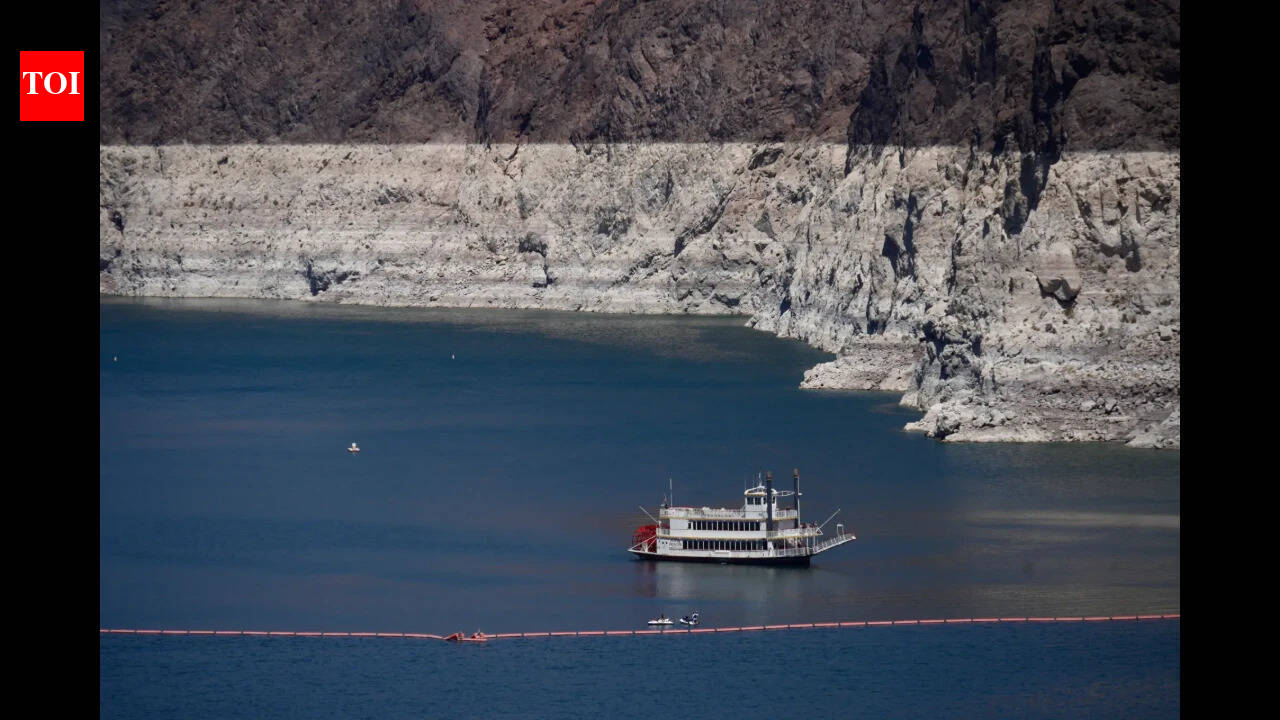
A paddle boat in Lake Mead near the Hoover Dam, far below the bathtub ring of light minerals indicating the lack of water, near Boulder
A paddle boat in Lake Mead near the Hoover Dam, far below the bathtub ring of light minerals indicating the lack of water, near Boulder City, Nev., on Friday, Aug. 7, 2026. (AP Photo/Ty ONeil) A record low across the Colorado River system Hydropower would be affected first Dead pool would threaten water deliveries Arizona, California, and Mexico would face different risks Las Vegas has an unusual advantage A tourist takes a photo of Lake Mead near Boulder City, Nev., on Friday, Aug. 7, 2026. (AP Photo/Ty ONeil) Wildlife and tourism are also at risk A crisis that would unfold in stages (With inputs from AP) Lake Mead, the largest reservoir in the United States, has reached its lowest recorded level since it was created nearly 90 years ago, according to AP News. The reservoir fell to 1,040.4 feet above sea level, just below its previous record low from July 2022. At the same time, Lake Powell, the country’s second-largest reservoir, remains dangerously depleted, raising concerns about the future of water supplies, hydropower, agriculture, wildlife, and communities across the Southwest.The two reservoirs are the backbone of the Colorado River system. Together, they help manage water for roughly 40 million people across seven U.S. states, Tribal communities, and Mexico. They also store water from wet years so cities and farms can continue receiving supplies during prolonged drought.But after years of low snowpack, extreme heat, drought, overuse, and rising evaporation, that reserve is rapidly shrinking. The question is no longer simply whether the lakes look low. It is what would happen if Lake Powell and Lake Mead fell so far that they could no longer perform their most important functions.Lake Mead is held back by Hoover Dam near Las Vegas, along the Arizona-Nevada border. Its recent decline reflects stress across the entire Colorado River Basin, particularly in the Rocky Mountains, where melting snow provides much of the river’s annual flow.The basin experienced its worst snowpack on record during the past winter, adding pressure to a river system already struggling with chronic drought and decades of demand exceeding natural supplies. Both Lake Mead and Lake Powell are now at levels not seen in nearly seven decades, while the combined storage of the two reservoirs has fallen to a historic low, according to CNN.The consequences are already visible. Boat ramps and marinas have had to close, move, or be rebuilt as shorelines retreat. At Lake Powell, visitors face increasingly difficult access to the water, while recreation-based businesses around both reservoirs are losing income.The crisis has also forced federal officials to make difficult choices. The Bureau of Reclamation recently proposed that Arizona, California, and Nevada, the three Lower Basin states, reduce their water use.
 The BriefWire