Sri Lanka’s solar projects threaten elephant habitat in Hambantota
Hambantota ’s solar ambitions collide with the habitat needs of 400 elephants Elephant habitat lost in Hambantota Hambantota’s 150MW solar plan raises elephant habitat concerns
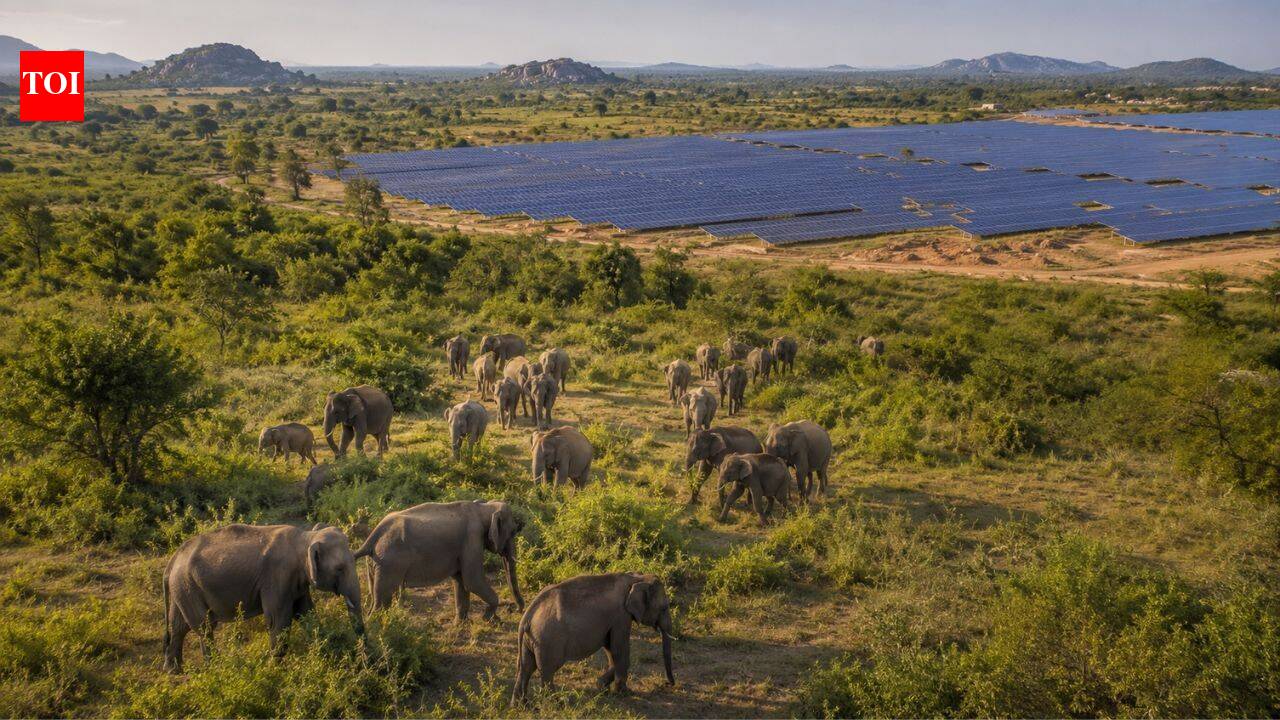
Hambantota ’s solar ambitions collide with the habitat needs of 400 elephants Elephant habitat lost in Hambantota Hambantota’s 150MW solar plan raises elephant habitat concerns Sri Lanka’s 2021 elephant range was created to protect vital habitat Hambantota’s shrinking elephant range is raising fears for farmers On the dry plains around Hambantota, the vegetation can look unremarkable at first glance. Thorny scrub, patches of grass and scattered trees cover land that has already been reshaped by farms, roads and large infrastructure projects. Yet this rough-looking landscape is part of the everyday range of hundreds of Sri Lankan elephants. They feed here, move through it and use its remaining water sources as they cross a landscape increasingly shared with people.Now parts of that habitat are being cleared for a planned solar energy park. Seventeen separate projects are being developed in the same wider area, each assessed individually. That has raised a difficult question: what happens when a collection of small projects becomes one large development from the elephant’s point of view?Hambantota sits in Sri Lanka’s relatively dry southern zone, where rainfall is lower and sunlight is plentiful. Those conditions make it an attractive location for solar generation. The district already hosts renewable energy facilities, and the government is looking to expand electricity production from sources that can reduce reliance on imported fossil fuels.But the scrub forests and grasslands that make the area useful for solar development have another function. Elephants eat the vegetation. They move between patches of scrub, grassland and water, often travelling beyond the boundaries of formally protected wildlife areas.As reported by The Sunday Times Sri Lanka, in Hambantota, more than 400 elephants are estimated to depend on this mixture of habitats.For people living nearby, that relationship has become increasingly difficult.
When feeding areas disappear or routes are blocked, elephants do not simply vanish from the landscape. They can turn up in cultivated fields, villages and even built-up areas in search of food and space.The district has undergone substantial change over the past few decades. Ports, airports, roads, agriculture and settlements have taken over parts of the former wilderness. As reported, almost 8,100 hectares of elephant habitat have been lost to major development in the region, according to conservationists. Global Forest Watch data also indicate that Hambantota lost about 5,900 hectares of tree cover between 2001 and 2024.Tree cover figures do not tell the whole story, though. Much of the landscape used by elephants is not dense forest. Dry scrub and open grasslands can appear degraded to people looking for land to develop, while still providing food and movement space for wildlife.Conservation scientist Prithiviraj Fernando, who has studied the movements of elephants in the region, says the scrub vegetation is a traditional feeding habitat for elephants living in Sri Lanka’s dry zone. Clearing it can therefore remove useful habitat even when the land does not resemble the lush forests that are usually associated with wildlife conservation.An elephant that loses one feeding area may have to travel farther to find another. If fences or other developments interrupt its usual route, the animal can be pushed towards farmland and settlements. In a district already struggling with human-elephant conflict, that can create another point of friction.The proposed development is expected to produce around 150 megawatts of electricity. It is not being presented as one enormous project on paper, however. Instead, the solar park is divided into 17 smaller units being developed by different companies.Under Sri Lanka’s environmental approval system, large developments can require a more comprehensive environmental impact assessment, while smaller schemes may go through an initial environmental examination.
 The BriefWire